Desert Online General Trading LLC
Dubai, United Arab Emirates
Desert Online General Trading LLC
Dubai, United Arab Emirates

Full description not available
L**R
one of the best books on any subject!!!
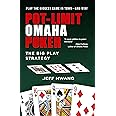
this is simply one of the best books i have read on any subject. extremely well written.i would give one proviso and that is that you shouldn't use this book for 6-max online. anyway, that game is often 4 or 5 handed and then it's a rakefest with almost no winners (and i'll go as far as to say no statistically significant winners whatsoever until you get way up in stakes).this book is somewhat nitty but exactly what you want for full table plo at bricks and mortar casinos. 6-8 seeing a limped flop. 3 to 5 seeing a raised flop.the plo8 section is really well done too. i see it as a free add-on to the plo section and it seems like it is a nice synthesis of the information out there on plo-8. plo high is quite a bit more straight-forward to bet/raise or not. plo-8 has alot more subtelty i think. and jeff does a great job on this.one area where i think he may go a bit far is his worry about free rolls. it seems like any nut straight you have on a flush draw board has some chance of a free roll. but i wouldn't go overboard on worrying about it myself. free roll is situations like when you have the nut straight but there is a flush draw out there. i guess another reason why there is so much respect for suited aces over suited kings/queens/etc.the above paragraph gets into the basic gist of the book's strategy. you want to be the one with an ace high flush vs. a 10 to King high flush..... the other basic of plo strategy is that you want alot of different ways to make a strong hand. naked aces aren't really that valuablejeff did some later books but they are to certain degree about six max. and i don't think that game is sustainable at all online and doesn't exist anywhere B&M that i know of.one of his later books though has alot of good info on spr. basically there comes a point where you've put some much money in the pot that it's fine to go with your jack high flush and hope for the best. better of course to have a redraw to a full house.... jeff's good spr work has been in cardplayer. not sure if it's behind a subscription wall or not these days.great book.......... maybe someone, even jeff, can clarify as to his content in later plo books.............. ciaffone's book is really good too, but very basic. and lyle's berman's chapters in SS2 is good too
A**O
Well written
Well written and thoughtful. Gives good game situations and quizzes. Makes you think. I bought it for the O8 section and was very pleased.
J**Z
Good book, but leaves me wanting more
This book was very helpful for me and I highly recommend it, especially to relatively new Omaha players. The best part was Hwang's analysis of the different types of starting hands and their structures (which is more complex than you may expect). He also does a good job of explaning the thought process that you should go through on the flop when you are deciding whether or not to continue with your hand. He favors a solid, tight/aggressive style which I agree with.However I did have a few issues with the book:1. Not enough postflop play. I know he is saving most of his advanced plays for the next book, but still, there wasn't enough discussion of postflop play for me. The turn is an especially tricky street, and he doesn't discuss turn play nearly as much as I had hoped. For instance, what if you have a solid 13-card draw on the flop, but you don't hit it on the turn? For the most part he says to keep betting it on the turn, but surely there are times when you should slow down, or even fold your hand on the turn. So, I found his discussion of turn play to be very short and overly simplified - he basically just says that if you liked your hand on the flop, then you should keep betting it on the turn, no matter what the turn card actually is.And I don't think there was a single hand in the book where he advocated going for a check/raise. This seems strange to me because the check/raise can be a very powerful move, even in PLO.There wasn't enough discussion on reading your opponents based on their betting habits, and he made no mention at all of using deception and varying your play in order to make yourself harder to read. This is another area that he will probably cover in the next book.2. The book stretches itself a bit too thin. He covers pot-limit omaha high, limit omaha 8/b, and pot-limit omaha 8/b. I would have liked to see the entire book devoted to PLO so that he could cover it in more detail. Omaha high/low could have been covered in a separate book.Having said that, it's a very good book and well worth the price. I just hope that volume 2 covers some of the "trickier" aspects of Omaha that were not discussed here.
T**R
Very informative.
I just got this book a week ago and have spent more than ten hours reading it and taking notes. I'm blown away. I actually was a little afraid to come on here and tell others how good the book is, but I realized there was no need to worry. Only the most studious and stable players will get a lot out of this book. Most players, even the ones who read this book, will continue to play naked ace-deuces in pot-limit Omaha hi/lo, and call off their entire stacks with only a low draw. So I don't care if a few people get educated by studying the game of Omaha through this book. For every one person who really studies this book and improves, there will be another hundred who couldn't care less. I suppose all poker games are like that, especially in online play.I should mention that I bought this book, thinking it would cover Omaha high only. But the pot-limit Omaha/8 discussion, which only covers about 50 pages of the book, is worth the purchase price in and of itself. The Omaha high discussion in this book has already been seen, for the most part, in previous books.
Trustpilot
2 days ago
5 days ago