

Desert Online General Trading LLC
Dubai, United Arab Emirates
Desert Online General Trading LLC
Dubai, United Arab Emirates
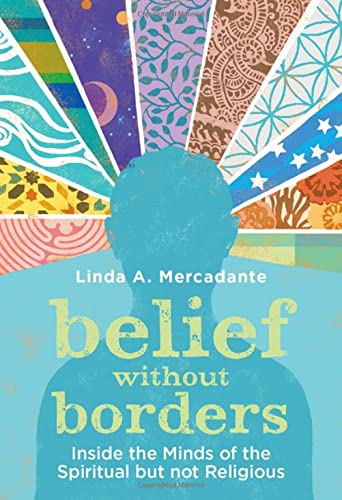
Full description not available
H**E
Who are the "nones"?
I long puzzled over the phrase, "spiritual but not religious," so I was glad to find this book, which is based on a large number of interviews with "SBNRs". The author thoroughly analyzes the dimensions and varieties of this belief system and lets us get to know a some of its individual adherents. They show up in opinion polls as "nones" because they answer "nothing in particular" when asked to identify their religion. What they mean is that they experiment with a variety of spiritual practices, frequently shifting from one to another and seldom inquiring into their religious or philosophical origins.. What they seek is personal happiness or what's conventionally called "peace of mind."The author is a theologian and not a sociologist, so her own goal is to examine the possibilities of reviving what used to be called "mainstream" religious organizations by incorporating the SBNRs. I would tell her not to bother. The Evangelicals and the Catholics alike have so poisoned the well of religion in this country that the younger generation is abandoning even those moderate organizations, despite their attempts to dilute Christianity with modernity to make it more palatable.To get a more complete picture of the "nones", I also read "The Varieties of Non-Religious Experience: Atheism in American Culture" by Jerome P. Baggett. This author is a sociologist, but not an atheist. He was perhaps surprised to find that the people he interviewed were quite ordinary Americans. I recommend reading both books.Full disclosure: I am both a sociologist and an atheist.
R**H
Church Leaders should be reading this book
This book is based upon an incredible number of personal interviews and great research methodology to give a really complete picture of who the Spiritual But Not Religious, Non-affiliated, or Nones really are. More than theory, it is a sympathetic review of the voices of many SBNR's and why they are increasing. Other authors might write about them, but few have taken the time to really get to know and present them like this book does. Dr. Mercadante's book should be read by clergy, by those alienated by the church, and cultural anthropologists. Rather than dismissing the SBNR's as being responsible for their own disaffection with the church as an imperfect institution, she challenges church leaders to not only listen to the SBNR's but to explore what they have to offer the church for growth in spirituality. However, she also challenges SBNR's to strip away the baggage and the packaging of much of what is modern day church life, and explore the patterns of spirituality which has been practiced by some in the church for 100's of years, which offer new ways to actually be Spiritual but Not Religious.
J**S
Excellent discussion points. Well written. Needed to be read for all Christians. People need to re-think Christianty and redo
Excellent discussion points. Well written. Needed to be read for all Christians. People need to re-think Christianty and redo the 2000 years old book, with it having 84% being unproveable. If fundamentalist want to believe the falsehoods that the bible was written by God himself, let them be wrong for another 2000 years. It is well known that there were about 3000 changes in the 2000 years. It is known that there are about 2000 words in the current versions. The bible's preparation was started by the Council of Nicene in 325 A.D. by the Roman Catholic Christians and enforced by the Roman Army soldiers. It was not accept as complete until 377 A.D. by the Bishop of Alexandris for his Christmas letter to his churches without a majority of the other bishops never agreeing on its contents.
T**R
Very useful information, but it's a qualitative study...
Very useful information, but it's a qualitative study. I would have liked more statistics, but the project was not designed to make them meaningful.Those mainline churches who are trying to lure SBNR's back should consult this book. They seem to think we left because of bad experiences. For many of us, it was because of the theology, which we find ugly.
R**M
and to better relate to
Very insightful and revealing of the "nones"; the author has a very accurate understanding of the culture of the population about whom she's writing; Well worth even a 2nd or 3rd reading to understand, and to better relate to, this significant segment of current American society. Besides, Dr. Mercadante is/was a professor at the same graduate school in central OH, of which I am an alumnus. She has brought further honor and distinction to the Methodist Theological School, Delaware, OH, with the publication of this very informative book!
D**N
Restored My Hope For the Church
Dr. Mercadante has a strong belief that the church that has survived and sustained the faith for so long can and must adapt and remain faithful. Her research and conclusions can help hold the church together, as well as teach it how to embrace, respect and find common ground with those who consider themselves spiritual but not religious. My personal faith has always been strong, and now my hope for the church and its future has been restored through her encouraging words. "Belief without Borders" is a must read for any church that desires to be both faithful and relevant.
B**E
I am fascinated by this book and believe that I ...
I am fascinated by this book and believe that I fall into the Spiritual, but not Religious category. This could be "game changing" for The church - if they are willing to listen and change some of their "but we've always done it that way" thinking.
J**V
Well worth the read
An Insightful look at people who believe differently than I do.
Trustpilot
1 day ago
1 month ago