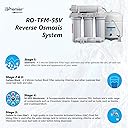
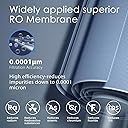
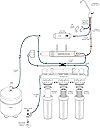
Excellent product - with a few important caveats.I've installed several Watts units and been exposed to several others.This one works fine, it's simple and the supplies are easy and cheap to replace.I'll suggest a few simple prechecks before installing that will save you time and pain,and give you a couple tips to keep it humming along for years to come..FIrst, the installation stuff you need to know:Take a good look at all the parts for damage first - you don't want to install it and then find out later it leaks.It isn't Watts fault, but when these things gets shipped it is not uncommon to be dropped on their head and at each end of the filter housings there are two small plastic elbows prone to cracking when mistreated. If this has happened, either call Watts and they will be happy to mail a couple replacers - or, drop by local hardware store for these things if in a hurry - they are a one dollar part. I won't gig Watts a star over that - it's a problem with rough handling...Next, think about where it will be installed - if under the sink cabinet, be sure you mount the main housing high enough that you can get a dishpan under the filters when it is time to replace them - I prefer to mount it so the screws aren't quite tight and I can slide the unit off them and remove it altogether to service it. If this means adding a little extra tubing to the lines, it's worth it for the ease of maintenance.Think carefully about where the drain line will go as well. You don't want any back pressure on it, as from a dishwasher for example. Some prefer to run that line out to a garden and let it continuously fill a water drum any time the unit runs - fine IF you don't have worries about freezing or overflow (flooding) - as these things toss a couple gallons of waste water for each drinkable one they make, it's nice to use this not so clean water for something - just be careful if you opt for that to make sure it won't cause problems in the flooding or freezing department...As you run the unit in, use a good bright light as pressure comes up to look for small leaks.Keep a couple bathtowels handy throughout the installation - just in case things go astray.Speaking of where to install it, for the really creative, there is no reason you can't put this thing in a basement, near a drain, and just run a single long piece of tubing up through the floor to the kitchen sink, refrigerator icemaker, and/or anywhere else you want a tap for RO water.... with the added bonuses of not having to crawl under the sink to install or maintain, not losing space under the sink for the unit, and keeping all the mess by a drain in the basement instead.Maintenance tips:Any RO unit works until the membrane fails, then passes water unfiltered until you replace it.Depending on your water and your luck, this can happen any time from 6 months to a couple years.Don't neglect regular replacement of the prefilters, especially if your water source is chlorinated, asthis has an effect on the main membrane as well.Manufacturers say to replace it based on time, but given the huge variability of lifetime andthe possibility of random failure, it's best to test the water yourself and replace this slightlymessy and fairly pricey membrane whenever actually needed. It doesn't take much of a pinholein the membrane to render it useless.Best way to tell if it has failed is to use a TDS or conductivity tester - you can get them onlinefor ten or so dollars. Well worth it, as it's used to tell you when a forty dollar part has failed andyou're just getting tap water out of the unit instead of processing it via RO.Here's the science, and the how-to to use the thing. RO removes most of thedissolved solids in water, so assuming your water supply has some hardness to it, it will score anumber fresh from the tap and a number about 90-95 percent lower from the RO unit. Whenthe membrane fails, the number will be the same or nearly the same both at the tap andcoming from the RO unit. When you see that, replace the membrane.Next, whenever water volume gets low, or at least annually, shut off incoming water, drain the unit dry,and check air pressure in the reserve tank with a gauge that reads low pressures well. If the tank doesn't have pressure, adjust it as per the book. If it leaks air into the water supply, it's shot, replace it - as the tank has a diaphragm you cannot replace and once it ruptures the water will touch raw metal inside the tank - not good. Any replacement tank will do, the bigger (within reason) the more RO water it will hold for instant availability.Finally, keep an eye on performance - run time goes up unreasonably, sediment has probably plugged the filters. If that doesn't get it, look at the shutoff valve. If the RO faucet leaks into the sink when the unit runs, check for a plugged drain line... and when in doubt, read the book, and remember, if you can't figure it out, Watts knows.Thanks for reading this far - and good luck with RO - I've gotten installation down to a few hours using the tips above!