โณ Stay ahead of time with CANADUINOโs atomic precision!
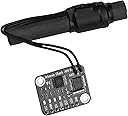
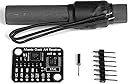
The CANADUINO Atomic Clock AM Receiver ADK 60kHz is a high-sensitivity, low-power AM receiver module designed for precise atomic time synchronization. Compatible with major global time signals (WWVB, JJY60, MSF), it supports microcontrollers at 3.3/5V logic levels and operates across a wide 2-15V range. The kit includes a premium tuned antenna and requires soldering, making it ideal for DIY electronics enthusiasts and professional developers seeking reliable, long-range atomic clock reception.


| ASIN | B01KH3VEGS |
| Antenna | Tuned 60kHz AM radio antenna |
| AntennaDescription | Tuned 60kHz AM radio antenna |
| Best Sellers Rank | 186,252 in Computers & Accessories ( See Top 100 in Computers & Accessories ) 21,176 in Components & Replacement Parts |
| Brand | CANADUINO |
| Brand Name | CANADUINO |
| Colour | Grey |
| Compatible Devices | Arduino, Raspberry Pi, STM32, PIC |
| Compatible devices | Arduino, Raspberry Pi, STM32, PIC |
| Connectivity technology | USB |
| Connector Type | Pin Header |
| Connector type | Pin Header |
| Customer Reviews | 4.1 out of 5 stars 82 Reviews |
| Includes Remote | No |
| Item Weight | 0.05 Kilograms |
| Manufacturer | UNIVERSAL-SOLDER |
| Manufacturer Part Number | N.A. |
| Model Number | N.A. |
| Network Connectivity Technology | USB |
| Tuner Type | AM |
A**R
What you may not know.
I designed a decoding board to be driven by a 60KHz r.f. signal from the Rugby transmitter (which is no longer at Rugby, by the way). When this minute receiver arrived, I found that half the circuitry on my pcb was already inside the encapsulated receiver. It is a Phase Lock Loop (PLL). The advantages of a PLL is that it can cut through noise and deliver a clean output, albeit logic or simply ON/OFF. Their response to a synchronised signal is extremely fast and the rise and fall times are so brief as to be almost immeasurable i.e. nanoseconds. However, they do take a finite time to synchronise, sometimes minutes, but usually <30 secs or so, dependent upon signal strength. This receiver, supplied by Universal Solder, has a sensitivity of 4 uV, which is quite respectable for a ferrite aerial. For those of you who reside at extreme distances from a transmitter, and who find reception poor to impossible, the signal to noise ratio may be improved by adding ferrite rods in a bundle (3 or so), surrounding the one already connected to this receiver. There have been some excellent reports about this receiver when operated at vast distances from their respective transmitters, especially from large countries like Canada and the U.S. The receiver runs at a maximum of 5 volts and burns micro-watts of energy, it being CMOS based. The output pulses are DC, not r.f., and their amplitude will be within a few percent of the supply rail voltage. The minimum operating supply is 3.5V. at which it will perform quite well. The aerial's ferrite-mounted coil is solid copper wire, not Litz wire, and is therefore quite brittle by comparison. Whilst it will tolerate a reasonable amount of flexing, great care needs to be taken when handling the 'heavy' ferrite rod and the minuscule micro-miniature p.c.b. when soldering etc. Namely, don't allow the ferrite aerial to dangle on the aerial wire, even accidentally. A second pair of hands will be useful when soldering the tiny lands associated with the additional connections. Whilst we are always keen to 'give it a burn', you are strongly advised to mount the pcb and aerial as soon as you have made all the connections. You should browse for UniversalSolder.ca and select the device from the list of other units supplied by this company. The instructions are clear and easy to follow ... just three pages. A point to note. Holding the receiver in your fingers will very likely introduce spurious or weakened r.f. signal response, as will the proximity of other loose wiring e.g. on a test rig. Leave the unit alone and be patient. Give it at least a minute to stabilise and produce pulses ... an oscilloscope isn't a must, but will prove quite reassuring. For MSF Rugby users in the UK, the first 0-100mS is the Seconds' Pulse. From 100-200 is the code (one bit per second) and from 300-400mSecs is the 'B' code. A fully detailed information sheet may be found on Wikipedia MSF Rugby, if, like me, you are designing your own decoder using hardware. All the work is done for you in this receiver, it producing nothing but seconds and coded output. In terms of performance, I don't think it will ever be bettered, as physics, in this case, have been mastered. It is a well- designed circuit, its small size enhancing performance. P.S. You may find it difficult to remove the ferrite rod and circuit board from the 'test tube', as they are rammed in to prevent movement during transit, and pulling the board to extract the ferrite via its aerial wiring is not recommended! Saw off the end of the tube and push the ferrite rod out with a pencil ... better safe than sorry. Apex Systems (UK) Ltd
M**H
Excellent Product
About 40 years ago I built a clock from the design in Radio & Electronics World (April 1983) and it has proved very reliable. In that time I have only had to replace the Z80 processor, which may have failed from overheating. But I never had much success with the 60kHz receivers (two designs) and aerials (ferrite rod and wire frame aerials). Aerials extremely directional and poor reception in daylight hours. This Canaduino module has transformed the clock. It comes as a kit, but very little soldering required. But you do need to be competent in soldering tiny parts (the crystal). It was very well packed inside a small plastic box. I don't know whether the box was intended to house the built-up unit, but that's what I did. With careful measurements and drilling I mounted the ferrire rod with cable ties, the PCB with M2.5 screws, and two phono sockets. One for power, the other for data. It seems quite tolerant of direction, but I'm relatively close to the Anthorn transmitter (about 135 km, 84 miles). It may be more critical at greater distances. Highly recommended.
A**P
have big plans for this
it works
G**X
good
works first time looking out of a south facing window got my old Maplin rugby clock working fine
A**R
Good Quality
Arrived ahead of schedule very safely packaged, good quality parts.
Z**I
value for money
A well priced and good piece of kit. I will buy again
M**E
Pessimo
Pessimo
S**Y
Exact time, all the time, < $10
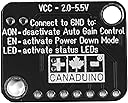
Packaging was pretty robust - the board and bar antenna were packed securely in a capped, sturdy plastic tube. It just took a tap on the opened end for it to slide out. The device came with printed documentation and usable references to part data if needed. After soldering down a 5-pin breakaway header on the board, I put it down on a breadboard and wired it to an Arduino, and wrote a short test sketch to time the edges on the T pin, and saw the right kind of timings (800ms/200ms etc). This was done on a bench in the man cave/Faraday cage, so that's pretty impressive performance. As a secondary check, I turned on an LF receiver in the shack and verified the pulses lined up with what I heard on WWVB. Looking forward to writing a time decoder for this very slow and very accurate PWM'd bit stream. Remember to pull down the P1 pin to turn on the receiver. It doesn't draw a lot of current (about 50 uA) when it's running, and draws near nothing (0.1uA) when you power it down (by pulling P1 up). The included documentation describes cycling this pin to retrigger the AGC logic to hasten signal acquisition time. You might therefore want to dedicate an Arduino output pin to controlling P1 rather than just grounding it. For my first test, I just grounded P1 and signal was acquired within seconds of power up. Standard shipping is via the Canadian and US Postal system; it took about a week and a half to get here. Seller was really quick to reply on a shipping question. He didn't solicit a review from me, I'm just impressed with this inexpensive, sensitive receiver giving me WWVB on a pin.
O**R
works as described. easy to built and very sensitive.
This is not a true kit as with few solder points was too simple. Connecting it and testing was a little more challenging. I would give it 2/5 difficulty as one has to wait for synchro. The info on the manufacturer web site, especially the stm32 clock is very good even only for this module alone and not considering the whole project described there. Much more sensitive than the desk marathon clock I have that never synchronizes. One needs other components if a full atomic radio clock is the end goal.
K**A
Works Perfectly, Soldering required
This is a receiver for the WWVB US time signal at 60 kHz. A tiny crystal is provided for the desired signal, depending on your country. This crystal must be very carefully soldered to the circuit board, quickly to avoid damage. The antenna and header pins also require soldering. As noted elsewhere, the PDN pin MUST be grounded to enable the receiver. After soldering, the device was powered up and instantly began recovering the time signal. The ferrite rod antenna is much larger and more sensitive than the similar tiny antennas found in most "Atomic Clocks" - my testing took place at 1500 hrs. in the northeast USA (full daylight)! I highly recommend this device for timeheads.
A**R
Otherwise a great product, that I'm glad someone has made available
Odd that the AGC contact is not same size nor inline with other pin holes, so can't have it on same header. Crystal not off-frequency by a few Hz, as datasheet recommends. Otherwise a great product, that I'm glad someone has made available.
Trustpilot
2 weeks ago
2 weeks ago