Desertcart purchases this item on your behalf and handles shipping, customs, and support to Greece.
🔌 Power up fast, last a decade, and never miss a beat.
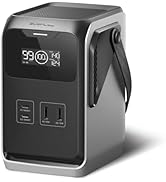
The EF ECOFLOW Delta 3 Portable Power Station packs a 1024Wh LiFePO4 battery with ultra-fast 56-minute full recharge, supports powering 13 devices simultaneously at 1800W continuous output, and offers expandable capacity up to 5kWh. Engineered for durability with 4000+ charge cycles and IP65 protection, it’s the ultimate reliable energy solution for professionals on the go, emergencies, or off-grid adventures.


| ASIN | B0DCBYMC9D |
| Antenna Location | Camping |
| Best Sellers Rank | #635 in Patio, Lawn & Garden ( See Top 100 in Patio, Lawn & Garden ) #2 in Outdoor Generators |
| Brand | EF ECOFLOW |
| Color | Black and Gray |
| Customer Reviews | 4.8 out of 5 stars 1,331 Reviews |
| EU Spare Part Availability Duration | 5 years |
| Included Components | AC charging cable ×1, EcoFlow DELTA 3 portable power station ×1, Manuals and warranty card |
| Item Dimensions | 15.7 x 8 x 11.2 inches |
| Item Type Name | DELTA 3 Power Station |
| Item Weight | 12.5 kg |
| Manufacturer | EcoFlow |
| Mfr Part Number | EF-DL-H10-3 |
| Model Name | DELTA 3 |
| Model Number | EF-DL-H10-3 |
| Number of Batteries | 1 Lithium Ion batteries required. (included) |
| Number of Items | 1 |
| Number of Outlets | 13 |
| Other Special Features of the Product | 1-5kWh Expandable with EcoFlow Extra Battery, 1800W AC Output, 2200W (Surge 3600W) with X-Boost, 4000 Cycles to 80+% Capacity, 5 Fast Recharging Methods, 600W<30db;1200W<40db |
| Output Wattage | 1800 |
| Power Source | Solar Powered |
| Recommended Uses For Product | Camping |
| Special Feature | 1-5kWh Expandable with EcoFlow Extra Battery, 1800W AC Output, 2200W (Surge 3600W) with X-Boost, 4000 Cycles to 80+% Capacity, 5 Fast Recharging Methods, 600W<30db;1200W<40db Special Feature 1-5kWh Expandable with EcoFlow Extra Battery, 1800W AC Output, 2200W (Surge 3600W) with X-Boost, 4000 Cycles to 80+% Capacity, 5 Fast Recharging Methods, 600W<30db;1200W<40db See more |
| UPC | 842783143235 |
| Voltage | 120 volts_of_alternating_current |
| Warranty Description | 5 Year |
P**A
Another great addition to the EcoFlow Delta series!
The Delta 3 is nice! I purchased this unit in March 2025, and added it to my growing EcoFlow collection. I have a few River series units and a Delta 2 with an extra battery. The Delta 3 arrived quickly, and setup was a breeze. EcoFlow offers an optional, free-to-use mobile app, which I have, and it recognized the device immediately after start up. The D3 works straight out of the box too, so if the mobile app isn’t your thing, it works just fine without it. Since it’s a 3rd generation unit, the Delta 3 has a lot of new features available in the app that my first and second generation units do not. I particularly like the remote shut-off feature, where I can go in the app and turn off the device in case I forget. Another new-to-me feature is the real-time power usage and history. Since I recharge the unit using solar, it’s great to see the history and daily solar power generated by the connected panel. I also like that all of the AC and USB ports are on the front of the unit. This is great since I store the unit on a heavy-duty shelf against a wall with my other devices. The Delta 3 is great, however I do have some small critiques. I did get two error codes during my first week of use. The first day I connected solar, I plugged the panel (EcoFlow Flexible 100W) in the night before. The next day, I woke up to error code 303, which is likely related to the inverter based on codes for previous generation Delta units. The mobile app explained the error and offered troubleshooting instructions right away. After the reboot, the device worked without issue and I haven’t see that error since. On a different day, after charging the D3 via AC power, I briefly encountered error 471 when unplugging the power cord from the outlet. It’s a quick error that appears on the D3 screen but doesn’t last long enough for the mobile app to show any information. I’m not sure if it’s actually an error or just a power blip when unplugging. It doesn’t happen every time, but I have seen it a few times since March. In general, I’m not worried about these two errors. The Delta 3 comes with a 5-year warranty, so if I have any issues in the future, I’ll reach out to Customer Service for support. Overall, I think the Delta 3 is a solid addition to the Delta series line up. If you’re new to EcoFlow and considering this unit, it’s a great one to start with. Note I said “start with”, because you’ll love it enough that you’ll want to add more devices to your collection! Definitely look for a Daily or Lightning Deal and EcoFlow coupon checkboxes on the item listing to get the best price. Not to be confused with the Delta 3 Plus, which is another great unit, the Delta 3 also comes in a 1500Wh capacity in either the black or silver finish. If you are trying to decide between the Delta 3 1024Wh unit (this one I’ve reviewed) and the Delta 3 1500Wh unit for a similar price, definite go for the larger battery. Whatever you choose, don’t forget to register your unit for warranty and *actively read the user manual* to learn how use and maintain your device for many years to come. Enjoy!
Y**X
Really fast charging, good engineering, and 1024Wh hits the sweet spot
After I bought and tried EcoFlow's excellent Delta Pro not too long ago for our vacation home, I became a fan of the company's products. I previously was a firm fan of Goal Zero and Jackery and was wowed by the Delta Pro's features. I was curious to see how the Delta 3 would do. The Delta 3’s 1,024Wh battery capacity — how long something can run for — puts it right in direct competition with the Goal Zero Yeti 1000x and Yeti 1000 Core, Jackery Explorer 1000, and its own predecessor, the EcoFlow Delta 2 — but with one major difference. Instead of using Nickel Manganese Cobalt (NMC), the Delta 3 uses Lithium Iron Phosphate (LiFePO4) like its more powerful Delta Pro sibling. There are significant differences between both Lithium-ion (Li-ion) battery chemistries that I will detail later. Some tips to keep in mind while reading my review: - How much energy a battery can store is measured in Wh (Watt-hours), and how much power is used or produced in W (Watts). - EcoFlow, Goal Zero, and Jackery power stations can be used while simultaneously charging themselves. Sweet Spot: The 1000Wh battery capacity hits the sweet spot for many consumers, including this author, who are looking for the right balance of power and portability. But when it comes to home integration, the more Watt-hours a battery ecosystem offers, the longer one can power a home for during a blackout. BATTERY TECHNOLOGY There has been a lot of debate on whether Nickel Manganese Cobalt (NMC) or Lithium Iron Phosphate (LiFePO4) is better. Both are Lithium-ion batteries. Goal Zero and Jackery used NMC for a long time and only recently switched to LiFePO4 (what EcoFlow and Bluetti had been using for some time). Why use LiFePO4 today? They hold some important advantages over NMC: - Safer, less volatile, and thus cheaper to manufacture - Charge cycle: 2000-5000 (10+ years) -- NMC: 20-25% capacity loss after every 500 cycle (6-10 years for up to 2000 cycles, after which capacity is vastly diminished) -- EcoFlow claims 3500 cycles before dropping to 80% of original capacity and 6500 to 50%. Each year, this number increases quite a bit as battery technology improves further - Usable in more extreme temperatures (-4F/-20C to 176F/80C). NMC: only 140F/60C max -- Check with manufacturer for your battery to be sure - Holds 350-day charge. NMC: 300 CAUTION: Lithium-ion batteries do NOT like to remain discharged at 0% for prolonged periods of time. If you let your battery stay at 0% for too long, you may not be able to charge it again without specialized equipment. CONTINUOUS VS PEAK OUTPUT It is important to understand the difference between Watts and Watt-Hours. How much power is used or produced is measured in Watts, and how much energy a battery can store is calculated in Watt-Hours. See the “Calculations” section below for more details. How much energy a battery can store is measured in Wh (Watt-hours), and how much power is used or produced in W (Watts). - AC Inverter: Converts battery (DC) power into AC -- Delta 3 provides 1,800W continuous output with a 2,600W peak (up to 3,600W with EF's "X-Boost") - Peak/Surge (Starting): Nearly every device initially draws extra power to turn on. The highest amount it pulls is the Peak. As long as that number is below 2,600W, it can be STARTED. Examples… -- Turns on OK (PEAK under 2,600W): --- Freezer starts at 400W (peak), runs at 150W once on -- Will NOT turn on (PEAK over 2,600W): --- Home AC starts at 4,000W (peak), runs at 1,000W once on Most devices power on at a higher (Peak) wattage than when they are already on (Continuous). Therefore, if its peak exceeds the power station's max, it may not be able to start - Continuous Output (Running): Once devices are on, as long as they keep drawing less than 1,800W total, they will stay ON until the battery runs out -- CONTINUES running (under 1,800W) --- 100W TV + 60W laptop = 160W -- COULD STOP running (over 1,800W) --- Temporary overdrawing beyond 1,800W for a few seconds is okay. A quality BMS will protectively shut down the battery if the surge does not end after a while. Regularly going over for a prolonged time can ruin the battery in the long run --- 1,000W machine (2,100W peak) + 300W appliance (500W peak) + 700W appliance (900W peak) = 2,000W. Probably will stay on for a short period ---- Add 1,000W mower (1,400W peak) = 3,000W. Battery will definitely shut down CALCULATIONS The below calculations are rough ESTIMATES as conditions, battery quality, and age can vary. [SORRY: I had to shorten my original review by a LOT (including many calculations) so it could fit here on Amazon.] Time to Charge This 1,024Wh Power Station - Calc: Hours to charge battery = Battery capacity (Wh) / Input Wattage -- As battery approaches 75% full, the input charge will increasingly be slowed down to prevent overcharging - AC Wall: 1,500W @ 41 mins [1024 Wh / 1500W] - 12V Car Charger -- 120W @ 8.6 hrs (at 10A, if car supports it) Charge Time with Solar - Calc: Hours to charge battery = Battery capacity (Wh) / (Panel Wattage x [0.5 or 0.75]) -- In a perfect lab, solar panels charge at the listed wattage -- Expect to only receive 50-75% on a good, sunny day (ie. 75W – 113W for a 150W panel), depending on panel's age, component quality, and weather - 200W solar panel: as fast as 6.9 hours [1024Wh / (200W x 0.75)] - Underproduction: If a panel is not making enough, adding extra ones can generate a higher, combined output - Overproduction: If the panels make more than the maximum the power station charge port can take, only the max will go through Watts Used/Produced by a Device - Calc: Watts used or produced by device = Voltage x Amperage - Vacuum with 120V @ 9.5A uses 1,140W - Solar panel with 12V @ 10A can produce up to 120W Ideal Battery Power Station Size - Calc: Battery capacity (Wh) = Watts used by device x Hours needed for / 0.85 -- 10-15% of power is lost during power conversion - 45W car fridge needed for 8 hours: Minimum 424Wh power station (45W x 8 / 0.85) FINAL THOUGHTS EcoFlow thoroughly impressed me with their Delta Pro power station and quickly added the company to my list of recommended battery providers. Their newest Delta 3, a LiFePO4 product, further surprised us (well, not as impactful as when the Delta Pro came out) with 1,500W rapid-charging that took the battery from 0 to 80% in a whopping 30+ minutes! Had I not seen that in person, I would have dismissed it as a marketing gimmick, but knowing how good power stations are today, that is not surprising any more. Add to that the ability to have the Delta 3's capacity and features expanded with additional products, and the Delta 3 makes for a VERY compelling choice against Goal Zero’s own Yeti product line that is starting to show its age. Jackery, on the other hand, is extremely difficult to recommend against the Delta 3, except that they have excellent customer service and consumer-friendly policies.
E**S
The best investment for blackouts in Cuba! Saves lives
I sent it to Cuba and my family is delighted. It works wonders to alleviate the situation with blackouts. It has a very good capacity, allows you to connect several devices at the same time and the quality of the EcoFlow brand is noticeable from the first use. He arrived in perfect condition and performs a lot. A must-buy if you need to back up the power there.
T**O
Good product
Loving it. Good quality and very useful. My other one was too small to run all night with my diesel heater. This has enough power to last the night and some.
A**S
Super
Excellent portable power station. Easy to set up, charges quickly, and provides reliable backup power when needed. The display is clear and easy to read, and the build quality feels solid. Great for emergencies, camping, or powering devices during outages. Very satisfied with this purchase.
V**N
Good product
Very nice , and fast charging. I use it for refrigerator when I go for camping two nights. I didn’t purchase the solar panel yet because it since the power station is enough for even camping three nights without recharging. I recommend this power station.
M**S
Power Where I Need It
Having the EcoFlow DELTA 3 around has completely changed how I think about portable power. I can plug in several things at once, see exactly what I’m using on the display, and recharge it quickly when needed. I especially appreciate not having to search for outlets or deal with extension cords when I need power somewhere else. It’s compact enough to move around but capable enough to be genuinely useful. Simple idea, extremely useful in real life.
A**9
A++
I brought this about a little more than a year ago. Here is my quick take on it. It runs my coffee pot k cups the big one, it runs my electric blanket all night on setting 10/12 is max, when I need it..it charges my pro max 16 iPhone. It charges my wireless speaker JBL. My Apple Watch an iPads a laptop. And I can run a fan all night in the summer including All my Apple products together an JBL I guess what IAM saying is I can charge a lot of things, mix an match. Charging the unit at 2% to 100, every 5 or 6 days. Sometimes longer 7 or 8 days. It’s used it every-night. It hasn’t failed me yet. One thing, since I brought it, it would charge fast, an it still does. Except it only charges to 99% now. Even though the app sets 100%. I use 800w speed, sometimes less speed sometimes fast speed depending on my needs. I guess what it boils down too is it works yes sir. I live in my van happily for now.
C**U
Muy útil.
Lo mejor, da energía a mi casa de campo, excelente opción.
M**L
Maravilla de producto
Es una maravilla de la tecnología, funciona excelente y lo mejor de todo que con una conexión extra que tú hagas puedes pasar corriente a tu casa. Obviamente bajando el Break de tu propia casa conectas un cable de la pila a un contacto de tu casa y ya tienes luz en tu casa más aparte funciona con paneles solares
A**S
Excelente.
Buen producto para emergencias, gran duración y con batería auxiliar más.
A**A
Buen equipo lo recomiendo
Excelente opción, su capacidad depende del equipo que conectes pero como ejemplo conecte una nevera portátil grande y me dió 24 horas de uso
Trustpilot
2 weeks ago
3 weeks ago