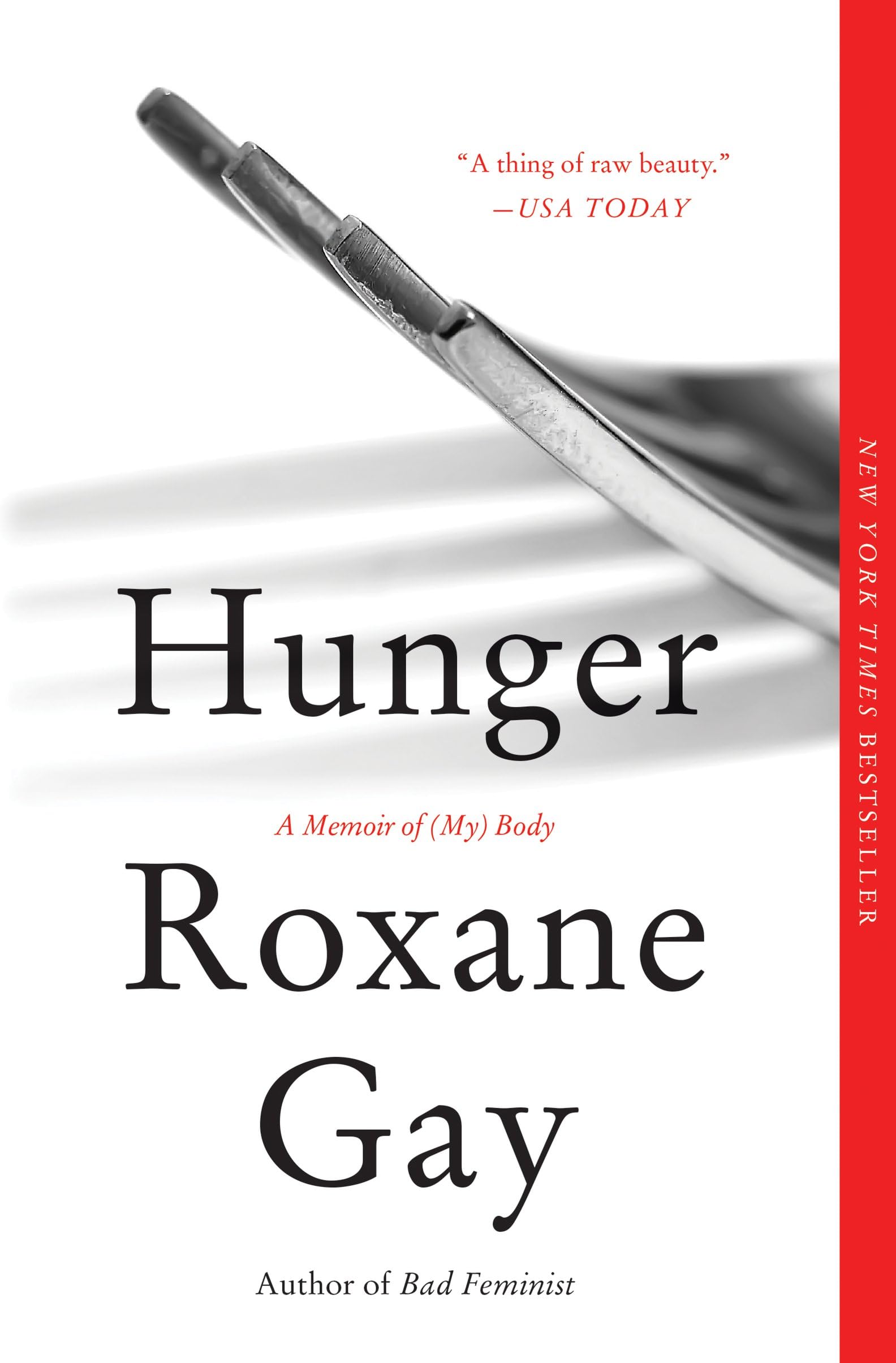
Hunger
Product ID: 66772604
Desertcart purchases this item on your behalf and handles shipping, customs, and support to Greece.
desertcart.com: Hunger: A Memoir of (My) Body: 9780062420718: Gay, Roxane: Books Review: Raw, real, relatable, unflinchingly bare. - Heartbreaking, relatable, raw. For anyone who's ever been overweight - really overweight, not 5 or 10 or 25 pounds (and for those of you who love or care about someone who's obese) this book is a must-read. Ms. Gay describes so clearly, so evocatively, the simultaneous, often-confounding push-pull of being fat in America - how we hate our bodies, yet are irritated and frustrated by America telling us that we should in fact hate our bodies; that we wish with every fiber in us that our bodies were different, yet how deeply we also wish we could just accept our bodies, flawed & dimpled & fat as they are. I've long admired Ms.Gay's brilliant writing, and love that she's both a feminist and an avid watcher of bad TV and delights in her youthful (and lingering?) addictions to Sweet Valley High and other silly series. (Hey, what a concept - we can be both feminists and excitedly watch The Bachelorette every week...) She lays out her personal story in this book with such raw, unflinching candor. It's painful at times to read it, like we've been caught reading her journal entries, but it's a pain that all of us who are fat have felt or feel every single day. A rare, wonderful, poignantly personal memoir that connects her personal struggles and trauma to the larger (pun intended) American obsession with being thin, and the price that overweight and obese Americans (especially women) pay with every breath, every movement, every heavy, aching step that we take in public spaces. For those who judge, who would look at Ms. Gay and say "why didn't she...?" or "why doesn't she...?" or "what about.....", read this first and hopefully blow open your pre-conceived notions about how "easy" it would be to do x, y, z, to release yourself from a cage of your own making. Review: Reminding myself it's a memoir - Gay has thought and thought and thought about the events of her life and where those events have taken her and she's very honest about what she is responsible for, what she is not responsible for, her feelings, the feelings of those around her, etc. For those reasons in combination with her adept writing, it's a good read. I did find myself wanting to talk with her at times because there were a few areas that I felt she had blinders on or made easy excuses, which seemed at odds with her clearly self aware and self critical persona. Her discussion on why exercise isn't her solution, for example, seemed pretty flippant and again, at odds with her persona. She basically says she's too lazy and feels intimidated going to the gym. Well, don't we all? Also, I don't think 'lazy' is the right word for someone like Gay who has clearly worked hard and excelled at many other facets in her life. It seemed like an easy write-off. The other issue that had similar 'write-off' tones was when she described that she was a vegetarian until she became too anemic and 'had to eat meat again.' Sounded like a really convenient excuse instead of her otherwise self-reflective and honest analysis of her life and coping mechanisms. Too anemic? Cook with a cast iron pot. Too anemic? Take iron supplements. I had to keep reminding myself, this is a memoir and so it is not held up to judgement in the way that perhaps an expert writing a self-help book should be held to fact. With that in mind, it was a good book, just a bit frustrating that while she is a great writer, a person you want to meet and be friends with, she also clearly has some blinders still in front of her.


| Best Sellers Rank | #39,999 in Books ( See Top 100 in Books ) #142 in Black & African American Biographies #242 in Women's Biographies #608 in Memoirs (Books) |
| Customer Reviews | 4.4 out of 5 stars 7,654 Reviews |
M**S
Raw, real, relatable, unflinchingly bare.
Heartbreaking, relatable, raw. For anyone who's ever been overweight - really overweight, not 5 or 10 or 25 pounds (and for those of you who love or care about someone who's obese) this book is a must-read. Ms. Gay describes so clearly, so evocatively, the simultaneous, often-confounding push-pull of being fat in America - how we hate our bodies, yet are irritated and frustrated by America telling us that we should in fact hate our bodies; that we wish with every fiber in us that our bodies were different, yet how deeply we also wish we could just accept our bodies, flawed & dimpled & fat as they are. I've long admired Ms.Gay's brilliant writing, and love that she's both a feminist and an avid watcher of bad TV and delights in her youthful (and lingering?) addictions to Sweet Valley High and other silly series. (Hey, what a concept - we can be both feminists and excitedly watch The Bachelorette every week...) She lays out her personal story in this book with such raw, unflinching candor. It's painful at times to read it, like we've been caught reading her journal entries, but it's a pain that all of us who are fat have felt or feel every single day. A rare, wonderful, poignantly personal memoir that connects her personal struggles and trauma to the larger (pun intended) American obsession with being thin, and the price that overweight and obese Americans (especially women) pay with every breath, every movement, every heavy, aching step that we take in public spaces. For those who judge, who would look at Ms. Gay and say "why didn't she...?" or "why doesn't she...?" or "what about.....", read this first and hopefully blow open your pre-conceived notions about how "easy" it would be to do x, y, z, to release yourself from a cage of your own making.
A**Y
Reminding myself it's a memoir
Gay has thought and thought and thought about the events of her life and where those events have taken her and she's very honest about what she is responsible for, what she is not responsible for, her feelings, the feelings of those around her, etc. For those reasons in combination with her adept writing, it's a good read. I did find myself wanting to talk with her at times because there were a few areas that I felt she had blinders on or made easy excuses, which seemed at odds with her clearly self aware and self critical persona. Her discussion on why exercise isn't her solution, for example, seemed pretty flippant and again, at odds with her persona. She basically says she's too lazy and feels intimidated going to the gym. Well, don't we all? Also, I don't think 'lazy' is the right word for someone like Gay who has clearly worked hard and excelled at many other facets in her life. It seemed like an easy write-off. The other issue that had similar 'write-off' tones was when she described that she was a vegetarian until she became too anemic and 'had to eat meat again.' Sounded like a really convenient excuse instead of her otherwise self-reflective and honest analysis of her life and coping mechanisms. Too anemic? Cook with a cast iron pot. Too anemic? Take iron supplements. I had to keep reminding myself, this is a memoir and so it is not held up to judgement in the way that perhaps an expert writing a self-help book should be held to fact. With that in mind, it was a good book, just a bit frustrating that while she is a great writer, a person you want to meet and be friends with, she also clearly has some blinders still in front of her.
J**O
Many 5-star and 1-star ratings missing the point of Hunger
That is my own measly opinion, of course. I think this book left people confused on either end of the spectrum, in different ways. I've read 1-star ratings calling it boring, disappointing, circular, with no light at the end of the tunnel; the memoir of a very unlikable human being who gets nowhere in this book. Like it's meant to be some kind of fairy tale, or the lesson to be learned is meant to leave the reader feeling accomplished and good. Like wisdom always feels good or something. Or the 5-star ratings that praise this as though it's this suspenseful and emotionally captivating read—which I personally feel is misleading and such a misrepresentation of why this book exists. "LOVE IT!!!" feels cheap. Calling this book amazing feels like a lie. When I started reading Hunger, I knew I was going into a memoir that was probably going to feel very uncomfortable; both in just reading about the real trauma a real person had experienced, and the fact that I have also suffered trauma. I am also obese and have experienced the fear of losing weight for the same reasons the author has and does. I get it and I felt myself bearing down and then a dull sense of disturbance fill my stomach as I got closer to what I knew lived in the pages of this memoir. I read a life that seemed very similar to mine; at a certain point I even felt a sting of annoyance that someone wrote down my story and got the success that I probably could've had a long time ago. I lived this life, in my own ways—so much of it was terribly familiar to me. Some moments mirrored my own, and some situations I couldn't even begin to imagine myself in. I'm wondering if those who got nothing out of this really missed the point of what Roxane's memoir is. She's not here to teach us a moral, or to leave us feeling empowered in our obesity, or giving anyone a sense of moral high ground. This memoir reads as a practice in pure catharsis—an attempt at validating her own traumas and seeing how it latched onto her and changed her perception of herself. It's not about the reader and really whatever they're hoping to get out of it; Roxane is showing us the very experiences that closely reflect those similar to her. Yes, it is redundant because trauma doesn't just go away. Trauma follows and manifests over and over again, however the brain makes it until the person is able to resolve it. That resolution, though?—sometimes it never shows up. Sometimes, trauma looks like decades of just eating, chatting online, the same list of stupid choices, failed jobs and grades, evictions, severed relationships, and the same relationships that hurt someone the first time the trauma happened. Years upon years of the same BS, neverending. Always going. And for an obese person—an obese woman of color—Roxane Gay's memoir is chronic and endemic, and it's deeply disturbing and can feel the reader with hopelessness. Some readers found this book boring because it just repeated the same things over and over. They lost interest. They ask, "What is in this for me? I want my money back! DO NOT READ, EVERYONE." If this book is anything, it is a practice in empathy for those whose lives have been debilitated and left in Limbo by the foul choices of others—even children, as Roxane Gay had been victim to. And in saying that, I will say that from my perspective, the people complaining about how bored they were and how disappointed that they didn't get any helpful advice or "wisdom" out of this memoir completely failed in that practice. Welcome to trauma. Welcome to sexual trauma. Welcome to rape. Welcome to PTSD. Welcome to eating disorders. And welcome to all of those things, wrapped up into a life that spent years being unresolved, misunderstood, unnoticed, invalidated, and left to rot—all because anyone could see was that Roxane Gay was fat.
A**R
a Powerful Journey of Truths
To say this is an excellent book is insufficient. Roxane Gay’s writing is soulful, complex, unmasking, revealing, painful, and quietly triumphant. There are so many places where her truth aligns with my own truth and her honesty goes deeper than my own. Her words helped me feel connected and empowered while bringing up echoes of my own healing and that which isn’t healed yet. I am beyond grateful that she said the words and shared the experiences that are said and known to those of us who are people of size. I am reminded that I am not alone and that everyone’s journey and life are theirs alone.
P**A
A Fascinating Book by a Powerful Woman of Size
Fascinating. A real insight into body issues that we tend not to think about - unless we are one of those people with real issues. She is a brilliant, well educated, beautiful professional woman - but people tend to focus only on her size. And that size is an enormous handicap that limits her in everyday activities - things I never think about like what chair will hold me or will I fit into an airline seat or can I climb those steps. And it influences all her relationships from family to lovers. And add to that issues of race and gender and she carries immense baggage. And it hurts - she is so open about that. The tragedy of her gang rape at age 12 hangs over everything. (I have a 12-year-old granddaughter and I can't imagine how she would cope.) It is heartbreaking that she wasn't able to reach out to adults to help her but instead turned to food. But she is a survivor. If I have one criticism about the book is that there are no pictures of her. When I finished it I went to the internet to look her up and she is beautiful. Of course size is an issue but I think it would help readers to see her because it gives more appreciation of what she is dealing with. When I am in crowds I am always touched by people who are enormously overweight, particularly young people, because I know it is a burden they will most likely always carry. And life is so unfair in how what we eat affects us all differently. Many heavy-set people are more disciplined about food than some thinner ones, but they pay a high price. And now I look at them differently. This book will stay with me for a long time. Ms. Gay can help a lot of people so I hope she keeps writing and talking.
J**S
A Book You Won't Forget
The title of this book is perfect. Anyone, who knows who Roxane Gay is, will assume the book has to do with eating. Hunger connotes a desire for food, right? But, this book is much more than a book about food. It's a book about yearning, about hungering for many things. Food is, of course, one of those things. But, Ms. Gay hungers for companionship, for love, for acceptance, for simple courtesy. She hungers for recognition of who she is versus what she looks like. In fact, there is little in the book that indicates that she hungers for food. This is a troubling book to read. It's full of angst. The short chapters feel as if each could be a confessional on a shrink's couch. The author shares her innermost wants, needs, feelings. It is so revealing that the reader feels as if they are intruding. The courage it took to write the book is evident. But, what's not so evident but clear is how much the author had to go deep within herself to really understand who she was. I'm assuming she did that alone and not in therapy. She doesn't mention being in therapy (except some counseling when she was in high school). Given all the revelations in the book, the reader begins to search his or her own soul. In doing that, we might ask ourselves, do we really see others? Do we assume by what we see in other people's appearance (bodies), they are a certain way without knowing that person. Are we subconsciously critical of people who are fat (anorexic, old, handicapped--my additions)? Ms. Gay helps the reader understand the difficulty she has doing very normal things, like going out to dinner with friends, going to the doctor, using a public restroom, flying in an airplane, sitting behind the steering wheel of a car, going to a movie or the theatre. The list is endless. I can add others: Serving on jury duty, walking on a sidewalk, sitting on a park bench. Those of us in normal-sized bodies take all these things for granted. After having read Hunger, I will never take these things for granted again. Hunger is a tough read. My hope is the process of writing it helped Ms. Gay deal with her own deep-seated, long-standing traumas. In the meantime, I will never look at an overweight person in the same way. That much I gained from this book. The book is not a slow read. The chapters are quickly devoured. The sentences short with much repetition. The emotion high.
R**E
"MY NO DID NOT MATTER"-p. 51
Roxane Gay was raped when she was 12. In reading Roxane's autobiography, I was reminded of another woman's rape words about how she disassociated and felt herself floating above, watching her own rape from the ceiling and these are her words: "I will spend the rest of my life trying to reattach the parts of me that watched from the ceiling that day". "Coming back" from rape is a journey, and it is usually punctuated with a lot of self-destruction, and Roxane's story has a lot of that. She often runs towards self-destruction because maybe on the other side of that, there is some kind of familiarity, some kind of safety, some version, perhaps twisted, of love. She writes of "needing to be a victim of some kind over and over. That was something familiar, something I understood" (p.236 of my paperback copy). After sexual assault, it seems less harmful for a girl to inflict damage upon herself rather than having others do it. Sexually abused women will almost always have issues revolving around control because they often feel some of their control was relinquished, stolen, or lost in the abuse. And since sexual abuse involves her body in such a direct way, it is natural that control will be often directed there, at her own body. In Roxane's novel, An Untamed State, the main character is gang-raped, just like Roxane. Instead of binge-eating, however, she does NOT eat, saying she wants to feel "empty", because if there is nothing there, if she is nothing, then, naturally, there's NOTHING LEFT TO HURT. Both these approaches--overeating and undereating--are flip sides of the same control coin. And it is a message to her potential perpetrators, and it is this: "I've ruined myself before giving anyone else the chance to EVER AGAIN". Before he organized his gang rape of Roxane, "Christopher" was someone Roxane wanted love from. She writes on p. 49: "Christopher wanted to use me. I wanted him to love me. I wanted him to fill the loneliness, to ease the ache of being awkward". This is the TRAP girls fall into, desperately wanting love or validation from an incapable boy, and they are often PUSHED into this trap. They are pushed by the media, by fairy tales, and they are often unaware that these guys are playing games. After the rape, Roxane writes that she became "hyperconscious of how I take up space" (p. 172). This can be a result of sexual assault, regardless of body size. Many sexually assaulted women become hyper-vigilant and PTSD-ing in public because they know how quickly aggression can happen. Unexamined, sexual assault creates a low bar for future relationships. When Roxane gets older, she often does not wait to get to know someone before jumping into a relationship, which often happens when sexually abused young women start having relationships. She writes of a new relationship that she jumps into that "we did not yet know the worst things about each other" (p. 235). There should be a WAIT before you really know someone. And usually before a couple has sufficiently waited, they have bonded in "love" or more likely lust, and now feel close. BUT YET they don't really know each other, and, most likely, just know the best versions of each other: the desirable sheen. There's always something sacred to the sexually assaulted woman, but it usually isn't sex. Roxane writes about the meaning of hugs for her: "A hug means something to me; it is an act of profound intimacy" (p.258). She also writes of her perceived "inability to overcome my past" (p. 260). For me, seeing how rape is related to blurrier sexually coercive situations, including medical coercion, actually helps, because then rape becomes not an isolated incident, but weaved into the sorry-state of today's sneak-driven society. Sexual assault is hard to crawl back from and there are some harsh reviewers here, their dismissive attitudes can come abusively close to the perpetrator's energy. Treat Roxane, and all the "Roxanes" with thinner bodies, kindly, respectfully, because that's only the beginning of the way back from abuse for all of society. Because, until that day, and I am not optimistic that that day will come, I will feel as Roxane feels: "angry when I think about how my sexuality has been shaped" (p. 246) AND.... ..."weary of all our sad stories--not hearing them, but that we have these stories to tell, and that there are so many" (p.247).
S**S
Beautiful Memoir Of her Body
Hunger is the Memoir of Roxanne Gay’s life. I absolutely love this book. As someone who has more recently started struggling with their weight it really hit home with me. What I love about this book is that she doesn’t just show the pretty parts of her life. She gets down into the rough, tough and dirty parts of her life. One of my favorite quotes from this book is “What you need to know is that my life is split in two, cleaved not so neatly. There is the before and the after. Before I gained weight. After I gained weight. Before I was raped. After I was raped.” (14) One of my favorite things about this book is that she is very honest about her entire life. She doesn’t hide anything from the reader. If something terrible happened she tells it how it is. That is something that I can really appreciate. My least favorite part of the book is how she treats herself and how others treat her. She doesn’t realize her own worth. She is an amazing and beautiful woman who doesn’t deserve to be treated poorly because of her weight. “What I feared was my appearance and what they would think of me. I worried that if they didn’t like me, they would make fun of me, mocking my weight, and I was not at all sure how to make them like me when I felt so very unlikeable, and always had.” (106) She really needs to start sticking up for herself and not allowing people to treat her like she is nothing. She is more famous than any of these terrible people will ever be. Another book that you could read that is like Hunger is Sex Object by Jessica Valent. If you enjoyed huger then I would recommend reading this as well.
Trustpilot
2 weeks ago
3 weeks ago