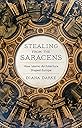
Stealing from the Saracens: How Islamic Architecture Shaped Europe
Product ID: 635951658
🌍Cross-cultural history revealed
📚197+ glowing reviews
🏛️Architectural heritage decoded
Desertcart purchases this item on your behalf and handles shipping, customs, and support to Greece.
🏛️ Discover the architectural secrets Europe doesn’t want you to miss!
Stealing from the Saracens reveals the profound impact of Islamic architecture on Europe’s most famous buildings, tracing cultural exchanges from the Middle East to medieval Europe. This critically acclaimed, beautifully illustrated book challenges conventional history with compelling research and has earned top accolades in religious and world history categories.
| Best Sellers Rank | 31,030 in Books ( See Top 100 in Books ) 43 in Religious History of Islam 142 in Religious History of Christianity 794 in World History (Books) |
| Customer Reviews | 4.7 out of 5 stars 197 Reviews |
S**S
Eye-opening and well-researched
Stealing from the Saracens is a fascinating read that challenges the traditional narrative of Western architecture. The research is thorough, and the connections drawn between Islamic and Gothic styles are compelling. A must-read for history and architecture lovers!
D**R
Comprehensive and informative
Comprehensive, well illustrated and full of 'Eureka' moments - at least for me. One of those rare books that you can't wait to finish but you don't want to finish.
A**L
A compelling read that reveals the Arabic and Islamic roots of European architectural heritage.
This erudite and compelling read reveals the largely ignored influence that Arabic and Islamic engineers and Architects had in creating our European (Christian) architectural heritage. I particularly enjoyed the chapter on how Sir Christopher Wren’s was inspired by what he called the ‘Saracen’ style of Gothic architecture. Well written with helpful photos & diagrams and a very clever title. 6 stars.
D**D
An overstated interesting hypothesis
A lavishly illustrated book containing an interesting but contrived hypothesis about the influence of Islamic architecture on Western architecture, in particular the Gothic medieval buildings. While there is some virtue in exploring such stylistic and technical similarities between the West and Islam, the author is overstating her case by simplifying the direction of influence. She is overlooking the impact of the Roman and Byzantine construction techniques in Islam. In the early part of Arab rule, the skills of local Byzantine master builders and mosaicists were exploited, in order to produce the feats of Umayyad architecture in Syria and Spain. The Arabs were generous patrons but they did not discover such building and decorative techniques on their own. They too, borrowed from the rich Byzantine building tradition in the Fertile Crescent and Egypt, and later from the Persian Sassanid tradition. The Muslims would have added and improved these techniques in the following centuries. Nevertheless the initial know how was not generated by the Muslim Arabs but by the Syrian and other Christian subjects in their vast Empire, whom they skilfully employed to develop novel architectural expressions to glorify their new religion. The horseshoe arch was not invented by the Arabs, it was found in Visigothic Spanish Churches before their arrival , similar examples were also found in churches in Cilicia built in the 6th Century. The apse was not invented by the Arabs but was found in Byzantine buildings. The double arches were used by the Romans for aqueducts. Teams of Byzantine craftsmen were sent by the Emperor Nicephorus II Phocas to Córdoba at the request of the Caliph Al Hakam II, to decorate the complex ceiling of the great mosque , with mosaics on a gold background. Even later in the 11th Century, the Fatimid rulers of Egypt and Syria were using Armenian architects and masons from the Byzantine lands, to build their protective city walls and towers around Cairo. The walls derived from Roman models have survived to our days. These remarks however do not detract from the fact there was a great flowering of artistic and construction innovations brought by the Arabs, but to impute uniquely their influence for the elaboration of the Western Gothic style is a polemical exaggeration. The Gothic style developed from the Romanesque, though it might have acquired some Islamic ingredients. There was certainly continuous interweaving of architectural and other cultural influences in the Mediterranean regions, Sicily, Spain and the Levant, where both Westerners and Muslims came into close contact. It is fascinating to note that much later the Jews of Central Europe adopted the Moorish style to build their synagogues. She is a brave author who has developed over the years a great passion for the religious architecture of Syria and great respect for the Muslim culture. The take home message is , we need to supersede the usual logic of cultural antagonism, as there is a great deal of commonality than we would like to admit it, between the Western European and their Muslim neighbours, having traded and exchanged ideas for centuries.
C**A
Great book about little known influence of Islamic architecture on the West.
Great book. It’s contents are brilliant. It’s about the influence of Islamic architecture on Western historical iconic buildings like St Paul’s Cathedral snd Notre Dame. However, it’s never been acknowledged, so really stolen because the provenance has been covered up. The only complaint I have is that the text is hard to read, it’s too small and faint.
A**R
Fabulous book!
I loved this book, highly recommend!
M**I
A great Book Indeed
This is indeed a very well written book on the subject. Now if I may address the customer "docread" who wrote a very well composed review, I would like to draw his and the readers' attention to the fact that yes the Arabs indeed took from those civilisations before them and added to it and passed it on to others that came after them. "docread", as many others especially in the West, tend to forget that the Romans took from the ancient Greeks who in turn took from the Canaanite Phoenicians ( Alphabet! The Epic Of Gilgamesh which predates the Iliad by 1500 years! the first king of Thebes (Cadmus)! Even the name of the continent of Europe itself which is the name of the daughter of the Phoenician king of Tyre (King Aginor) who was, as the Greek legend goes, abducted by Zeus !), from the Egyptians, and from the Babylonians. Of course the Romans took also from the Punic/Phoenician Carthaginians after the destruction of Carthage for no apparent reason except, I'd dare say, pure envy of a city state that predated Rome by a few centuries! Also "docread" is forgetting that Syria from about 100 BC was ruled by Arab city states like The Abgars who ruled over Edessa and Oesrhoene from 134 BC (https://en.wikipedia.org/wiki/Abgarid_dynasty) and whose King Abgar V ( https://en.wikipedia.org/wiki/Abgar_V) was allegedly claimed to be the first king to correspond with Jesus Christ who sent him Mar Addai ( Thaddeus of Edessa). Emesa Too was Arab and ruled by the Samsigeram or ShamsiKaram Arab Priest Kings (https://en.wikipedia.org/wiki/Emesene_dynasty) from about 46 BC. the mother of Caracalla is Julia Domna a noble Arab lady from Emesa born in 160 AD ( https://en.wikipedia.org/wiki/Julia_Domna) , so was her sister Julia Maesa an Arab noble woman of antiquity . Aurantis (modern day Houran and it's capital Bozra) was Arab where the Roman Emperor Philip the Arab hailed from (https://en.wikipedia.org/wiki/Philip_the_Arab). All this leads to the fact that big tracts of Syria at the beginning of the 1st century AD were in fact ruled by Arabs and had a big Arab population who mostly became ardent Christians centuries befor the advent of Islam. readers should correct their views around this point where they think that (1st) there were no Arabs in Syria at the time of Jesus Christ and (2nd) that Christianity spread from messianic Jews to Greeks and Romans omitting and airbrushing history and leaving behind all those early Christians who became Christians much before Greek or Romans. I guess that when Arabs are involved, historical revisionism by the West is and has been the custom for centuries.
D**D
Brilliant study of the origins of our art and architecture
Indifferent health meant it was months before I got around to reading my Christmas books, including ‘Stealing from the Saracens’; I’m so glad I made the effort at last; it proved to be a life changing experience I’m glad not to have missed. The OED seems stumped by the etymology of the crucial word ‘Saracen’: different dictionaries and Wikipedia come up with different suggestions. So, you pays your money, and you takes your pick, and Arabist Darke opts for ‘sariq’ (a thief), so her title is a kind of pun: ‘stealing from the thieves’. The Oxford English Dictionary unkindly/unwittingly shoots Darke’s fox with this throw-away remark: ‘Saracenic: “By Sir C. Wren erroneously applied to Pointed or ‘Gothic’ architecture’”’; the underlying thesis of the book, based on extensive reported quotations from the ‘Parentalia’, is that Wren was, on the contrary, exactly right; though not himself an Arabist and little travelled, Wren would have been aware of the research of Laudian Professor Edward Pococke. Darke uses her wide knowledge of early (greater) Syrian monuments and abandoned churches, with passing advice on how to visit or notes on recent damage/destruction. Cloisters, pointed arches, trefoils, horseshoe arches, double arcades, blind arches, rose windows, tracery, stained glass, double domes and a host of other familiar details, she documents their spread from the Middle East to Europe, via a variety of routes including the crusades and Umayyad Spain. Her seemingly boundless knowledge and obvious enthusiasm make it hard to resist her argument, which is supported by numerous quotations and abundant, high-quality full-colour illustrations. Her breathtaking conspectus embraces the architecture of Venice, the Turkish master Sinan, and the unwitting spread of oriental influences through 19th-century architectural revivals and much more. On retirement, I took on learning Arabic as a project, because of the increasingly obvious cultural links between Europe and the neighbouring Arab world, so in many ways I was an ideal reader for Darke’s book; she amply confirmed me in the view that far from being in conflict, each of the cultures provides a vantage point from which to view the other.
L**E
Histoire de nos édifices religieux
Pour ceux qui connaissent un peu l'anglais, niveau de langue raisonnable, iconographie remarquable, théorie des plus intéressantes. Indispensable pour les curieux des courants d'idée au Moyen Âge. Vocabulaire technique bien expliqué dans le glossaire.
F**E
Great book
A must have book for those interested as a reference. Can see an introduction by the author on YouTube for more information on what to expect in the book.
B**S
Buen libro. Presentación deplorable.
El libro tiene mucha información y muy buena pero llegó en mal estado. Páginas dobladas, portada descolorida y manchada por humedad y maltratada de la parte baja del lomo. Lo peor es que es para un regalo. Pésima presentación.
H**.
Must read book!
This is an amazing book, a must-read if you are interested in the origins of gothic and Christian architecture. This should be a mandatory read for the history of architecture classes.
R**O
A feast for the intellect and a treat for the eyes
Who knew? Who knew that the Gothic Cathedrals of Europe, so deeply associated with christianity, were in fact inspired by Islamic architecture. Who knew? Christopher Wren knew. Christopher Wren (1632-1723) was the English architect who was commissioned by King Charles II to spearhead the rebuilding of St. Paul's Cathedral, which had been nearly destroyed in the Great Fire of London, in 1666. Christopher Wren is among the heroes of "Stealing from the Saracens: How Islamic Architecture Shaped Europe" by Diana Darke. If you have the slightest interested in architecture, in world history, or in religion, you'll find much to enjoy in this imminently readable book. The author is a first-rate historian who specializes in Middle East studies and in ancient architecture, and a fine writer to boot. At 390 pages and beautifully illustrated, this book is as much a feast for the intellect as it is a visual treat for the eyes. The original St. Paul's was one of the more majestic examples of Gothic architecture in Europe. Unfortunately, Christopher Wren did not appreciate Gothic architecture--which favored ornate pinnacles, slender towers and prickly steeples, and in their place erected a majestic dome--an engineering triumph that made him the bane of parishioners, who wanted their cathedral rebuilt exactly as it had been before the fire. Nonetheless, Wren's dome lived on to become one of London's most iconic landmarks. Christopher Wren was as much a student of architecture as he was England's greatest architect. It was he who discovered that Europe's majestic Gothic cathedrals were in fact inspired by the Mosques the Muslims had been building for hundreds of years in the middle east. He wrote, "the Gothic style should be more rightly called the Saracen style" (note, the word 'Saracen' has dropped from our vocabulary, but in Wren's time it was commonly used as a pejorative term to describe Arab Muslims, particularly Spanish-Arab Muslims). Writes the author: "While recognizing the Saracen origins of Gothic, Wren himself was no fan of the Gothic style, dismissing its weak roofing, its poor construction, and its fiddly decor and ornamentation. . . ." Further on, she writes: "If Wren's theory is right, that the origins of Gothic are Islamic, it would mean the Muslims provided the inspiration for what Christianity regarded as its own unique architectural formula--a most inconvenient truth." The author spends much of her book proving that Wren's theory was indeed right, and traces how it happened, beginning with the collapse of the Ulmayyad dynasty in 750 CE. The Ulmayyads were builders, who created a rich legacy of architecture in the Syrian city of Damascus--mostly mosques and grand palaces, as well as a sophisticated system of canals and reservoirs to capture, store and transfer fresh water into the desert city. After their violent overthrow, the surviving Ulmayyads fled Damascus, crossed over Northern Africa, and relocated in Spain, where they established a new political base in Cordoba. There, they built a number of mosques and grand palaces, many of which still stand today. Having gained a foothold in Spain, their architectural influence soon spread into Northern Europe, beginning in 12th century France, with the construction of the famed St. Denis Basilica. As with so many Gothic cathedrals to follow, the stone masons who designed and built it were Muslim craftsmen who had followed the Ulmayyads into Spain, and who passed their knowledge onto a host of European apprentices. They had long since mastered the art of stone-cutting and sophisticated building techniques that, in the centuries to follow, would lead to ever taller and more dramatic Gothic cathedrals, far surpassing anything seen up to that time. In the early chapters the author examines middle east architecture and how it evolved from ancient civilizations, and came to full flower during Islam's Golden Age (900--1300 CE). Interestingly, a number of the mosques built during this time started out as christian churches and, curiously, as rulers came and went, switched back and forth between the two faiths. A prime example is the Dome of the Rock in Jerusalem, which the invading crusaders mistook for Solomon's Temple, and therefore believed it was a Christian church. Writes the author: "The Dome of the Rock represents the first power statement, a monument deliberately conceived to impress the mark of Muslim identity on Jerusalem and to proclaim Islam's dominance over the formerly Christian city." The building's magnificent golden dome was one of the engineering wonders of its day, and would prove highly influential on the many European building to follow. Another influential structure was the Hagia Sophia, originally built as a Christian church in sixth century Constantinople (modern day Istanbul). A complex structure topped by an elegant dome that dominates Istanbul's skyline, today it serves the followers of Islam as a Mosque. When designing the dome for St. Paul's cathedral, Christopher Wren used the Haglia Sophia dome as one of his models, in particular the interior framing. Such were the complexities of building a dome, the author devotes an entire chapter to how the engineering was developed and applied by master engineers, such as Christopher Wren. Wren's counter-part in the middle east was an architect and civil engineer named Mimar Sinan (1488--1588) who lived roughly a century before Wren. He was hailed as the Euclid of his time and one of its greatest engineers. Writes the author: "His contributions in the advancement of dome technology was of huge direct relevance to European architecture, since it went on not only to inform the techniques of Christopher Wren in building the dome of St. Paul's, but also to influence aspects of Italian Renaissance architecture." One of Sinan's engineering breakthroughs was the double dome--two half-shell structures--one fitting within the other, each one strengthening the other--that made giant domes such as St. Paul's possible. To Sinan and Wren the dome serves both mosque and church as a means of letting in more light, either through a central oculus or through windows in the vertical section supporting the dome, or indeed both, as at St. Paul's. The author describes the dome effect on true believers thusly: "From the inside, the worshippers could gaze up and marvel as his spirit rose, enjoying a sense of harmony and the sacred. From the outside, the dome was the embodiment of God's presence and power." Further on she writes: "Everyone built on everyone's knowledge in a constant synthesis of all the techniques and materials on hand, but East and West each interpreted their Romano-Bysantine inheritance in entirely separate ways. While European architecture after the Renaissance became endlessly focused on designing facades using the antique orders so beloved of Wren, Ottoman architecture under Sinan instead concentrated on achieving perfectly centralized unified domed spaces filled with light. Sinan's was a single-minded search for geometric purity of form, textured by masterful fenestration (i.e. the arrangement and proportion of windows) and the control of light and shade into a centralized space. The reason Middle East architects were able to build such complex structures--such as balancing a heavy dome on thinly supported walls-- was by their mastery of geometry. Indeed, Islam's Golden Age was a time of scientific advancement, financed by world trade. Through trade their ideas reached European centers of commerce such as Venice, as well as Spain and Sicily, and from there spread on into greater Europe. Another of their advancements was the development of glass, which would prove critical to the grand stain-glass windows that are the hallmark of Gothic cathedrals. The author sums up: "My purpose had been to show that no one 'owns' architecture, just as no one 'owns' science. There is no property in a scientific discovery. Everybody builds on what went on before. Once made, a discovery can be used and built upon by people from other cultures, and where it came from is, in a sense, ultimately irrelevant. When people talk about 'Greek science', 'Islamic science' or 'European science', this does not change the fact that whatever Greeks, or Muslims or Europeans discovered in the way of science is ultimately science, pure and simple. Double domes, pointed arches, ribbed vaults, etc. are all discoveries of architectural techniques that will, of course, subsequently be used and developed across cultures . . . "Except that architecture is not just science. Neither is it aesthetics. It is a deliberate choice, reflecting self-image, and in the case of public and historic buildings, it is closely tied to national identity. As such, architecture can be, and clearly already has been, co-opted into culture wars. Such wars can play out within cultures, such as the Neo-classicism versus Neo-gothic that Wren struggled with all his life when building St. Paul's which (here she quotes Wren): being contrived in the Roman style, was not so well understood and relished by others, who thought it deviated too much from the old Gothic form of cathedral churches, which they had been used to see and admire in this country. Others observed it was not stately enough and contended, that for the honor of the nation, and the city of London, it ought not to be exceeded in magnificence, by any church in Europe." Such is the price of being ahead of your time. Truly, "Stealing from the Saracens: How Islamic Architecture Shaped Europe" is a wonderful book that will absorb your imagination indefinitely, as it has mine.
Trustpilot
4 days ago
1 month ago