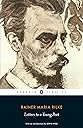
Letters to a Young Poet: Rainer Maria Rilke (Penguin Classics)
Product ID: 62111993
Desertcart purchases this item on your behalf and handles shipping, customs, and support to Greece.
At the start of the twentieth century, Rainer Maria Rilke wrote a series of letters to a young officer cadet, advising him on writing, love, sex, suffering and the nature of advice itself; these profound and lyrical letters have since become hugely influential for writers and artists of all kinds. This book also contains the 'Letter from a Young Worker', a striking polemic against Christianity written in letter-form, near the end of Rilke's life. In Lewis Hyde's introduction, he explores the context in which these letters were written and how the author embraced his isolation as a creative force. Charlie Louth's afterword discusses the similarities and contrasts of the two works, and Rilke's religious and sexual wordplay. This edition also contains a chronology, notes, and suggested further reading. Review: Soul of a wonderful poet - I finished this little book, and then I read it again. I am blown away. I am fascinated with the soul of a magnification poet, artist. These letters are mesmerizing reading for a writer, or for one who wants to be a writer. There are 11 letters in the book. 10 of them are written to Franz Xaver Kappus,(a Schwab German in Austrian-Hungarian Empire), between years 1903 and 1908. The other one is written to Belgium poet Emile Verhaeren from a factory worker (a fictive person) in 1922. These letters are not intended to be compiled and turned to a book during his lifetime. Rilke died in Switzerland 1926. They were published after his death in 1929, yet it is his most read book. Book is made up of five sections. 1- Chronology 2- Introduction 3- Letters to a Young Poet 4- The Letter from The Young Worker 5- Afterword by the translator Charlie Louth Chronology is very nice. One should, and does come back to read it again, to have a better grasp and digestion of Rilke's life. I am in favor of placing chronologies always at the end. Chronology is more tastier when reader finishes author's work first, and has some wonders about author's life in his head. Reading it before feels cold, not engaging. Rainer Maria Rilke was born to German family in Praag, Bohemian State of Austrian-Hungarian Empire in 1875. He enters Military Lower school in 1886, then moves to Military Academy in 1890. He leaves the academy without finishing. He starts studying trade, and commerce, and leaves again without completing. He seems to be having a drifting life. His father advises him to be civil servant at state to have settled job. It is just wonderful fortune to literature world that he did not follow this advise. He appears to love travelling; Paris, Venice , Tunisia, Berlin, Russia, Switzerland. It was a lovely surprise for me to find out that Rilke had also relation with Russian psychoanalyst Lou Andreas Salome. ( Nietzsche fell in love with her, but got rejected. Freud was said to have romantic relation with her too. ) Introduction written by author Lewis Hyde, and it is a misfit to this book. It is unclear and not an enjoyable reading, and feels without substance. Reader gets a relief reaching letters part. (Lewis Hyde should learn from Rilke.) Franz Xaver Kappus is eight years younger than Rilke, and studies in the same Military Lower school. He wants to be a poet also, and is having paradoxical feelings about his future. One day while reading a book of Rilke, a Professor of the school approaches him grab the book. Professor recognizances Rilke's name, tells to Kappus that he also studied there. This triggers Kappus to send Rilke his poems to get feed back. Kappus thinks Rilke must have the similar paradoxical feelings between following a military carrier or becoming a poet. It looks like Rilke loves, and pays great attention to these letters. I think it was for two reasons. 1- Now someone is asking his advise who has the same paradoxical feelings about his future as he had by then. So he has great sympathy for Kappus. 2- This is also an opportunity to unleash his soul and experiences, practices. Letters are great work of literature where he opens up his soul, shares his wisdom, and practices. Through out the letters he emphasizes patience, one's own deepness, solitude. His dislike with the ordinary, mundane, cheap is obvious. He writes about how a poet should find what he is looking for. Letters are written in aphoristic style. They reminded me Nietzsche, but with a soul of a poet. Reader feels his breath, presence. He is a fulfilled, peaceful, life enjoying artist. Here is one of his lovely advise. [ You are a young, all still lies ahead of you, and I should like to ask you, as best I can, dear Sir, to be patient towards all that is unresolved in your heart and to try to love the questions themselves like locked rooms, like books in a foreign tongue. Do not now strive to uncover answers; they cannot be given you because you have not been able to live them. And what matters is to live everything. Live the questions now. Perhaps then you will gradually, without noticing it, live your way into the answer, one distant day in the future. ] You immediately notice the difference of style between 10 letters to Kappus, and The Letter From a Young Worker. In this letter , he questions, challenges Christianity. Is it enhancing the human life or not? His language sounds more modern, logical, and less tasty. I think by choosing a factory worker he shows his side on this polemic, production, labor, rationality, modernity. This was surprising for me. In The Afterword section, translator Charlie Louth has also very nice review of the letters. Review: Great book - Came Super quick, perfect condition and no complaints!

| Best Sellers Rank | 32,164 in Books ( See Top 100 in Books ) 2 in German Poetry (Books) 32 in Criticism on Poetry & Poets 157 in Essays, Journals & Letters |
| Customer Reviews | 4.5 out of 5 stars 860 Reviews |
A**L
Soul of a wonderful poet
I finished this little book, and then I read it again. I am blown away. I am fascinated with the soul of a magnification poet, artist. These letters are mesmerizing reading for a writer, or for one who wants to be a writer. There are 11 letters in the book. 10 of them are written to Franz Xaver Kappus,(a Schwab German in Austrian-Hungarian Empire), between years 1903 and 1908. The other one is written to Belgium poet Emile Verhaeren from a factory worker (a fictive person) in 1922. These letters are not intended to be compiled and turned to a book during his lifetime. Rilke died in Switzerland 1926. They were published after his death in 1929, yet it is his most read book. Book is made up of five sections. 1- Chronology 2- Introduction 3- Letters to a Young Poet 4- The Letter from The Young Worker 5- Afterword by the translator Charlie Louth Chronology is very nice. One should, and does come back to read it again, to have a better grasp and digestion of Rilke's life. I am in favor of placing chronologies always at the end. Chronology is more tastier when reader finishes author's work first, and has some wonders about author's life in his head. Reading it before feels cold, not engaging. Rainer Maria Rilke was born to German family in Praag, Bohemian State of Austrian-Hungarian Empire in 1875. He enters Military Lower school in 1886, then moves to Military Academy in 1890. He leaves the academy without finishing. He starts studying trade, and commerce, and leaves again without completing. He seems to be having a drifting life. His father advises him to be civil servant at state to have settled job. It is just wonderful fortune to literature world that he did not follow this advise. He appears to love travelling; Paris, Venice , Tunisia, Berlin, Russia, Switzerland. It was a lovely surprise for me to find out that Rilke had also relation with Russian psychoanalyst Lou Andreas Salome. ( Nietzsche fell in love with her, but got rejected. Freud was said to have romantic relation with her too. ) Introduction written by author Lewis Hyde, and it is a misfit to this book. It is unclear and not an enjoyable reading, and feels without substance. Reader gets a relief reaching letters part. (Lewis Hyde should learn from Rilke.) Franz Xaver Kappus is eight years younger than Rilke, and studies in the same Military Lower school. He wants to be a poet also, and is having paradoxical feelings about his future. One day while reading a book of Rilke, a Professor of the school approaches him grab the book. Professor recognizances Rilke's name, tells to Kappus that he also studied there. This triggers Kappus to send Rilke his poems to get feed back. Kappus thinks Rilke must have the similar paradoxical feelings between following a military carrier or becoming a poet. It looks like Rilke loves, and pays great attention to these letters. I think it was for two reasons. 1- Now someone is asking his advise who has the same paradoxical feelings about his future as he had by then. So he has great sympathy for Kappus. 2- This is also an opportunity to unleash his soul and experiences, practices. Letters are great work of literature where he opens up his soul, shares his wisdom, and practices. Through out the letters he emphasizes patience, one's own deepness, solitude. His dislike with the ordinary, mundane, cheap is obvious. He writes about how a poet should find what he is looking for. Letters are written in aphoristic style. They reminded me Nietzsche, but with a soul of a poet. Reader feels his breath, presence. He is a fulfilled, peaceful, life enjoying artist. Here is one of his lovely advise. [ You are a young, all still lies ahead of you, and I should like to ask you, as best I can, dear Sir, to be patient towards all that is unresolved in your heart and to try to love the questions themselves like locked rooms, like books in a foreign tongue. Do not now strive to uncover answers; they cannot be given you because you have not been able to live them. And what matters is to live everything. Live the questions now. Perhaps then you will gradually, without noticing it, live your way into the answer, one distant day in the future. ] You immediately notice the difference of style between 10 letters to Kappus, and The Letter From a Young Worker. In this letter , he questions, challenges Christianity. Is it enhancing the human life or not? His language sounds more modern, logical, and less tasty. I think by choosing a factory worker he shows his side on this polemic, production, labor, rationality, modernity. This was surprising for me. In The Afterword section, translator Charlie Louth has also very nice review of the letters.
K**Y
Great book
Came Super quick, perfect condition and no complaints!
F**L
Four Stars
Good product delivered promptly.
S**B
Excellent Book, Incredible Translation!
I've read this before, but the incredible thing about Rainer Maria Rilke, is that if it's a different translation, you could end up with a different book. This book was an amazing addition to my stock of Letters to a Young Poet, an amazing read, highly recommend for others wanting to learn more about philosophy - which is my biggest takeaway. This book is an easy read and I often find myself coming back to it for a little top-up when I need some guidance..
N**T
Astonishingly wise and exuding with love.
So much wisdom in here, delivered with love. One of my favourite books.
D**D
Very, very dated...
Not really relevant unless you happen to be a poet...
A**E
A change in reading literature
Read a couple of chapters bit tough going but I like it so will continue. Not my normal reading but fancied a change
J**A
gorgeous writing from a gentle genius
If you are write or create or are simply interested in the human condition, get this beautiful book. Rilke was a gentle genius. Reading his letters is like opening a window and letting the air and sunshine into a room. His words will stay with me for a long time.
F**.
A powerful and beautiful read
This is the first ever classic book I read. Actually, I was very intimidated when I started this book. But actually it's really a easy read. There are some philosophies in this book that we don't understand. But I googled that phrases/sentences/paragraphs and I got the meaning. I think this book will be more enjoyable to the aspiring writers. This book discusses many aspects. Solitary,loneliness,love,relationships, sadness,happiness, and many more things. I loved this book. As for the quality of this book, I got this book in an excellent condition ❤️
E**O
Bueno
Genial
F**I
Uma lição de vida em poesia e escrita
Excelente estado, conteúdo essencial
D**Z
Arrive en bonne état
La qualité des pages sont bien et c’est bien arrivé
B**E
Timeless Inspiration
A profoundly beautiful collection of letters that every creative person should read. Rilke’s insights on solitude, patience, and the artistic process are timeless. This Penguin Classics edition features a wonderful translation and a great introduction.
Trustpilot
3 weeks ago
5 days ago