
Desertcart purchases this item on your behalf and handles shipping, customs, and support to Greece.
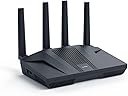
🚀 Dominate your digital world with the Flint 2 — speed, security, and control in one sleek router!
The GL.iNet GL-MT6000 Flint 2 is a cutting-edge Wi-Fi 6 dual 2.5G VPN router designed for professionals and gamers alike. Featuring ultra-fast 6 Gbps speeds, 8-stream Wi-Fi 6 technology, and robust VPN support with WireGuard and OpenVPN up to 900 Mbps, it guarantees low latency and secure connections. With AdGuard Home for ad and tracker blocking, plus the capacity to handle over 100 devices, this router delivers exceptional performance, security, and control for demanding digital lifestyles.
| ASIN | B0CP7S3117 |
| Antenna Location | Gaming |
| Antenna Type | Retractable |
| Best Sellers Rank | 2,065 in Computers & Accessories ( See Top 100 in Computers & Accessories ) 23 in Routers |
| Box Contents | Ethernet Cable, GL-MT6000 router with 2-years warranty, Power Adapter (EU+UK Plugs), User Manual |
| Brand | GL.iNet |
| Brand Name | GL.iNet |
| Colour | Black |
| Compatible Devices | Computers, Mobile Devices |
| Compatible devices | Computers, Mobile Devices |
| Connectivity Protocol | Wi-Fi |
| Connectivity Technology | Wi-Fi |
| Control Method | App |
| Controller Type | App Control |
| Country of Origin | China |
| Coverage | Long Range |
| Customer Reviews | 4.5 out of 5 stars 3,138 Reviews |
| Data Transfer Rate | 6000 Megabits Per Second |
| Frequency | 5 GHz |
| Frequency Band Class | Dual-Band |
| Frequency band class | Dual-Band |
| Has Internet Connectivity | Yes |
| Has Security Updates | Yes |
| Is Electric | Yes |
| Is Modem Compatible | No |
| Item Dimensions L x W x H | 23.3L x 13.7W x 5.3H centimetres |
| Item Highlight | Wi-Fi 6 6 Gbps, 8-stream, 2.5G WAN and LAN, WireGuard 900Mbps, OpenVPN 880Mbps, AdGuard Home |
| Item Weight | 761 Grams |
| LAN Port Bandwidth | 2.5 Gbps |
| Manufacturer | GL.iNet |
| Manufacturer Part Number | GL-MT6000 |
| Maximum Upstream Data Transfer Rate | 6000 Megabits Per Second |
| Model Name | GL-MT6000 |
| Model Number | GL-MT6000 |
| Model name | GL-MT6000 |
| Number of Items | 1 |
| Number of Packs | 1 |
| Number of Ports | 6 |
| Operating System | Linux |
| Other Special Features of the Product | 8 Stream Wi-Fi 6 |
| Product Warranty | 2 years |
| RAM Memory Installed | 1 GB |
| Router Firewall Security Level | Advanced |
| Router Network Type | hybrid |
| Security Protocol | WPA3 |
| Special feature | 8 Stream Wi-Fi 6 |
| Unit Count | 1.0 count |
| Voltage | 5 Volts |
| Wi-Fi Generation | WiFi 6 |
| Wireless Compability | 802.11ac, 802.11ax, 802.11b, 802.11g, 802.11n |
| Wireless communication standard | 802.11ac, 802.11ax, 802.11b, 802.11g, 802.11n |
T**M
Powerful, Flexible and Remarkably Easy to Set Up
I bought the Flint 2 to replace the ZTE router supplied with my Hyperoptic 1Gb broadband service. The original router had been extremely reliable, but its restricted network configuration made it unsuitable for what I wanted to achieve—particularly running my own DHCP arrangements and having greater control over gateways and VPN routing. The Flint 2 was delivered, updated to the latest stable firmware and connected directly to the Hyperoptic service. I had the internet connection and my existing network running again within about fifteen minutes. No specialist ISP settings or credentials were required; the router obtained its connection automatically. What has impressed me most is the software interface. Despite offering far more control than the typical ISP-supplied router, it is clearly presented, intuitive and remarkably easy to navigate. Configuring the DHCP address range so that it would not conflict with my manually addressed workstation, Synology NAS and Cisco switch was completely straightforward. The hardware specification is also excellent for the price. The two 2.5Gb Ethernet ports allow a full-speed connection between the router and my network switch, while my workstation and NAS continue to communicate through their separate 10Gb connection. Built-in support for both WireGuard and OpenVPN is particularly useful, as I use Private Internet Access and wanted VPN routing to be handled by the gateway rather than placing that burden on the NAS. This is not a simplistic plug-and-forget router: there is considerable additional functionality available through its OpenWrt foundation for anyone who wants to explore it. Crucially, however, none of that complexity gets in the way of the basic setup. The everyday controls remain approachable while the more advanced facilities are there when required. It is still early days, so I cannot yet comment on its reliability over months or years. My initial experience, however, has been excellent. The Flint 2 replaced my ISP router with very little fuss and has given me substantially more control over my network without making routine administration unnecessarily complicated.
M**R
Good range. Fully compatible with OpenWRT.
I bought this router specifically because of its compatibility with the latest version of OpenWRT. Even the pre-installed firmware is basically OpenWRT with a simplified web interface put on top. You still have access to luci (and the full OpenWRT experience) from the simplified interface though. This makes the router equally good for "normal" users who want to rely on the simplified interface, but also "pro" users who want to use the this router to its full potential. The router is already pre-configured with a 2.4GHz and 5GHz wireless network and the ability to easily create a 2.4GHz and 5GHz guest wireless network. Since the preinstalled firmware is not based on the latest version of OpenWRT, I decided to flash the latest version of OpenWRT instead. Flashing the firmware was straightforward and could be done directly from the web interface. Everything worked as expected. The OpenWRT documentation is very clear and guides through the steps needed. GL.iNet GL-MT6000 in combination with OpenWRT really puts the power in your hands. It is easy to configure different networks to enhance the security of your home networks. For instance you could have a network for devices you don't trust much and only allow them to connect only to the internet and optionally not even be able to connect to each other. Then another network for instance for you echo devices. Then your own main network. This is just an over-simplified example of course, and it just scratches the surface of what is possible. There are plenty of guides online on how to setup wireless networks, VLANs, etc. with OpenWRT. I also noticed that the wireless range with this router is better than my old ASUS RT-AC3200 and I can finally connect reliably with a single router to all my wireless security cameras. My old router had started to struggle and often the wireless networks started going down, but everything is stable with the GL.iNet GL-MT6000 router. When checking the amount of memory and CPU used, the load is still very low. Another advantage is that since you can directly flash OpenWRT, you don't have to worry about the vendor stopping releasing firmware updates. You can just download the latest version of OpenWRT and flash that one. Well, as long as the router is still supported by OpenWRT of course, but that's normally way beyond the support offered by the vendors anyway. The antennas can only rotate by 180 degrees. So the go from being fully closed on top of the unit, parallel to it, to being fully flat in the back (so that they are vertical if you wall mount the router). Overall, I am really pleased with this router and I still have not used all its capabilities. I cannot yet comment on the durability, but I wil update this review if anything bad happens.
A**R
So far the best router I've ever owned
I stopped using and relying on ISP provided routers and popular consumer routers like netgear and asus a few years back after going through years of issues and struggles. I switched to a more hobbyist setup of Tomato firmware and openwrt and then ASUSMerlin, where you install community software on consumer hardware. This was immediately better and I relied on this for a few years but found the hardware aging and slow, and the community software either getting abandoned or very slow to get updates to fix bugs. I ended up switching to a more complex but much more reliable combination of Unifi and Mikrotik which served me will until this year, however I again needed a hardware refresh to allow me Wifi6 and also had been struggling with VPN customizations often breaking on the mikrotik for the past year, where I ended up introducing more hardware - a GL.INet low end router for the ease of configuration especially in terms of VPN. I was about to buy a new Wifi Unifi access point to replace my current one and figured I'd look around at what else was around. Then I discovered the GL.iNet Flint 2 for the same price as the Unifi access point. Seeing it does Wifi6, plus the software capabilities I already depend on for things like VPN, AND 2.5G ethernet ports, it seemed like an upgrade for all 3 separate pieces of hardware I was relying on. SO I bought it. Indeed I have now disconnected my Unifi access point, my gigabit Mikrotik router and my existing GL.iNET router. The Flint 2 is doing all 3 things at a fraction of the price (accumulatively). My wifi speeds went from 88mbps to 400 Mbps (and that's whilst using Wireguard VPN in both cases), my configuration is much simpler, and my "network cabinet" has just reduced a 3rd in size. Outstanding. My network speeds (specifically from one ethernet device reading and writing to another ethernet device - my NAS) went from 1.19 MB/s read and 0.73 MB/s write to 3.52 MB/s read and 3.78 MB/s write. (Cat6 ethernet cables and gigabit intermediary switch in both cases). Incredible. I'll continue to use this for a while to see how it goes, but so far it's looking promising. I did have 3 smarthome devices that failed to continue with the SSID changed to be the same as the old access point, but resetting all 3 devices fixed them without issue, and they seem fine now so was probably just them being weird, and all my other devices transitioned without issue. My next plan is to further reduce the network hardware I'm relying on, and getting rid of another router I use for a non-vpn network - as I've been testing out the VPN policies provided by the Flint 2, and it makes it easy to force a device to use VPN or not based on mac address/ip/vlan and so far that's been working great. If that works out, I'll be replacing 5 network devices with a single GL.iNet Flint 2. Insane. I wish this device existed years ago, it'd have saved me a lot of headache, time and sunk cost. Edit: six months later I have realised that the WiFi has gotten much worse and prevents me from gaming or game streaming entirely despite speed tests showing around 260/250 I constantly get dropped frames and disconnects, whereas it wasn't an issue before. Using ethernet I gave no issues though. I'm not sure why, I haven't had the chance to play much since buying the flint 2 but I'm fairly sure there was no issue originally with the flint 2. I'm now wondering if I need to buy a unifi access point again.
C**W
Secure, Powerful, and Worth the Effort
This router has truly proved to be an efficient, powerful, and remarkably flexible piece of kit. I initially planned to use the Flint 2 simply as a VPN front-end for my existing Google Nest WiFi mesh system, allowing the Google hardware to handle the Wi-Fi. However, once I started the setup, I quickly realized the Flint 2 was capable enough to stand on its own, and I opted to remove the entire Google mesh network and use the Flint 2 exclusively. The performance has been exceptional. Performance & Features VPN Excellence: The WireGuard client performance with my Surfshark subscription is stellar. The ability to run full-speed VPN and configure Domain-based Split Tunneling (to exclude services like Netflix, Disney+, BBC iPlayer, ITVX, and Channel 4) directly on the router is a game-changer for UK streaming. AdGuard Home: The integrated AdGuard Home feature provides network-wide ad and tracker blocking, creating a cleaner, faster browsing experience across all devices. Network Segmentation: I appreciate the ability to use a Guest Network for low-trust IoT devices (switches, smart plugs) for superior security, keeping my high-value devices segregated on the main network. The Learning Curve (Why it's not 'Plug and Play') To be transparent, this is not a product for beginners. It is a powerful piece of hardware that requires an understanding of network principles to unlock its potential. As the manufacturer states, it's not a plug-and-expect-everything-to-work device. It has taken a couple of days of focused tweaking to get every setting perfectly optimized (especially integrating the VPN, AdGuard, and resolving connectivity issues on devices like Google Nest Hubs due to advanced Wi-Fi features). The Gemini Advantage: This is where modern AI assistance (specifically Google Gemini) made setting things up a breeze. By feeding the logs from both the Flint 2 and AdGuard directly into Gemini, I received simple, step-by-step instructions and troubleshooting advice to resolve tricky blocking and Wi-Fi compatibility issues. As someone with a technical background, Gemini made the configuration process highly efficient and straightforward. Conclusion: I absolutely do not regret buying this. It has replaced a complex mesh network with a single, highly capable device. The flexibility and raw performance are outstanding, and I am confident that my home network is now fast, highly secure, and optimized for both privacy and streaming performance. If you have some technical knowledge and want the absolute best control over your home network, the Flint 2 is the clear choice.
F**Y
🌟🌟🌟🌟🌟 Absolutely Unmatched – Hidden Features That Make This a Dream!!!!
If I could give this 10 stars, I would. This isn't just a router — it's a full network control centre hiding in plain sight - even for me that knows next to nothing about networks. I bought the GL.iNet Flint 2 expecting decent Wi-Fi and a few nice extras, but this thing has completely changed how I run my home network. --> Here's what nobody is talking about in the reviews: 1. Drop-In Gateway Mode (The “Secret Weapon”) This feature lets you add the Flint to your existing network without replacing your old router — and still get full control over everything. This should be one the front of the box as it is mind blowing!! That means: - No weird setup clashes - No “double NAT” problems (where you have two routers trying to be the boss) - No IP conflicts - No headaches I was able to move all my smart home gear over to the Flint (like cameras, sensors, smart plugs, etc.) without touching my old PlusNet router settings. It just worked — like magic. I still do not have nay idea how they did this! 2. Built-in NAS (Network Attached Storage) I plugged in a USB solid-state drive (SSD), and within 30 seconds, I had a shared network folder for my whole house. No extra software. No technical setup. It's like having a mini file server built right into the router. The only thing it will not do is file sync between devices, but hey, bung a 1Tb USB3 SSD onto this and you have a discount network storage system, you cant have it all. 3. Tailscale, AdGuard, and VPNs – Built In!!! These just work, and using the Drop-In Gateway Mode, this all just happens behind the existing router. It is mind blowing, this all just works with the existing IPS provided router sitting there with no idea all this is going on! - Tailscale: Secure, encrypted connection to your home network from anywhere in the world. Works across phones, tablets, laptops, even while on 4G or public Wi-Fi. No port forwarding needed. ---> One note on this: You can't set Tailscale as an exit node in Drop-In Gateway Mode, which is a bit annoying. Suppose it just is not able to configure enough settings to run this way when it is not in main control? But...it works a dream as an exit node once it is the main router. That means any device with Tailscale can connect to, and use your home network securely from anywhere in the world, which is amazing! - AdGuard Home: Blocks ads, trackers, and malware at the network level. All devices benefit automatically — no need to install ad blockers on each one. - WireGuard & OpenVPN: These are VPN (Virtual Private Network) options that protect your traffic and can let you appear as if you're browsing from home when away. Great for remote working, bypassing restrictions, or accessing local devices securely. 4. Full OpenWRT Access for Advanced Users If you know what OpenWRT is (a Linux-based open-source router OS), then you already know why this is amazing. You can: - SSH into the router - Install custom packages (like fail2ban, iperf, etc.) - Tweak firewall rules - Monitor logs in real time It’s like having your own little Linux server at the heart of your network. This router should be called “The FlintForge” — it’s a network Swiss Army knife disguised as a consumer router. This is the first product I’ve bought in years that exceeded every expectation. I’ve already ordered another for a family member, and I’m not done yet. If you're even slightly technical — or just want more privacy, more speed, and total control — this is the best 100 odd quid you’ll ever spend.
S**D
Best in class
Another amazing GL.iNet product. It is safe to say this is the direct bigger brother of the GL-AXT1800, the Slate AX Wi-Fi 6 Travel Router i own in terms of the basic features, but it can do a whole lot more. FYI is uses the same GUI webpage for administration, so anyone with previous experience will have no issues. For starters the WiFi signal is nice and strong and more importantly stable thoughtout the day. Throughput is consistant and i have not noticed any real data drops. Whilst i cannot completely describe in details what i use the router for, I will say that the support for OpenVPN and WireGuard is the same reliable form as the travel router. As technical information only, if you were attempting to place yourself in a different country using vpn to obfuscate site and app country locks, this router will lock all traffic to the VPN tunnel only and not allow DNS leak, which is where most routers fail. This router runs in many modes, however its party trick (as with the GL-AXT1800) is acting as a repeater but using the Ethernet LAN uplink port (also you can used WiFi as either a primary or a secondary source (Backup to LAN)). This is where this router stands out as best of class in features as well as price point for devices in this class. If you are slightly interested in Tech and were looking for a router that has more features that you can shake a stick at this is the one to buy.
B**P
Great Router-Has all the Bells & Whistles, but Advanced Features Are Outside of the Basic Interface
Had this for 4 weeks, but have had issues with anything more complicated than an out of the box setup. There are 3 types of users in my opinion: 1) Simple: Users that just want everything to work out the box, with no grief and easy setup and no complicated requirements. 2) Simple +: As above but like more an more people today may have WiFi cameras and 'Smart' devices and who need a little more, like being able to create an IoT network to isolate all these devices away from their main network for security reasons. Also, especially as many cameras need resetting if the SSID or password ever changes, often losing all their settings, to say nothing of manually having to get to the camera and reset them manually (a la up the ladder type of thing). 3) Power User: Those that may have more complex networking requirements who really want to take advantage of the Flint 2's advanced features. The issue is that although this is a very well-spec'd piece of hardware, a solidly built router with a 2.0 GHz processor and oodles of memory, the software side of things is lacking. Ok for the simple user - GL have designed a simple interface accessed via App or browser that can set up the default main and Guest WiFi easily and get you connected in a few simple steps. But anything more than this will require you to launch the advanced Luci interface. This is where problems can happen as not everything implemented here are reflected in the GL GUI. It's because GL have provided their interface to keep it simple and the version of OpenWRT provided means that some later commands don't work and changes made don't show in the main GL GUI, which causes confusion. I.e. Trying to create an IoT network is not possible in the GL GUI with the current firmware without going into Luci or using a terminal to enter commands or scripts. This not for the feint hearted and is the subject of much debate on Forums, as GL are marketing this as a consumer router, but providing advanced features. Fair play to them, but the software development is seriously lacking at present. I've still not been able to create my IoT networks yet because of incompatibilities with the various OpenWRT versions and the lack of support. Having said that, they are planning to provide native IoT support int he interface with Version 4.9x of the firmware later this year. As for features, the included Adguard is brilliant for blocking Ads and other tracking behaviour from your devices, especially if you have a smart TV, Roku and anything else that likes to 'Dial home to ....' - it just works brilliantly and allows custom filters and rules to be setup at will, unlike the TP-Link routers that put anything like this behind a paywall! This router has great capabilities and loads of fallback features allowing tethering and connection of internet backup devices, and loads of plugins available given it built to run OpenWRT. So as long as you understand that anything more advanced than basic operation may need a huge learning curve. GL.inet do need to get the software side of things more stable and comprehensive to allow simple IOT creation on the fly without being a rocket engineer.
G**E
Why I Replaced My Asus Router with the Flint 2
After using an Asus RT-AC86U for several years, I started running into limitations. While it was generally stable, it lacked native support for WireGuard VPN, and relied on Merlin firmware, which eventually dropped support for this model. I was also seeing frequent Sonos speaker dropouts and occasional issues with Tado smart heating connectivity. Around the same time, I had started using a GL.iNet Beryl AX (MT3000) while abroad and was impressed by its intuitive web interface and the ease of setting up VPN tunnelling. That experience led me to replace my Asus with the GL.iNet Flint 2, which offered similar software but with far more power and flexibility for a main router. VPN Server – Secure Tunnel to Remote Router One of my main goals was to build a WireGuard VPN tunnel between the Flint 2 and the Beryl AX, located abroad. This setup has worked extremely well: The Flint 2 acts as a WireGuard server, and the Beryl connects as a client. I have full access to my UK network from abroad without relying on cloud services or complex port forwarding. The connection is persistent and stable, with no need for manual reconnection. Low-Latency Streaming Locally, the Flint 2 also performs well under low-latency use cases. I stream games from a Windows laptop (first floor, wifi) to an Nvidia Shield TV (ground floor, wifi) using Sunshine and Apollo. Even across floors and mixed connections, I consistently see 1–2 ms latency, and gameplay is smooth and responsive. Smart Home – Sonos and Tado Now Stable Since switching to the Flint 2, I’ve had no more issues with my Sonos system or Tado smart heating. Devices connect and stay connected reliably, even across restarts. I haven’t needed to troubleshoot dropouts or re-pair devices since the switch. Additional Notes I’ve configured scheduled reboots at 5:00 AM daily, which helps keep memory usage stable (typically under 70%). Firmware updates have been reliable so far. The user interface is the same as the Beryl AX, which was one of the reasons I chose the Flint 2, as there is no need to learn a different UI just because I upgraded to a more powerful router. Advanced settings are available via LuCI if needed, but for most cases, the main interface is more than sufficient. Overall, the Flint 2 has cleanly replaced my older Asus setup while solving several recurring issues. It offers stable WireGuard performance, supports my smart home devices without problems, and handles low-latency LAN streaming better than I expected. The fact that I could stay within the same GL.iNet ecosystem as my Beryl AX made the transition seamless. If you're already using a GL.iNet travel router and want the same experience in a more capable home setup, the Flint 2 is a solid option.
掛**俊
ちゃんととどきました。
ちょっと箱の角1カ所にに押されたようなあとがありましたが軽微でなかみにはたっしてませんでした。返答もはやくてよかったです。
M**E
Mycket bra
Mycket bra
B**E
Das Beste aus zwei Welten: Power-Hardware mit echter Open-Source-Seele
Nach intensiver Recherche habe ich mich bewusst für den GL.iNet Flint 2 (MT6000) entschieden und bin absolut begeistert. Dieses Gerät ist die perfekte Symbiose aus roher Leistung und der Freiheit, die nur ein wirklich offenes System bieten kann. Die entscheidende Wahl: MediaTek statt Qualcomm Meine Kaufentscheidung fiel ganz gezielt auf den Flint 2 wegen seines quelloffenen MediaTek (ARM) Prozessors. Im Gegensatz zum neueren Flint 3, der einen Qualcomm-Chipsatz verwendet (welcher 500Mhz weniger Takt bietet), wird der MediaTek-SoC des Flint 2 erstklassig und direkt vom offiziellen OpenWrt-Projekt unterstützt. Für mich als Enthusiast, der die volle Kontrolle und Aktualität eines "Vanilla" OpenWrt sucht, war das der entscheidende Faktor. Während der Flint 3 auf die (sehr gute) Hersteller-Firmware angewiesen ist, die auf OpenWrt basiert, aber bei Updates etwas hinterherhinkt, habe ich hier die Freiheit, jederzeit die neueste, offizielle Version zu flashen. Performance & Stabilität – Absolut überzeugend Schon mit der hauseigenen GL.iNet-Firmware merkt man, was in diesem Router steckt. Die Quad-Core-CPU langweilt sich im Normalbetrieb förmlich (Load Average nahe Null), was riesige Reserven für anspruchsvolle Aufgaben bedeutet. Ich betreibe eine Gigabit-Leitung, mehrere WLAN-Netze, anspruchsvolles QoS (SQM) und einen netzwerkweiten Ad-Blocker (AdGuard Home). Selbst unter Volllast bleibt alles pfeilschnell und die Latenz stabil. Abstürze oder Neustarts? Fehlanzeige. Das Gerät läuft seit der Einrichtung absolut felsenfest. Zwei Wege zum Ziel: Original-Firmware vs. Vanilla OpenWrt Hier glänzt der Flint 2 besonders. Die Original-Firmware von GL.iNet bietet bereits mehr Features als 99% der Router auf dem Markt. Die Einrichtung von VPNs, AdGuard Home oder Gastnetzen ist kinderleicht und funktioniert hervorragend. Für die meisten Power-User ist sie mehr als ausreichend. Für Enthusiasten liegt die wahre Stärke jedoch in der nahtlosen Installation von offiziellem OpenWrt. Die Installation war ein Kinderspiel: Einfach das sysupgrade-Image flashen, und schon hat man ein pures, schlankes System. Man profitiert von schnelleren Sicherheitsupdates direkt von der Community und hat die absolute Kontrolle über jedes Detail – von VLAN-Tagging bis zu komplexen Firewall-Regeln. Fazit: Der GL-iNet MT6000 ist eine Hochleistungs-Plattform für Anwender, die das Maximum aus ihrem Netzwerk herausholen wollen. Die Kombination aus brachialer Leistung, grundsolider Stabilität und der Wahlfreiheit zwischen einer exzellenten, benutzerfreundlichen Hersteller-Firmware und einem vollwertigen, offiziellen OpenWrt ist in dieser Preisklasse unschlagbar. Wer die Kontrolle will und sich für die Open-Source-Kompatibilität entscheidet, bekommt hier ein Gerät, das selbst Router schlägt, die das Doppelte kosten. Eine uneingeschränkte 5-Sterne-Empfehlung
O**N
Great router, even better support
When my GL-MT6000 (Flint 2) died after a power fault, GL.iNet's support team made the warranty process painless. Nikki answered quickly, walked me through the RMA, kept me updated the whole way, and even refunded my return shipping. The replacement showed up in great shape, and I'm back up and running today. The router itself is excellent. Wi-Fi 6 coverage is fast and reliable across my home, the ports handle everything I throw at them, and the admin panel is clean and easy to use. Built-in VPN support and AdGuard Home ad blocking are huge bonuses, and having OpenWrt under the hood means there's room to grow. It's a big step up from my ISP's gateway. Thanks again, Nikki and the GL.iNet team. I'd recommend them without hesitation. — Emanuel
C**N
El rey del OpenWrt y las VPN (Potencia bruta sin restricciones)
Buscaba un router que no me limitara con firmwares cerrados y este GL.iNet GL-MT6000 (Flint 2) es, sencillamente, una bestia. Si te gusta tener el control total de tu red, no hay nada mejor por este precio. Lo que lo hace especial: • Rendimiento VPN: Es capaz de mover WireGuard a velocidades increíbles (casi 900 Mbps según mis pruebas). Ideal si trabajas con privacidad o quieres ver contenido de otros países sin tirones. • OpenWrt de serie: Viene con una interfaz muy limpia y fácil de usar, pero si entras en el panel avanzado de LuCI, tienes todas las opciones del mundo. Es un paraíso para los que nos gusta "trastear". • Hardware potente: Con sus puertos de 2.5G y el procesador que lleva, gestiona decenas de dispositivos sin inmutarse. El alcance del WiFi 6 es sólido y estable en toda la casa. Comparativa rápida: A diferencia de marcas más tradicionales donde el software es rígido, aquí la libertad es total. Es un router pensado para durar años y adaptarse a lo que necesites (AdGuard Home, túneles VPN, etc.). Conclusión: Si solo quieres enchufar y olvidar, quizás te sobre router. Pero si valoras la privacidad, la velocidad en VPN y un hardware de primera con software abierto, el Flint 2 es imbatible. 100% recomendado.
Trustpilot
2 weeks ago
2 months ago