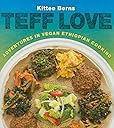
Teff Love: Adventures in Vegan Ethiopan Cooking
Product ID: 52062120
Desertcart purchases this item on your behalf and handles shipping, customs, and support to Greece.
For those unfamiliar with Ethiopian cooking, Kittee Berns is on a mission to demystify these delicous dishes, ibreaking through language and cultural barriers to show how these foods are traditionally prepared and served. Readers discover how to source the ingredients that are essential for replicating authentic Ethiopian dishes and learn several ways to make perfect injera without the need for special equipment. Kittee focuses on the popular vegan "fasting" dishes found in veggie combo platters in restaurants, as well as less familiar vegan dishes and fusion foods (those that blend Ethiopian seasonings into nontraditional foods) that will thrill and intrigue fans of this cuisine. Along with more than 90 recipes are sections on how to serve Ethiopian cuisine, make prep easy, and cook for a crowd. Review: Well-crafted, delicious food that will impress any food lover - This is my second Ethiopian cookbook, and it's definitely the better of the two. There's a really wide range of recipes, most of which are authentic and some of which are just imaginative re-inventions. I'm a cookbook lover, but this means that I can be very tough on cookbook authors. Kittee definitely delivers. The book: - Has well-tested recipes. I have had success with every one I've tried, which is often not the case with cookbooks these days (and certainly not the case with blogs!). - Draws on fewer exotic ingredients than you might think, given the subject matter. And once you buy a few unusual spices (provided you already have a decent herb/spice collection), you will be able to make a few spice mixtures that are used again and again in the book. Some of the more obscure ingredients are also optional. - Has a useful index that seems to be quite thorough. - Consists of mainly healthy recipes that are simple to make, with a few more indulgent and time-consuming recipes. The 'proper' injera, for instance, takes days to make, but Kittee offers a quick alternative. - Not only is this book vegan, but it is also almost entirely gluten free. - The book draws largely on traditional 'fasting' dishes which are naturally vegan, so you really are getting a quite authentic taste of Ethiopia. Like Kittee, I love Ethiopian but moved to a place where it isn't widely available. This book fills that empty space, and I know I will be using it again and again. Review: Yum - A whole new world of Ethiopian culinary adventure awaits in these lavishly illustrated pages, it's really excellent. The only caveat I would add is that these are not beginners recipes and require a certain level of skill. Oh also many of the ingredients required aren't going to be on the shelves of Tesco and you will have to hunt them down elsewhere. But generally if you've got hold of some Teff and some veg you're away. Anyway the results I've got from everything I've tried from this book have been extra yummy.
| Best Sellers Rank | 87,696 in Books ( See Top 100 in Books ) 19 in African Cookery 182 in Vegan Food 339 in Vegetarian Food |
| Customer Reviews | 4.5 out of 5 stars 461 Reviews |
U**E
Well-crafted, delicious food that will impress any food lover
This is my second Ethiopian cookbook, and it's definitely the better of the two. There's a really wide range of recipes, most of which are authentic and some of which are just imaginative re-inventions. I'm a cookbook lover, but this means that I can be very tough on cookbook authors. Kittee definitely delivers. The book: - Has well-tested recipes. I have had success with every one I've tried, which is often not the case with cookbooks these days (and certainly not the case with blogs!). - Draws on fewer exotic ingredients than you might think, given the subject matter. And once you buy a few unusual spices (provided you already have a decent herb/spice collection), you will be able to make a few spice mixtures that are used again and again in the book. Some of the more obscure ingredients are also optional. - Has a useful index that seems to be quite thorough. - Consists of mainly healthy recipes that are simple to make, with a few more indulgent and time-consuming recipes. The 'proper' injera, for instance, takes days to make, but Kittee offers a quick alternative. - Not only is this book vegan, but it is also almost entirely gluten free. - The book draws largely on traditional 'fasting' dishes which are naturally vegan, so you really are getting a quite authentic taste of Ethiopia. Like Kittee, I love Ethiopian but moved to a place where it isn't widely available. This book fills that empty space, and I know I will be using it again and again.
N**S
Yum
A whole new world of Ethiopian culinary adventure awaits in these lavishly illustrated pages, it's really excellent. The only caveat I would add is that these are not beginners recipes and require a certain level of skill. Oh also many of the ingredients required aren't going to be on the shelves of Tesco and you will have to hunt them down elsewhere. But generally if you've got hold of some Teff and some veg you're away. Anyway the results I've got from everything I've tried from this book have been extra yummy.
K**R
If you love Ethiopian food,and you enjoy cooking, get this book!
Great book. Just wish I could more easily find the ingredients!
D**C
Very helpful
Although I had Ethiopian 20times in my life, during my last pregnancy I just craved this kind of food. As I live in a country unfamiliar with this cuisine, I had to start from scratch. This cookbooks gives you exactly that - how to do it all at home. Very grateful! All recipes I tried were true to taste as I remember it.
S**A
Excellent purchase
We've had this book a while now and I cannot get enough of it. I'd never eaten Ethiopian food but had heard wonderful things about it, and the instructions are clear and the dishes just taste out of this world. A definite success with all the family! You'll be wanting to eat injera every day all day after buying this.
H**.
Recipes fine but hard to visualise, not really authentic
I was disappointed that the author's research appears to have been exclusively via Ethiopian restaurants and people in the United States, she doesn't actually seem to have even been to Ethiopia. I think this would be a starting assumption for claiming expertise in the cuisine of a nation. Also agree with the comments about the pictures, it's really hard to visualise a recipe since you have to find the page with the relevant image and then work out which one in the group it is while remembering the sometimes long Ethiopian names.
A**O
Good idea to pre-portion your spice pastes (we use an ice tray).
Fantastic recipes, easy to cook once you've got all the spices you need. We've eaten recipes from this book loads of times and impressed every time.
M**Z
Five Stars
excellent recipes and very informative
A**R
Ethiopian food at Home!
I love ethiopian food in a restaurant and now I can make it at home!. I have made a few recipes out of this book so far. The spiced oil is a must make, it really transforms the dish. I made the pepper blend for the wots, also a keeper recipe really easy to do and made a big difference in the dish. I also did the red lentil wot, and the green bean and carrot dish, both were really good, I found a local source for injera to serve them on. At a later date I also did the Ethiopian Roasted Brussels sprouts, those were amazing and I will definitely make those again. I didn't have all the spices but had quite a few of them, she is definitely correct, you can just leave out the really specialty ones you don't have.
M**U
This book is a masterpiece! No doubt!
This book represents authentic and healthy cooking. I know the Ethiopian food quite well. This book has plenty of great tasting and spicy reciepts. Highly recommended to all people who love healthy and exotic food. For me as a rasta this is real food that fits our philosophy "Ital is Vital". We are all Ethiopians. Ethiopia is our home. We are all brothers and sisters. This knowledge of cooking should be spread all over the world. We say: One love for TEFF LOVE. Ital is vital. Respect for all the effort the author put into this masterpiece. People who are saying something different don't know anything about Ethiopian culture. This author is Ethiopian to the fullest - no matter what her colour is. She is African because she helps to spread this culture worldwide. Budena or Injera is the most powerful food I know. So no matter where you are from. This book will connect you closer to mother Africa because of the smallest green in the world. Our roots are there in Ethiopia. The vegan way is so helpful for everyone and everything. Environment, health, animals, mankind and climate. Let's spread some love with TEFF LOVE! One love.
C**O
La cucina etiope in versione vegana
Non mi risultano libri in italiano sulle cucine di Eritrea, Somalia e Etiopia (e questa è un po' una cattiva sorpresa); pochissimi sono i testi tutt'oggi reperibili in inglese. Tra questi ultimi, quello di Kittee Berns illumina il panorama grazie ad una grande versatilità delle ricette (quella dell'Injera, ad esempio), alle variabili, alla felicità dei piatti. Il libro è pieno di proposte intelligenti, e anche se accompagnate da poche tavole a colori, il formato e la grafica sono molto user-friendly, il che aggiunge piacevole rilassatezza alla lettura. Per gourmet dai gusti raffinati, non solo per vegani.
G**N
Made a great Ethiopian dinner on my first attempt
Really good instructions and practical tips in this cookbook, especially for making injera. It takes a solid week from start to finish to make the injera, but it came out great. Not exactly like you would find in a restaurant, but like Kittee (the author) explains, restaurants usually use a combination of wheat and teff flours so if you only use teff, it's going to be a little different. Mine was thicker than restaurant injera, but it tasted perfect, and had a nice soft spongy texture. And since we are gluten free in this household, I wanted to learn how to make 100% teff injera. Lots of great suggestions on how to source ingredients and what to look for. I had to order a few things from Amazon. Don't expect to be able to get the book and make Ethiopian food that very day. I mean, sure, you can, but you might not have all the herbs and stuff you need to make it really authentic tasting. So plan on giving yourself a week to get everything together, make the spiced cooking oil, ferment the teff, etc. Cooking the actual dishes is quite simple, and the vast majority of the ingredients are easy to find at any grocery store (potatoes, lentils, carrots, cabbage, onions, etc.). We do a lot of Indian cooking as well so we already had most of the spices for the dishes. As a matter of personal taste, I didn't love the collard greens recipe. I made it as instructed, and it was quite bitter. I have a lot of experience cooking collards so next time I will probably alter that recipe a bit to my own personal taste - perhaps boil the greens first to wash out some of the bitter flavor, add some agave and lemon juice maybe; I'm not sure exactly. But the other dishes I made were excellent. All in all I'm very, very happy with this book. And I'm grateful to Kittee for putting it all together in one big VEGAN reference (all the vegans out there know what I'm talking about ... sure, we can adapt any recipe and make it vegan but it's so nice when we don't have to!). I told our next door neighbors I was going to invite them over for an Ethiopian feast once I have a couple of attempts under my belt, and they are really looking forward to it!
T**S
Wot more could we want?
This is an early review--early because I've just received the book and want to provide my first impressions, though I haven't tried most of the recipes yet. I will update the review after cooking! (EDITED TO ADD: Now I have. See below.) Kittee Berns has written an exhaustive and updated book about Ethiopian vegan cuisine, the "fasting food" that has long been a part of Ethiopian culture. This is a gorgeous book that is well-laid-out and exudes the author's signature sense of homey style. It has tons of information without being fluffy or overwritten, features colorful and inviting pictures, and has common-sense explanations of how to execute traditionally-tricky recipes like injera--the teff-based Ethiopian sourdough that is the basis for the title of this tome. Ms. Berns has organized the book well and has tagged the recipes according to her categorization system; the reader/cook can choose from traditional Ethiopian recipes that form the basis of popular combination plates, quick-fix versions of traditional recipes, and "fusion" recipes with a twist of Ethiopian flavors, among other treats. She provides helpful information, such as how to store ingredients and finished recipes, and how long they will last in the fridge or freezer. Nutritional information is additionally provided, and the book is friendly to those with celiac or otherwise following a gluten-free diet. Every time I was about to ask a question about a recipe, I found the information I wanted in the instructions or footnotes. She demonstrates respect for Ethiopian culture and tradition while bringing her own flair to this style of cooking. "Teff Love" is clearly a labor of love, and--oh, please forgive me--Ajwain to say that I'm berbere glad shirote it. Edits and Updates (for anyone still reading after the bad puns): I don't think I ever previously cooked 6 recipes from a single cookbook in one 24-hour period, but I did so with Teff Love. I think Ethiopian cooking lends itself to a slow prep process: The first week you make your injera starter and make some of the seasoned oil and spice blends, then you start your injera, then you have on hand what you need to whip up most recipes in a snap. (Except the injera. I recommend finding it locally if you can, already made, due to the amount of time required to make the real thing.) I was worried about the spiced oil/butter recipe because it had lots of cinnamon and cloves and I don't like sweet mixed in with my savory, but the flavor of the oil is AMAZING. (I used a container of Earth Balance as the base.) I made a shiro recipe, mild lentils, mild collard greens, toasted injera, and the black-pepper blend. Everything was a winner, with complex and nuanced flavors. I did bother to seek out the specialty ingredients and it made a big difference in the authenticity of the flavors; the author helpfully provides ingredient names in Amharic and Hindi where necessary to help you locate the correct item in a specialty market. This book is a triumphant marriage of clear explanations and explosive flavor combinations. I can't wait to try more dishes!
Trustpilot
2 months ago
2 weeks ago