
DOWNLOAD THE APP


Customer Services
Copyright © 2025 Desertcart Holdings Limited
DOWNLOAD THE APP

🪟 Cool clarity, smart savings—upgrade your windows, upgrade your life!
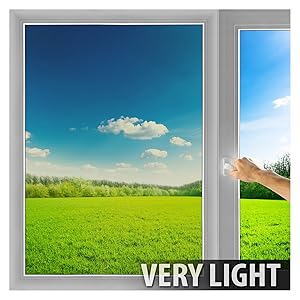
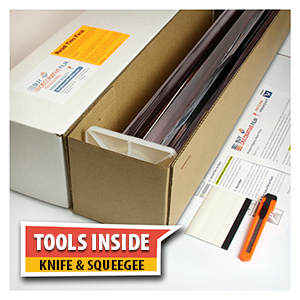
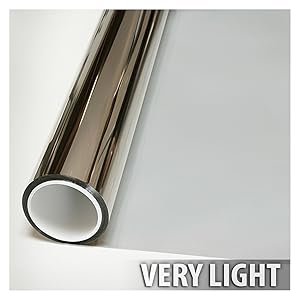
The BDF NSN70 Window Film offers a very light transparent shade that maximizes natural light while delivering superior heat rejection and blocking 99% of UV rays. Its durable, scratch-resistant surface and strong adhesive make it a long-lasting, easy-to-install solution that reduces cooling costs and protects interiors from sun damage.



T**L
Excellent film to bock, but retain light for viewing outside.
I bought this film to apply under the Skylight that I just replaced. My old Skylight was cracked, and since it's 50 years old, very few new Skylight will fit. I bought the only one I could find, and I was not so satisfying with it. It was medium grey, color and not as dark as my old Skylight. My house is already hot as hell with the old Skylight, so imagine that with a lighter color Skylight. As the sun shined through the Skylight, it left a large rectangle moving through my carpet, then my staircase, then on to the wall. Looking at it was like looking at a 150-200 watts incandescent light bulb directly with the new Skylight, so I had to use my hand to cover on side of my face every time I walked by, to keep my eyes protected. it's that bad. And here is where the tint film came in.I applied 4 layers of this film, BDF NSN70, directly under the Skylight because it was for interior use. I cut each layer in 3" stripes and overlapped them so that they could conform to the curved surface of the Skylight better. It was still imperfect, but looked more decent than apply the whole film on the curved surface. It still didn't look good. Then I went to Home Depot and bought a 2x4 defusing panel that you normally installed on the ceiling below the fluorescent lights. This was done to defuse light better, and also make the Skylight look good since the flaws wouldn't show up through this panel. I then installed the Skylight with the pannel sandwiched in between the Skylight and the roof, rough side of the panel down.The result: ABSOLUTELY AMAZING !!! I just couldn't believe it! This cut the heat absorbed through the Skylight by 95%. You read it right, by 95%. I stood directly under the Skylight with the sun shined directly over my head, and I can feel the heat on my skin: It was only VERY SLIGHTLY WARMER THAN MY OWN BODY TEMPERATURE and the outside temperature was 85 degree. The sun shine had been cut down so much thru out the day, and the light color was actually WHITE all day long, not YELLOW as it should be any more. It was like looking at a 40 watts fluorescent white light bulb from a distant. The light was slightly darker before noon, and from noon on, it was at full capacity, which was gentle and very easy on eyes. For me, this was perfect. If I wanted it brighter, 3 layers would do that, with a little temperature gain, of course. So, the template now was the temperature of the house coming from doors and windows, but no longer from the Skylight. The defusing effect of the panel also dispersed the light out such that it created a more even light through the area, and I no longer saw the sharp rectangle sun glow on the wall anymore, that was the end of it. Needless to say, the result was sort of unexpected because from my calculations, I never knew that it would turn out like that, but hey, who is complaining?An important thing I learned from this exercise is this: If you want to use a film for heat blocking, try an MIRROR EXTERIOR FILM first. I used the BDF EXS35 for my windows and doors that I wanted to see more out of those, and BDF EXS15 for my master bedroom to cut the heat to a minimum level so that I can sleep in it in the afternoon. This will cut the heat by 60% and 80% respectively. I plan to apply the BDF NSN70 to the interior of the same glasses to cut the heat down another 15% and 8% respectively, making the heat rejection totals to 75% and 88% respectively. This will bring the temperature down further, but affects the views very little. The BDF NSN60 will not be that much more gain to consider. Note that I mentioned MIRROR FILM here, preferably the SPUTTERED type for EXTERIOR use, and NOT the regular black or dark gray films. Black color attracted heat, so, initially the black film blocks heat by blocking sun light, but given enough time and the right sun angle, the sun light turns into heat, and heat will start to radiate into the room because the film only blocks light, not heat, so the later part of the day (4-6pm), it will be the hottest. I used to come home from work almost every day and it was ok, but now I stay home all day everyday, so I realized how much discomfort it was with the black film. And from the experience I gained from doing the Skylight, I no longer again tint my glasses with black or dark grey films.Hope my experiments here will be of some helps for those who needed it.
L**E
Do it at night
This stuff went on easily enough. I could have used a second pair of hands on my larger ones (27x30”). The biggest thing I learned is that daylight coming through will hide bubbles and flaws. Once the sun went down I saw a lot of bubbles I couldn’t see during application! Next time I will do this when it’s dark outside.
V**.
Watch the video instructions FIRST, work slowly, & keep surfaces soaking wet.
First off, this entire product line seems to run lighter than monitor representations lead people to expect. If you want something "barely there" to cut back on visible light transmission & block UV, without bringing the ire of a landlord or HOA down on yourself? This will do the trick. But I care a bit more about not getting full sun to the face, and I wish I'd bought something darker.I found this film very easy to install by myself, even on a large sliding glass door. A bit of masking tape along the top edge will hold the excess tab of film to the dry window frame, while you work your squeegee towards it from the center of the peeled area upwards. Then, when you've got the sheet stuck down right against the edge, use the window border as a guide for your razor to trim the excess at the top. Ta-da, you are now ready to start working down from the piece of film that's still attached to its backing.Re-wet the window. Wet the adhesive side of the film as you peel off 6-12" of backing, and smooth it against the glass. Wet the other side of the film and squeegee out the larger bubbles. Repeat.Note that when you have an entire window covered and are moving on to chase tiny bubbles, you'll find that distribution of water under the surface is uneven. Spray more water (with a touch of baby soap) on the outer surface and use the little felt-covered squeegee to chase the water masses into something that your normal squeegee can move around. Then pull it and all its tiny bubbles out the edge. This flattens the sheet of film and will gradually move the nice clean edges you cut at top and bottom, and that's okay. You can trim them again at the end, if you need to.Did I mention that you'll need to keep everything wet? Because that's the trick that makes this easy. If you think you have too much water, it's probably just enough.(And you should always know where your towel is. ;) )
A**Y
Does not work
This product did NOT reduce heat in my room at all. I measured the temperature of the area near the window and in the room of 2 rooms right next to each other, with the same exact angle to the sun. One room had no widow film adhered to the window and one room had the window film adhered to the window. Both rooms had the exact same temperature near the window and in the room. What a hoax!!! I could not measure UV light, but I bet this film did not help that either!! I was hoping with the window film and some shades, the heat in the rooms in direct sunlight would be reduced. The film does not help at all. I will tear off this window film and continue my search for heat reduction in the room.
A**D
Not really blocking heat.
TL;DR Instead of heating what the sunlight touches, it heats the glass of the window it's on. Net zero effect on reducing the overall room temp.As an experiment I put this film (70%VLT) over half of one of my double-pane windows. I then measured the surface temperature of the floor where then sunlight landed. The area lit by the sun through the uncovered glass was about 5-6 deg. F warmer than the area lit through film. Success. But... The film itself becomes significantly hotter than the glass it's meant to cover. So it seems the film is absorbing the heat from the sunlight passing through rather than reflecting it back out again. My second test was putting a bit of painter's tape on the glass with and without the film. The tape on the film was 5-6 F warmer. Measurements were done with a thermal camera and aiming at non-reflective surfaces. Since my goal was to reduce room temperature, I'll look at other options. Maybe it would work better on the exterior of the window?
Trustpilot
1 month ago
3 weeks ago