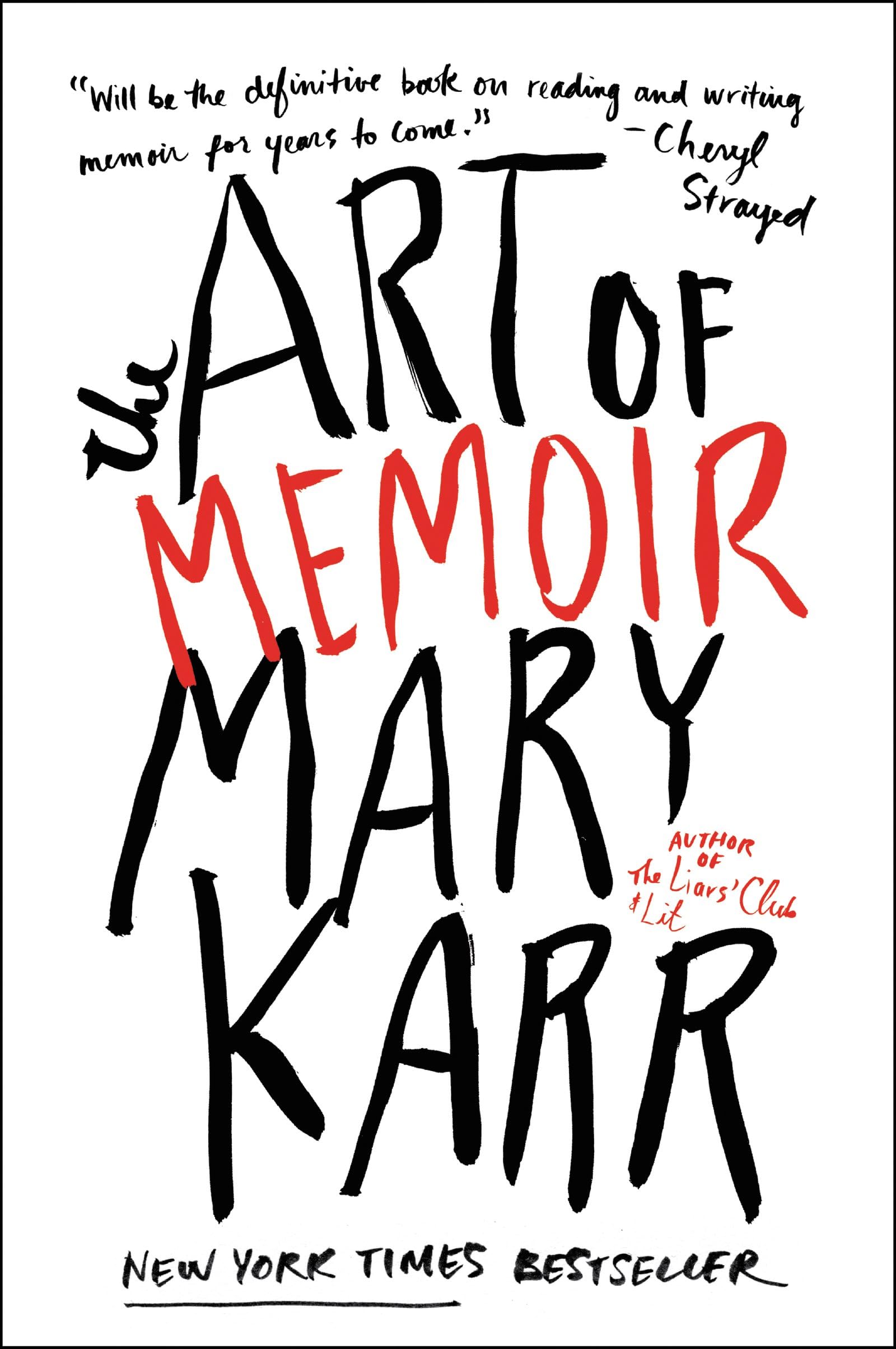
The Art of Memoir: A Master Class in the Essential Elements of Great Memoir Writing
Product ID: 38014738
Buy anything from 5,000+ international stores. One checkout price. No surprise fees. Join 2M+ shoppers on Desertcart.
Desertcart purchases this item on your behalf and handles shipping, customs, and support to Greece.
“Karr is a national treasure—that rare genius who’s also a brilliant teacher. This joyful celebration of memoir packs transcendent insights with trademark hilarity. Anyone yearning to write will be inspired, and anyone passionate to live an examined life will fall in love with language and literature all over again. ” — George Saunders Credited with sparking the current memoir explosion, Mary Karr’s The Liars’ Club spent more than a year at the top of the New York Times list. She followed with two other smash bestsellers: Cherry and Lit , which were critical hits as well. For thirty years Karr has also taught the form, winning teaching prizes at Syracuse. (The writing program there produced such acclaimed authors as Cheryl Strayed, Keith Gessen, and Koren Zailckas.) In The Art of Memoir , she synthesizes her expertise as professor and therapy patient, writer and spiritual seeker, recovered alcoholic and “black belt sinner,” providing a unique window into the mechanics and art of the form that is as irreverent, insightful, and entertaining as her own work in the genre. Anchored by excerpts from her favorite memoirs and anecdotes from fellow writers’ experience, The Art of Memoir lays bare Karr’s own process. (Plus all those inside stories about how she dealt with family and friends get told— and the dark spaces in her own skull probed in depth.) As she breaks down the key elements of great literary memoir, she breaks open our concepts of memory and identity, and illuminates the cathartic power of reflecting on the past; anybody with an inner life or complicated history, whether writer or reader, will relate. Joining such classics as Stephen King’s On Writing and Anne Lamott’s Bird by Bird, The Art of Memoir is an elegant and accessible exploration of one of today’s most popular literary forms—a tour de force from an accomplished master pulling back the curtain on her craft. Review: Karr Voices Memoir Clearly - Writing a memoir evokes a special brand of fear. No matter how you approach the topic, the fear is that your life story is not worthy of being told and the mere attempt to tell it is to be guilty of exaggeration and pride. No matter how good the writing, the fear is that you do not stand in the company of presidents, kings, and celebrities. Against this fear, one can only aspire to write clearly with distinction and to seek out a good book or two to aid in this vain enterprise. In her book, The Art of Memoir, Mary Karr points to other motivations, somewhere between the writer “trying to make sense of the past” and “readers thirsty for reality” (xiv). Memoir invites the reader into the private life of the author in a verbal strip-tease, undertaken for catharsis or paid therapy (xxi). Something anyone can aspire to writing memoir, even if the readers may be limited to an immediate circle of friends and family. The primary requirement is having memories that you are willing to analyze against a particular theme and to share with readers. These memories need not be absolute truth, but they need to be spoken with an authentic voice. Karr emphasizes voice as the authenticator of good memoir, writing: “Each great memoir lives or dies based 100 percent on voice.” (35) The truth of memoir is not absolute—sworn on a Bible—truth, but rather a more interesting subjective truth—truth told with an authentic voice. It is subjective, in part, because we lie more often to ourselves than we do to other people. Karr validates her own accounts with the people she writes about (5). It is interesting, in part, because an authentic voice embeds the veils that we use to cover our inadequacies. Uncovering the veils and exposing the lies they cover up is painful, as Karr explains: “You have to lance a boil and suffer its stench as infection drains off.” (12) Yet, this catharsis liberates our true selves, a necessary step in healing and in personal growth, as Karr admits: “I often barely believe myself, for I grew up suspicious of my own perceptions” (22). Part of authentic voice is admitting your motivation in writing. Karr argues: “Unless you confess your own emotional stakes in a project, why should a reader have any?” (97) While this advice might seem to be a terribly female observation to make—why can’t I just lay out my hypothesis, you say?—communications professors often admonish their students that complete communication requires both an idea and an emotion. Authenticity requires complete expression—why is that hypothesis so important that you spent at least a year examining it in great detaiI? Chances are good that the emotional stake is already substantial and its substance needs only to be recognized in your writing. A novelist might refer to this stake as an emotional hook to grab the reader. Karr’s voice shows ironic tension. She is consciously literary—dropping great quotes from famous memoirists and dotting her work with cutesy new ways of expression. The tension arises when you see her photographed wearing blue jeans and cowboy boots more fitting of her Texas upbringing. “The lady doth protest too much, methinks” as Shakespeare writes in Hamlet. Voiced tension is a source of conflict and, as such, is interesting. Cowboy boots aside, Karr writes prescriptively in 24 chapters, each with its own theme. A particularly important theme in her writing comes in chapter 6: Sacred Carnality. While one’s mind naturally runs to carnal, as in carnal knowledge, Karr uses carnal to mean sensual in description, as in the five senses—seeing, hearing, smelling, tasting, and feeling (71). For those of us more comfortable in non-fiction, analytical writing, this carnality is necessarily forced, as she readily admits (75). By utilizing carnal description to move the action, dialog can be used more like a spotlight. Mary Karr’s The Art of Memoir is helpful addition to any writer’s library. Karr’s cites from numerous famous memoirists(check out the appendix listing) aptly makes the point that memoir is a wider genre than the usual political and celebrity autobiographies, and the creative potential in memoir is greater than the usual A-B-C chronologies. I would never have guessed, for example, that a favorite film of mine, Francis Ford Coppola's Apocalypse Now (1979) was based on a memoir by William Herr: Dispatches (1977). Karr’s book has already encouraged me to purchase a memoir that she recommended ; it has been a great encouragement in my own memoir project; and I have already gifted this book to a friend. Great book; read it. References Angelou, Maya. 2009. I Know Why the Caged Bird Sings. New York: Ballantine Books. Herr, William. 1977. Dispatches. New York: Alfred A. Knopf. Review: A lasting standard about writing memoir - Memoir has become a popular field in recent decades. The novitiate often thinks that anyone can write about their own life. The experienced one knows that this task is actually incredibly hard, both in penning the work and in emotionally admitting truth to yourself. Bestselling memoir author and writing professor Mary Karr writes about values and practices she finds helpful. Importantly, she cites other authors alongside her own experience to ground her work not just in personal ingenuity but in universal human knowledge. Augustine of Hippo wrote the first known autobiography in his Confessions in the fourth century CE. Since then, some humans – whose sanity could be questioned! – have found revealing their inner lives in literature a part and parcel of their writing craft. It seems that Karr has read many of the best of these reflections and shares an exhaustive list in an appendix. She hand picks a favored few to study in depth in many of the 24 chapters. Then she spends some time reflecting on the topic of choice via her own experience in penning three memoirs. As my only criticism, she spends too much time for me harping on the theme of telling the truth. Now, I am a big fan of the truth – reality is always the best and most steadfast motivator. Indeed, I agree most memoir writers could probably benefit from not straying too far from relating reality as best they can. However, I also work as a scientist, so obsessing about getting it right earns my paycheck and consumes my days. My personal foible in writing is having an entertaining voice. Fortunately, Karr does talk about voice in several chapters, but truth-telling from emotional memories still takes the most eminent, dogmatic place in this book. Frankly, few people anywhere would be able to write this book. Few have read as widely as Karr has. Further, few have written three successful memoirs. Fewer still teach students how to write memoirs for a living, as Karr does in Syracuse’s MFA program. That’s why this book will remain for some time as a standard that every aspiring author of the genre needs to consult. For those with deeper curiosities, she also lists a handful of other recommended works in the aforementioned appendix. This challenging book is not for the faint of heart, but to those readers who persist, it can lead to stories that last longer and that reach a broader audience. Not bad for any ambitious author…
| Best Sellers Rank | #19,942 in Books ( See Top 100 in Books ) #12 in Creative Writing Composition #13 in Authorship Reference #375 in Memoirs (Books) |
| Customer Reviews | 4.5 out of 5 stars 1,680 Reviews |
S**ﻦ
Karr Voices Memoir Clearly
Writing a memoir evokes a special brand of fear. No matter how you approach the topic, the fear is that your life story is not worthy of being told and the mere attempt to tell it is to be guilty of exaggeration and pride. No matter how good the writing, the fear is that you do not stand in the company of presidents, kings, and celebrities. Against this fear, one can only aspire to write clearly with distinction and to seek out a good book or two to aid in this vain enterprise. In her book, The Art of Memoir, Mary Karr points to other motivations, somewhere between the writer “trying to make sense of the past” and “readers thirsty for reality” (xiv). Memoir invites the reader into the private life of the author in a verbal strip-tease, undertaken for catharsis or paid therapy (xxi). Something anyone can aspire to writing memoir, even if the readers may be limited to an immediate circle of friends and family. The primary requirement is having memories that you are willing to analyze against a particular theme and to share with readers. These memories need not be absolute truth, but they need to be spoken with an authentic voice. Karr emphasizes voice as the authenticator of good memoir, writing: “Each great memoir lives or dies based 100 percent on voice.” (35) The truth of memoir is not absolute—sworn on a Bible—truth, but rather a more interesting subjective truth—truth told with an authentic voice. It is subjective, in part, because we lie more often to ourselves than we do to other people. Karr validates her own accounts with the people she writes about (5). It is interesting, in part, because an authentic voice embeds the veils that we use to cover our inadequacies. Uncovering the veils and exposing the lies they cover up is painful, as Karr explains: “You have to lance a boil and suffer its stench as infection drains off.” (12) Yet, this catharsis liberates our true selves, a necessary step in healing and in personal growth, as Karr admits: “I often barely believe myself, for I grew up suspicious of my own perceptions” (22). Part of authentic voice is admitting your motivation in writing. Karr argues: “Unless you confess your own emotional stakes in a project, why should a reader have any?” (97) While this advice might seem to be a terribly female observation to make—why can’t I just lay out my hypothesis, you say?—communications professors often admonish their students that complete communication requires both an idea and an emotion. Authenticity requires complete expression—why is that hypothesis so important that you spent at least a year examining it in great detaiI? Chances are good that the emotional stake is already substantial and its substance needs only to be recognized in your writing. A novelist might refer to this stake as an emotional hook to grab the reader. Karr’s voice shows ironic tension. She is consciously literary—dropping great quotes from famous memoirists and dotting her work with cutesy new ways of expression. The tension arises when you see her photographed wearing blue jeans and cowboy boots more fitting of her Texas upbringing. “The lady doth protest too much, methinks” as Shakespeare writes in Hamlet. Voiced tension is a source of conflict and, as such, is interesting. Cowboy boots aside, Karr writes prescriptively in 24 chapters, each with its own theme. A particularly important theme in her writing comes in chapter 6: Sacred Carnality. While one’s mind naturally runs to carnal, as in carnal knowledge, Karr uses carnal to mean sensual in description, as in the five senses—seeing, hearing, smelling, tasting, and feeling (71). For those of us more comfortable in non-fiction, analytical writing, this carnality is necessarily forced, as she readily admits (75). By utilizing carnal description to move the action, dialog can be used more like a spotlight. Mary Karr’s The Art of Memoir is helpful addition to any writer’s library. Karr’s cites from numerous famous memoirists(check out the appendix listing) aptly makes the point that memoir is a wider genre than the usual political and celebrity autobiographies, and the creative potential in memoir is greater than the usual A-B-C chronologies. I would never have guessed, for example, that a favorite film of mine, Francis Ford Coppola's Apocalypse Now (1979) was based on a memoir by William Herr: Dispatches (1977). Karr’s book has already encouraged me to purchase a memoir that she recommended ; it has been a great encouragement in my own memoir project; and I have already gifted this book to a friend. Great book; read it. References Angelou, Maya. 2009. I Know Why the Caged Bird Sings. New York: Ballantine Books. Herr, William. 1977. Dispatches. New York: Alfred A. Knopf.
S**N
A lasting standard about writing memoir
Memoir has become a popular field in recent decades. The novitiate often thinks that anyone can write about their own life. The experienced one knows that this task is actually incredibly hard, both in penning the work and in emotionally admitting truth to yourself. Bestselling memoir author and writing professor Mary Karr writes about values and practices she finds helpful. Importantly, she cites other authors alongside her own experience to ground her work not just in personal ingenuity but in universal human knowledge. Augustine of Hippo wrote the first known autobiography in his Confessions in the fourth century CE. Since then, some humans – whose sanity could be questioned! – have found revealing their inner lives in literature a part and parcel of their writing craft. It seems that Karr has read many of the best of these reflections and shares an exhaustive list in an appendix. She hand picks a favored few to study in depth in many of the 24 chapters. Then she spends some time reflecting on the topic of choice via her own experience in penning three memoirs. As my only criticism, she spends too much time for me harping on the theme of telling the truth. Now, I am a big fan of the truth – reality is always the best and most steadfast motivator. Indeed, I agree most memoir writers could probably benefit from not straying too far from relating reality as best they can. However, I also work as a scientist, so obsessing about getting it right earns my paycheck and consumes my days. My personal foible in writing is having an entertaining voice. Fortunately, Karr does talk about voice in several chapters, but truth-telling from emotional memories still takes the most eminent, dogmatic place in this book. Frankly, few people anywhere would be able to write this book. Few have read as widely as Karr has. Further, few have written three successful memoirs. Fewer still teach students how to write memoirs for a living, as Karr does in Syracuse’s MFA program. That’s why this book will remain for some time as a standard that every aspiring author of the genre needs to consult. For those with deeper curiosities, she also lists a handful of other recommended works in the aforementioned appendix. This challenging book is not for the faint of heart, but to those readers who persist, it can lead to stories that last longer and that reach a broader audience. Not bad for any ambitious author…
S**S
Interesting and helpful
Unlike the other memoir writing books I’ve been reading, this one has a much sharper tone. Karr is a stricter teacher with very firm opinions and very definite ideas that she believes in with certainty that she is right thank you very much. Also unlike the other memoir writing books, she uses much older examples and her own memoirs. Although I don’t know if she’s necessarily always right, I did find a lot of her advice helpful.
G**N
Brilliant
Fantastic. Insightful not only in her tips, but in the way she demonstrates them through her own writing. She made me look at my scribbles in a completely new way (and want to revise a lot of them!)
E**8
A must read for anyone writing a memoir
I bought Mary Karr's "Liars Club" three years ago when I first began writing my memoir. I loved her writing style and was both inspired and intimidated. I just finished this book and it does such a great job breaking down key components to the craft using examples from Karr's own work as well as works by other authors from classic to contemporary. If you are writing a memoir or thinking about writing one I strongly suggest picking this up. You will learn about the importance of voice and how to find yours and stay true to it. The art of showing, not telling (which is where I need the most help). How to use/select specific details to make scenes feel more carnal and truer to the reader. And get advice on things like how to handle writing about family and topics that may be sensitive to them. You can really tell that the author is a teacher–some chapters feel like they could actually have been taken from a lesson plan–but that's what makes this book so much better than some of the others I've read about writing memoirs that were penned by agents or other industry professional types. This book isn't just a list of general tips/advice. Mary Karr is a true master of the craft and digs deeper, providing examples to give the reader a better understanding. It's almost like sitting in on one of her classes. Which after reading this book, I'd really like to do. I wish this book had come out three years ago before I started writing but now I am using what I learned to revise and edit the manuscript I have. The only negative for me was one or two of the chapters focused too much on a particular author who's style and voice didn't resonate with my taste (Nabokov for example) so I glossed over those pages. But everybody's taste in books are different. That said, in my humble opinion, this is the best book written on the craft of memoir that I have read to date.
J**H
Worth the read
I love Mary Karr, and I love her work and there is so much that is good and helpful in this book. She writes as she speaks, which I love. But in my oh so humble opinion she also waffles a bit and she's a poet and I'm not, which is my fault not hers. It was worth the read, but I didn't love it. I am in awe of her knowledge and I love how generous she is with it. I laugh that she considers herself such a non academic and maybe compared to many she isn't, but she leaves me for dead that's for sure! I have heard her say, more times than I can count, that nobody made her the boss of memoir ... but that's not true! We all did, and she is, and it's well deserved! She is the boss and the queen :)
D**B
like her, have made the memoir form come alive
It’s a treat to read an analytical book by an author who knows more about penning a memoir than any other living writer—after all, she’s the rare writer who has written three: The Liar’s Club, Cherry, and Lit. Furthermore, this book offers a broad perspective of someone who has had a full life as a wife, mother, therapy patient, writer, spiritual seeker, and alcoholic—while always living with lust and deep curiosity. The Art of Memoir is not necessarily what the title suggests—that is, it’s not a how-to book about memoir. It’s even greater and more exotic than that—it’s a powerful literary criticism of the form. Karr is very generous in her perspective, sharing many examples and excerpts of other famous writers and contemporaries who, like her, have made the memoir form come alive. These writers include Tobias Woolf, Maxine Hong Kingston, Geoffrey Woolf, Maya Angelou, Kathryn Harrison, as well as one of her very favorite writers, Vladimir Nabokov, who wrote the book Speak Memory. Karr shares many gems in this book, one of which is: “Each great memoir lives or dies based 100 percent on voice.” I could not agree more. “For the reader,” she adds, “the voice has to exist from the first sentence.” Having had the distinct pleasure of meeting Karr recently, I feel that I am at an advantage as I hear her vocalize the essence of this book. Her words are alive, both on the page and in person. She’s one of those rare writers who writes the way she speaks, and she will be the first to humbly admit that the sign of a great memoirist is one who speaks like they write, and in a way that brings their readers closer to them. This book is highly recommended, regardless of your preferred genre.
S**R
Go for the Carnal
Mary Karr puts her considerable experience teaching, writing, and reading memoir to good work in this compelling, readable, and idiosyncratic how-to book. I liked Lit, didn't love it, and I've had some starts and stops while reading Liar's Club -- in spots it just feels like she's trying too hard and the pace is still too slow. Yet this book glides along at a swift clip; it's a fun, often entrancing read. She's a careful, clear writer. At times I feel like she's trying too hard in this book too, but some of this is due to the "cultured & erudite Southerner" quality of her voice, which is just as often funny, surprising, and sharply observed. Plus, her advice is practical. She bids writers to go for the visceral, or the "carnal" as she calls it. Bring details -- smells, sounds, sights -- into your memoir writing, she counsels. I like Mary Karr. She's gutsy and smart; her words feel well-lived. I'm halfway through this book, and wanted to share my enthusiasm with someone. Doubt my opinion will change by the end of the book, but if it does, I'll be back to impugn The Art of Memoir. Until then.....
E**E
Recommended for memoirists
Well written interesting book useful for aspiring memoirists.
A**R
Loved it
So beautifully written and extremely comprehensive and helpful. I immediately wanted to go back and read it a second time. Thank you!!!
R**T
Good guidance
Good material! I like how the author expresses her ideas, even when she tells stories non-linearly, which happens at many moments. It gives a personal and unique tone to her narrative and opinions.
N**A
Truth and the Carnal
Karr has set the ground rules for memoir writing, and most ring true. Honesty, truth, writing your story, and more are essentials in memoir writing. But I disagree with not hurting loved ones and leaving that out. If truth must rule, then there should be no exceptions. Still. The best book on the subject. I especially like her emphasis on the carnal, on flesh-and-blood description. Karr challenges the reader, and for me, that's what good writers do.
D**E
Good Company
An inspirational read, good if you have any kind of creative block. I was fast ordering her other publications .Karr's Lit is also worth looking into. She is good company to spend your reading time with. Actually missed her when I had finished. If you are contemplating writing your own memoir this is a great place to start your research.
Trustpilot
1 month ago
3 weeks ago