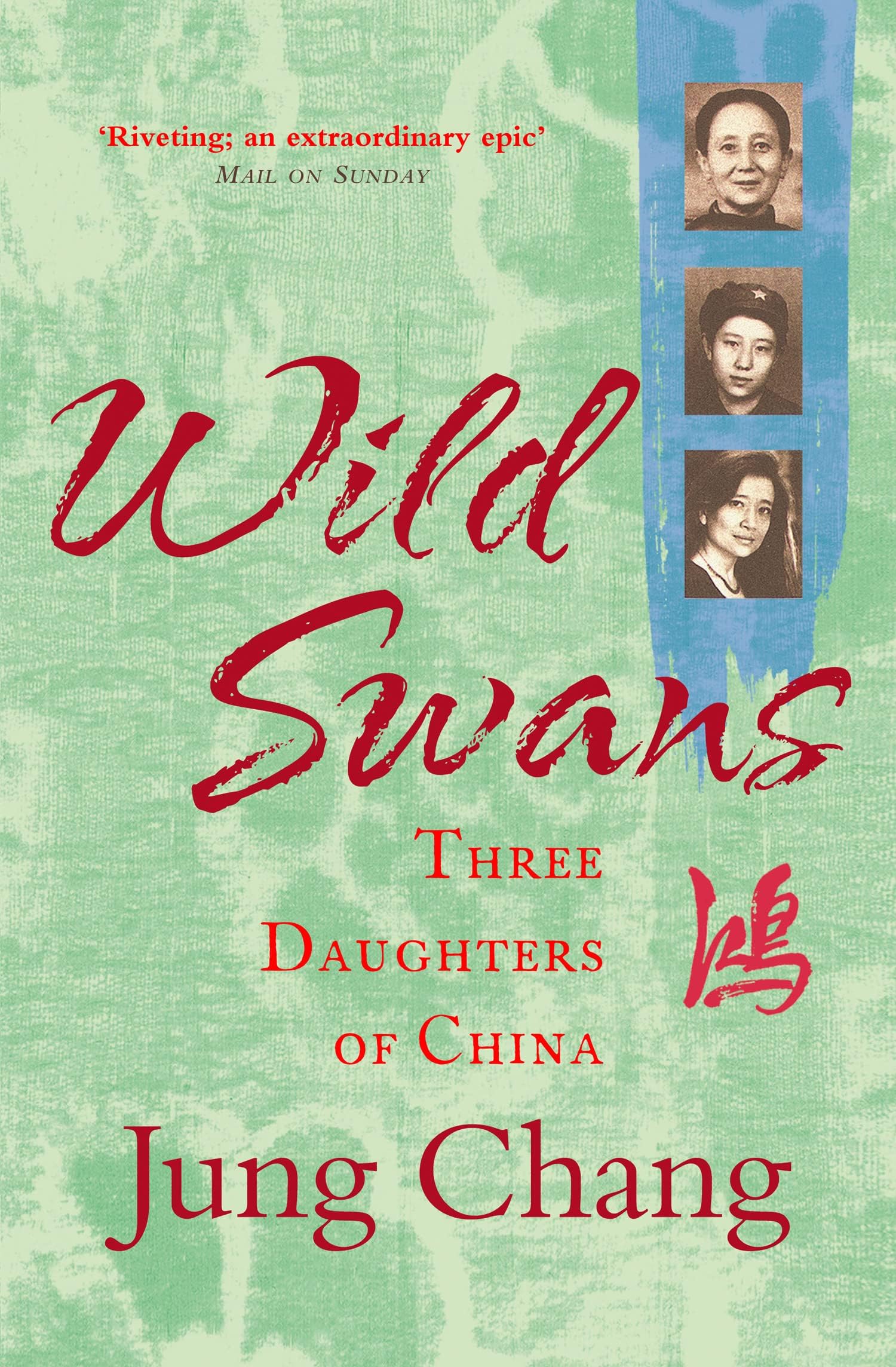
William Collins Wild Swans: Three Daughters of China
Product ID: 343940948
🌏Epic 20th-century China history
📚13M+ copies sold
👩👧👧3 generations of women’s stories
Desertcart purchases this item on your behalf and handles shipping, customs, and support to Greece.
📖 Unlock the untold saga of China’s past — because knowing history is the ultimate power move.
Wild Swans by Jung Chang is a globally bestselling paperback biography tracing three generations of Chinese women through the 20th century. With over 13 million copies sold and high critical acclaim, it offers a gripping, personal perspective on China’s political upheavals, especially under Mao’s regime. This richly detailed narrative combines historical depth with accessible storytelling, making it essential reading for anyone seeking to understand modern China’s complex legacy.
| Best Sellers Rank | #21,047 in Books ( See Top 100 in Books ) #74 in History of Asia #80 in Women's Studies #121 in Historical Biographies |
| Customer Reviews | 4.6 out of 5 stars 1,759 Reviews |
M**T
Life under Mao
What a book! Everyone in the world should know about "this" China! 650 pages and almost every sentence is packed with interesting information. I thoroughly enjoyed reading every part of it and didn't want it to end when it did. It's about the authors "elite" life in Communist China under the reign of Mao, which included her families persecution. But not only that, it also goes back to her mother and grandmothers life in China - stuff certainly not taught in my American schools, but should be. Mao and his closest collegues, including his wife and her "friends", were nothing but a bunch of thugs that ruled the Chinese people in an evil, ugly way. If Satan was ever personified it was in Mao, right down to Mao ordering that grass and flowers be destroyed as bourgeois. He controlled styles of hair, clothing,books,food,careers,and more, he even had peoples thoughts under patrol and convinced people that turning in their neighbors and torturing those who opposed him were the right things to do. I, raised in America, wonder at it all, my life was so very different, but this book gives you an idea about what it was like, and it was horrible. God help us and others who are under regimes who think like Mao did. And not only does it shed light on Mao and his power hungry, selfish greed but how people in general can be controlled by government, become corrupt by indoctrination and their own selfishness, or driven to suicide out of real dispair. It's also a great victory story in that the author and her siblings appear to have faired well in the end. But what a price to pay. Here's just a few exerpts from the book: pg 378: "Like many Chinese, I was incapable of rational thinking in those days.We were so cowed and contorted by fear and indoctrination that to deviate from the path laid down by Mao would have been inconceivable. Besides, we had been overwhelmed by deceptive rhetoric, disinformation, and hypocrisy, which made it virtually impossible to see through the situation and to form an intelligent judgement." pg 407:"The whole country was like a pressure cooker...There were no football matches, pressure groups, law suits, or even violent films. It was impossible to voice any kind of protest about the system and its injustices, unthinkable to stage a demonstration. Even talking about politics...was taboo." pg415 + 416:"We hardly even thought of going out for a walk. The atmospher outside was terrifying, with the violent street-corner denunciation meetings and all the sinister wall posters and slogans;people were walking around like zombies...As an indication of the terror of the day, no one dared to burn or throw away any newspapers. Every front page carried Mao's portrait, and every few lines featured Mao's quotations. These papers had to be treasured and it would bring disaster if anyone saw you disposing of them.Keeping them also posed a problem: mice might gnaw into Mao's portrait, or the papers might simply rot - either of these would be interpreted as a crime against Mao." pg 456: "Nearly everything, from salt, toothpaste, and toilet paper to every kind of food and clothing, either was rationed or disappeared completely...no sugar for a year...six months passed without a single bar of soap...Starting from June 1966, there was no schooling...No school meant no control. But what could we do with our freedom? There were virtually no books, no music, no films, no theatre, no museums, no teahouses, almost no way of keeping oneself occupied...'Red Guardship' became many youngsters' full-time occupation. The only ways they could release their energy and frustration were in violent denunciations and in physical and verbal battles..." (which was encouraged by Mao) Oh my word! There was so much! I have numerous pages marked with things I wanted to put into a review. Before this book my interest about China was sparked by Safely Home, by Randy Alcorn, another fantastic book revealing China. I may read Chang's other book about Mao next, but maybe later, I think I've had enough of Mao for now. Safely Home has a satisfying description of where Mao is now.
N**R
Compelling
This author is fantastic. After reading her biography of Empress Cixi, I immediately ordered her other two books. Her writing is comprehensive yet accessible, making complex history easy to engage with. I highly recommend her work to anyone interested in history or learning more about China. Also if you can - catch her interview on you tube - compelling.
Y**A
China : The land of subterfuge
I was born into the communist elite, and saw how class-ridden and hierarchical Mao's China was. Everyone was slotted into a rigid category. On every form, next to 'Date of birth' and 'Sex' was the inevitable column 'Family background'. This determined one's career, relationships and life. - Jung Chang Reading about history is like travelling in a time machine which allows us to explore, analyse and making sense of our past which makes us what who we are as a people, and as a nation. Although, historians writes about history from time to time, but somehow they misses one of the most important part of history. The stories of the common men, women and children alike. That's why personal histories, or personal memoirs are one of the most important and authentic sources which allows us to understand the psyche of a nation, and the people who resides there. Wild Swans, Three Daughters Of China, is a beautifully written personal memoir with full of emotions. It's a story of the author's grandmother, her mother and about herself during the twentieth century China. China and its civilization is one the oldest in the world. Throughout their history the Chinese civilization remained exclusive. Interactions with other people and cultures were remained miniscule. That's why when china gained their independence in October 1949 after the brutal civil war between the Communists, led by Mao Zedong, and Kuomintang, or Nationalists, headed by Chiang Kai Shek, the former after defeating the latter decided to take his country on a very different path. This book exposed that faulty path and the hypocrisy, double standards and inhumane policies of Mao Zedong. That's why this personal memoir is still banned in mainland China. The foundation of China is resting on the dead bodies of millions of innocent people who lost their lives for no reason. The regime of totalitarianism which was started by Mao is being followed in letter and spirit by his successors. This book is not everyone's cup of tea, especially for those who are not accustomed in reading heavy Nonfiction books. But for those who loves reading about history, then this book is a must read. I will end with this bon mot :- 'China is one of those few countries where human turns into living robot.' My Ratings : ⭐⭐⭐⭐⭐ (5/5) I hope you like this, Thanks for reading, Jai Hind.
A**ー
三代に渡る中国人女性の壮大な物語
祖母、母、本人と三代に渡る中国人女性の壮大な物語。 三人とも、時代の波に翻弄されながらも、必死で自分の人生を生きようとする。 その姿は闘争と言っていいくらいのもので、同じ女であっても私ののほほんとした人生とはまるで違う。 特に本人は幼い頃から毛沢東の政策の中で生きてきて、文革の中で青春時代を過ごす。 歴史を知るためにも、女性たちの生きざまを知る意味でも、価値のある本だと思う。 オススメです。 英語は所々難しい単語はあるものの、言い回しが易しく、表現が分かりやすい。 私は他人の英語をどうこう言えるほど語学力がある訳ではないのだが、それでも、著者の英語は美しいと思う。
K**S
Review
The author was born in 1952 to Chinese Communist revolutionary leaders. In this beautifully written and revealing 1991 biography she traces the lives of her grandmother, her mother and herself through the historical period of warlords, Japanese occupation, rightist armies of Chiang Kai-shek, rise of Communism, Cultural Revolution, and beginnings of modern China. This is a must-read book. I don’t know how I missed it earlier. It is good literature and it is important history. The author has created an intimate and loving portrait of a close-knit family of individuals with strong character and ideals living in a world often dominated by petty and vengeful characters – taken to an extreme of horror under Mao’s malevolent Cultural Revolution. Written in a straightforward, highly observant and detailed style, it creates a powerful history of that period. The theme of surviving in a petty and jealous environment shows up early on. The grandmother grew up with bound feet as her father schemed to marry her to a warlord general. As the warlord’s concubine “wife” she rarely saw him, but bore him a daughter, and was later hounded by jealous other wives and concubines. After his death she married the well-respected Dr. Xia. To escape his jealous family, they moved away with her daughter leaving all his property and money behind. Living simply, they sheltered others in the threatening climate of the Japanese occupation and then the Kuomintang and Chiang Kai-Shek. The mother grew up sensitive and outspoken. Chang carefully sets the stage for her parents’ engagement in Communism, and she delicately paints the picture of her well-educated father’s stubborn adherence to ideals and the difficulties experienced from it. They had five children (the author being second). As Communist values prevailed, the children were sent to live in nurseries, but eventually as elite revolutionary leaders they were allowed to live as a family and for a few years the children had schooling and relative security. But the mother’s past history of helping the wrong people and the father’s defiance brought downfall. Along with millions, they became victims of the Cultural Revolution. Chang provides a detailed account of this horrifying period in history and how the pettiness and jealousy of people was turned into a weapon. Mao’s programs had plunged the country into poverty and famine. Corrective measures taken by other Communist leaders helped end the famine, but then Mao took revenge and solidified his leadership by removing all former party members and arranging for their detention and torture. Gangs of youth (Red Guard) were formed to attack the enemies of the people and ran rampant through the streets. People were encouraged to inform on each other. Family histories were examined for any previous links contrary to Mao. Books were burned, schools were closed, and Mao propaganda was pushed through loudspeakers and reading material. Her parents were imprisoned, interrogated, and tortured. It was largely through her mother’s courage and resourcefulness that the family was held together and able to avoid the worst tortures, navigating through those who would turn on them and those who would help. This is also a story of Jung awakening. She describes herself as an unquestioning follower of Mao, as one of many who saw the leader as almost a god, while being distraught at the events around her. And then she relates how her eyes and mind began to open, to see and to question. To me this book has tremendous value in that it renders in intimate detail what it was like living in China under Mao, recording a history of how people of all classes suffered and died needlessly during his regime. And further, it has the literary value of relating delicate intricacies of living under such a regime and managing to maintain dignity and live one’s values.
Trustpilot
4 days ago
3 weeks ago