
Desertcart purchases this item on your behalf and handles shipping, customs, and support to Greece.
๐ Unlock the dark secrets of a gothic classicโbecause your bookshelf deserves a legend.
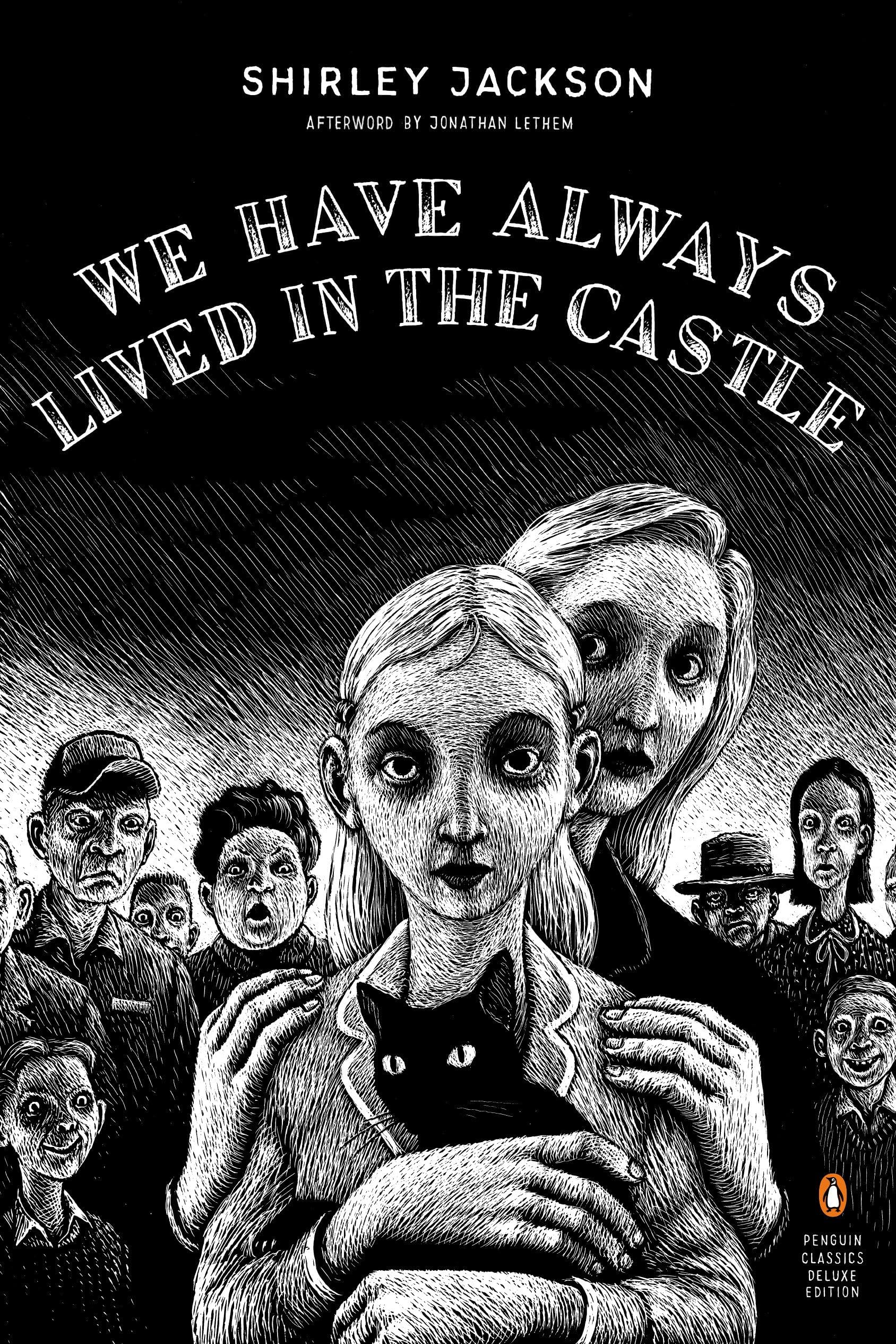
Penguinโs Deluxe Edition of 'We Have Always Lived in the Castle' by Shirley Jackson offers a compelling gothic novel featuring a new introduction by Jonathan Lethem. This paperback edition is part of Penguin Classics, known for authoritative texts and scholarly insights. With a 4.5-star rating from nearly 3,000 readers and top rankings in U.S. Literature and Horror genres, itโs a must-have for discerning readers seeking timeless, unsettling storytelling.


| Best Sellers Rank | #26,161 in Books ( See Top 100 in Books ) #11 in U.S. Literature #25 in Horror #54 in Gothic Fiction |
| Customer Reviews | 4.5 out of 5 stars 2,871 Reviews |
C**E
Not what I expected :/
The book came to me quite fast. Although I do questions the delivery etiquette of the driver as he sat in his car and waited for me to come downstairs at 8pm at night in the middle of town. Which already gave me uncomfortable vibes as a woman. But despite the fast delivery and good wrapping to keep it protected, the book itself had poorly made deckled/untrimmed edges. Which is no where said in the description of the product. Buy the book because you want to read it. I bought the book to give as a gift to my brothers girlfriend, and the edges were not satisfactory to me.
V**O
Conforme o esperado.
Conforme o esperado. Recomendo.
G**.
Bellissimo
Bellissimo libro e comprensibile in lingua originale anche per chi ha un b2 in inglese!
A**B
Great book
Didn't realise the book was supposed to looked very diy and a bit ripped up. Great book.
M**E
Bonne lecture
Bonne lecture
P**N
Merricat, Merricat, May I Come and Play?: A Fatal Case of Sugar and Spite
'It's a little too candy-box pretty for me', George said with that wonderful wit of his, narrowing his eyes with glee, adjusting his driver's seat and lowering his voice into a comical growl. 'Yes', he continued 'for behind these quiet houses often lurks evil in the heart of mankind'. George, one of my weekend guests and I, were exploring a village in New England on a spring day, a small community which has long become a tourist draw for New Yorkers along the shore of the Connecticut River. Chuckling, I glanced out the window at the sleepy Main Street early at dawn, and his comment brought to mind one of my favorite books, first read with great enchantment when published in the early 60's. It was: "We Have Always Lived in The Castle", by the late author Shirley Jackson. This short novel is about a young girl Merricat now eighteen when the story begins, and her older sister Constance Blackwood, the sole survivors of their intimate family circle, and their elderly Uncle Julian, a now addled invalid confined to his chair, busy with his papers documenting the purported crime that his niece Constance was accused of, that of polishing off her family with a serving of berries and arsenic-laced sugar. Merricat, thirteen at the time of the tragedy, had been sent to her room without supper for some infraction and thus survived; their Uncle Julian only barely, having asked for a modest sprinkling of sugar on his dessert. Constance was acquitted after the trial was over and the case was closed, but the village people remain hostile to her and the house, and she rarely ventures outdoors. Merricat has to go once a week to the the village for groceries, attracting hostile stares from the locals and meeting up with the village bully, Jim Donell, an arrogant man who enjoys his attempts to rattle and tease her. Occasionally some young boys from the village on a dare, creep up at night and throw stones at the windows of the Blackwood house, chanting their little mockeries before running away as fast as they can and this local legend continues to grow among them. And, then one day a cousin of the family, Charles, a first-time visitor shows up in the midst of their quiet existence, moves into the house, courts Constance and starts to make changes with a firm agenda in mind. Havoc ensues as a result of this intruder. Merricat narrates the story, and after I finished this mysterious, magical and dark delight, for that was my interpretation at a young age, I wanted to join her as a playmate, and her intriguing unusual voice in the telling of her adventures and forays into nature drew me in right away. Merricat in fact will remain forever thirteen. Many years later when I picked Jackson's novel up again, it was with finer clarity and a more mature and experienced eye. Words such as creepy, depressing and weird are some of the comments one finds among new and younger readers today and while they all carry validity, to my mind the word 'sinister' comes to the forefront. It is not the gentle Constance, nor the troubled Merricat, nor their ailing Uncle Julian, who are the sinister ones here, it is the collective cruelty of people banding together that is frightening. A theme which the author Shirley Jackson knew about first-hand, and addresses in this memorable and psychological masterpiece of hers, Jackson was to return to this topic in some of her other important works. There are several defining moments that stood out on this second reading: when circumstances reach an explosive edge, Uncle Julian comes out of his reality from the past, and in a moment of rare if fatal lucidity, joins his two nieces protectively against Charles, the dangerous and manipulative trespasser. There is a tinge of unexpected conviction laced with pathos to be found here. The turning point in the story, however, is perhaps when the leader of the village, Jim Donell, after removing his professional hat, picks up a rock as a sign to the pack of malicious onlookers to have fun, and the destructive party begins. A tragedy? Reflections on the subject of collective shame? A horrifying tale? All of the above, and more perhaps. Some of the reviewers are able to articulate it better. On a side note, the author Eric Hoffer was to say that he was doubtful about 'collective shame' on the basis that association with others is almost always felt as an association with one's betters, and to sin with one's betters cannot be productive of a crushing shame. And, yet Shirley Jackson goes on to show that there are such cases as the above in this famous novel of hers. One might feel, after reading this classic, like joining the village people in the aftermath of their actions, in leaving a pot of jam, or some fresh bread, a small token of some kindness on the door-steps of this household now at peace while moving quietly away again. There are slight tinges of redemption to be found here as well. Known for her extraordinary Gothic novels, Shirley Jackson was also a fine psychologist of the human condition, and her own life, by all accounts, was not always a happy one although she could be wicked and witty at times especially when it came to her own family anecdotes and her short stories. To D. Friedlander, moderate and steady in his views, yet passionate in spirit; his wry humor and fine perception; his reasoned clarifications on important life issues, the many laughs and complexities we experienced over the years, and for explaining to me why Shirley Jackson's enduring short story "The Lottery", best remembered of all her writings today, caused such a furor among people when published in 1948. She will always be a favorite of mine
Trustpilot
4 days ago
1 month ago