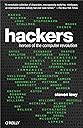
Hackers. 25th Anniversary Edition: Heroes of the Computer Revolution
Product ID: 256639660
Desertcart purchases this item on your behalf and handles shipping, customs, and support to Greece.
This 25th anniversary edition of Steven Levy's classic book traces the exploits of the computer revolution's original hackers -- those brilliant and eccentric nerds from the late 1950s through the early '80s who took risks, bent the rules, and pushed the world in a radical new direction. With updated material from noteworthy hackers such as Bill Gates, Mark Zuckerberg, Richard Stallman, and Steve Wozniak, Hackers is a fascinating story that begins in early computer research labs and leads to the first home computers. Levy profiles the imaginative brainiacs who found clever and unorthodox solutions to computer engineering problems. They had a shared sense of values, known as "the hacker ethic," that still thrives today. Hackers captures a seminal period in recent history when underground activities blazed a trail for today's digital world, from MIT students finagling access to clunky computer-card machines to the DIY culture that spawned the Altair and the Apple II. Review: Feels like reading a fantacy novel. Skip this one... - This book is about techies . Author has made it like a novel by adding too much poetic phrases. I read “iWoz”in three days straight. This one i dont think i ll be able to finish. Review: Required reading to understand the zeitgeist of the current "open source" movement. - I serendipitously picked this up to read at the beginning of a four month sabbatical during which I intended to do some reading and research into the "ethic" or "spirituality" of people developing software according to the the 'free' (as in speech) or 'open source' model. I could not have picked a better history of how the current open source got its start. It was not my intention to start with a bit of history, but it turned out to be just the right thing to do. Levy's description of "The Hacker Ethic" has helped direct thought and research ever since. I wondered why I did not read this book when it first came out, but in a sense I am glad I waited because I was able to read the updated words and it helped me with context in my sabbatical study.

| Best Sellers Rank | #464,501 in Books ( See Top 100 in Books ) #254 in Computer Hacking #633 in Computer History & Culture #3,258 in Computer Science |
| Customer Reviews | 4.6 out of 5 stars 280 Reviews |
S**E
Feels like reading a fantacy novel. Skip this one...
This book is about techies . Author has made it like a novel by adding too much poetic phrases. I read “iWoz”in three days straight. This one i dont think i ll be able to finish.
P**H
Required reading to understand the zeitgeist of the current "open source" movement.
I serendipitously picked this up to read at the beginning of a four month sabbatical during which I intended to do some reading and research into the "ethic" or "spirituality" of people developing software according to the the 'free' (as in speech) or 'open source' model. I could not have picked a better history of how the current open source got its start. It was not my intention to start with a bit of history, but it turned out to be just the right thing to do. Levy's description of "The Hacker Ethic" has helped direct thought and research ever since. I wondered why I did not read this book when it first came out, but in a sense I am glad I waited because I was able to read the updated words and it helped me with context in my sabbatical study.
S**L
Unterhaltsam und lehrreich für Software-Entwickler und -Manager
Jeder, der die ursprüngliche und echte Bedeutung von "Hacker" als fähige, trickreiche, innovative Programmierer kennt; der regelmäßig ganze Nächte mit seiner Maschine verschmilzt, weil er wissen wollte, wie man etwas noch besser machen kann; der muss dieses Buch kennen. Ganz klar. Levy schreibt eine äußerst unterhaltsame Geschichte, die Anfang der 1960er mit der Entdeckung eines (programmierbaren!) TX-0 durch Mitglieder des Modelleisenbahnclubs am MIT beginnt und mit dem aufbrechenden Konflikt zwischen Hacker- und Managerphilosophien bei Atari, Apple, Microsoft, Sierra On-Line und anderen Giganten der Spiele- und Softwareindustrie um 1984 -- leider viel zu früh -- endet. Das ist aber nicht nur stellenweise extrem witzig (bzw. skurril bis besorgniserregend :), sondern auch heute noch eine für alle an Softwareentwicklung Beteiligten höchst interessante Lektüre. Für Entwickler sowieso. Gut, "Hacken" als Paradigma ist heute nicht mehr allzu hoch angesehen -- aber ich habe keinen einzigen guten Programmierer kennengelernt, der der Hackerphilosophie nicht starke Sympathien entgegenbringt und der nicht auch, wenn's drauf ankam, hacken konnte. Doch auch und gerade Managern kann ich dieses Buch nur ans Herz legen -- wer ein effizientes Softwareprojekt effektiv leiten will, der ist gut beraten, die Hackerphilosophie zu kennen und im Umgang mit Programmierern zu beachten. Und die wird in keinem anderen Buch so authentisch, anschaulich und greifbar beschrieben. Kurz und gut, mit diesem Buch können alle ganzheitlich an Software Interessierten das Angenehme mit dem Nützlichen verbinden. Es eignet sich ausgezeichnet als unterhaltsame, unanstrengende Bettlektüre, bei der man ganz nebenbei viel über die Geschichte von Software sowie der Mentalität ihrer Entwickler erfährt. Eine seltene Synthese!
L**E
An extraordinary account of the growth of the home computer.
If you thought the term 'Hackers' had anything to do with computers you were mis-informed - but they invented the entire industry, bootstrapping it from skills learned from people running the early mainframe computers while on the search for components for their giant train set. Amazingly detailed, Steven Levy has lived and worked among the generation of geeks who became the household names from Microsoft and Apple, the games houses and software companies that are now world wide big business. And with the development of the Raspberry Pi it might be starting all over again!!
G**L
If you like computers, this book will tell you where they came from. A fun read!
Ok, I admit, I'm old. I actually remember most of the things talked about in this history of the computer age's genesis. Got my first home computer in 1982, a Timex Sinclair ZX81. 8K of ram and no keyboard, just a flat panel like on microwaves. Try typing in programming code on that! hah! Moved "up" to an Atari 800XL, which I hated and then to a Commodore 64, which I expected to hate, but loved. After that I reluctantly moved to a PC clone, although I wanted a $3600 Macintosh. Just couldn't afford it. At that point I got my first job as a self taught computer tech, in 1988. And I am still doing the same work now, although it's just about time to retire. So I've seen a lot over the years The rise of Microsoft, the surprising success of Apple, the fall of CP/M and about 50 different computer languages, such as Logo, Lisp, Fortran and Cobol. I saw the first computer expos, long before there was CES. People wandering around big halls, buying stacks of floppies and glossy computer mags. I played the games from Sierra (before it was Sierra Online) and Electronic Arts, (before it was "EA") and I was there when AOL became a monster app and spanked CompuServe. I had a BBS in 1990 that was one of the first to offer Internet email access. But it was all text as the WWW hadn't been invented yet! All these milestones and much more is covered in this book and I found it fascinating, even though I was never "in the In Crowd" where the Home Brew Computer Club was located. A really well done and informative look at how we got from $500 TI calculators to smart watches more powerful than the computers that put a man on the moon. Wowsers.
Trustpilot
1 month ago
3 weeks ago