
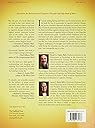


Guilford Publications The Anxiety and Worry Workbook: The Cognitive Behavioral Solution
Description
If You'Re Seeking Lasting Relief From Out-Of-Control Anxiety, This Is The Book For You. It Is Grounded In Cognitive Behavior Therapy, The Proven Treatment Approach Developed And Tested Over More Than 25 Years By Pioneering Clinician-Researcher Aaron T. Beck. Now Dr. Beck And Fellow Cognitive Therapy Expert David A. Clark Put The Tools And Techniques Of Cognitive Behavior Therapy At Your Fingertips In This Compassionate Guide. Carefully Crafted Worksheets (You Can Download And Print Additional Copies As Needed), Exercises, And Examples Reflect The Authors' Decades Of Experience Helping People Just Like You. Learn Practical Strategies For Identifying Your Anxiety Triggers, Challenging The Thoughts And Beliefs That Lead To Distress, Safely Facing The Situations You Fear, And Truly Loosening Anxiety'S Grip--One Manageable Step At A Time. Association For Behavioral And Cognitive Therapies (Abct) Self-Help Book Of Merit.
Specifications
| Dimensions | 20.32 x 1.91 x 26.67 cm |
| Edition | 1st |
| Isbn 10 | 160623918X |
| Isbn 13 | 978-1606239186 |
| Item Weight | 653 g |
| Language | English |
| Print Length | 294 pages |
| Publication Date | 27 October 2011 |
| Publisher | Guilford Publications |
Reviews
User
A+
As described, well packed
User
The essence of cognitive therapy for anxiety in self-help form for the first time
This is an important book, for obvious reasons. It's the first self-help book on anxiety by Aaron T. Beck, the founder of cognitive therapy. It's published hot on the heels of Beck's 2010 revised treatment manual for cognitive therapy of anxiety disorders, also co-authored with David Clark. Beck's original treatment manual for anxiety was published in 1985 and revised in 2005 but this is a major revision of his approach. He has now provided an extremely comprehensive account of the scientific evidence for cognitive therapy and a more carefully defined and up-to-date set of guidelines for clinicians. This self-help workbook is basically the companion text for that clinical manual, presenting the same approach in a version designed for the general public to use by themselves or as homework when seeing a cognitive therapist using the same approach.It's not as much of of a light-read as some popular self-help books. It's a workbook in the true sense, with a thorough and systematic chapter-by-chapter approach, including many forms to complete and regular exercises to engage in, perhaps requiring half an hour of work per day for several months. This, in other words, is a serious evidence-based guide to addressing anxiety directly and it will require commitment from the reader.The book begins with a generic approach to anxiety, which can be used for subclinical problems and many mild-moderate issues. The later chapters focus on three special categories of anxiety: panic attacks, social anxiety and chronic worry. These problems are experienced by many people but the chapters will, of course, be particularly relevant to people who suffer from panic disorder, social phobia, or generalised anxiety disorder (sometimes called the "worry" disorder). Of course, individuals with diagnosable anxiety disorders should probably seek treatment from a qualified therapist who can guide them through an approach like this.Beck's approach is different to that described by many other books on CBT, some of which adopt a simpler approach or perhaps failed to recognise or assimilate aspects of Beckian cognitive therapy fully. For example, Beck has always interpreted anxiety as being maintained by faulty "appraisals" of threat and coping, following early research in the field of stress, which he applied to anxiety. Thoughts which over-estimate the probability and severity of potential harm are therefore the main target, along with those which under-estimate one's ability to cope and create a sense of helplessness or vulnerability. Moreover, Beck makes the technique of exposure to feared events central to his approach, emphasising the role of "habituation", from behaviour therapy, the natural tendency for anxiety to abate when anxious situations are endured in a repeated, prolonged and systematic manner, without internal struggle or unecessary safety-seeking efforts. Beck also recognises that the process of worrying, prolonged thinking about possible catastrophes and one's difficulty coping, needs to be addressed in a way that goes beyond simple disputation of individual thoughts. The AWARE acronym recommended in his earlier manual (1985) as a self-help strategy for use early in cognitive therapy, although not mentioned in his recent clinical manual for anxiety, re-appears here, particularly as advice for coping during exposure experiments. (AWARE = Accept feelings, Watch thoughts and feelings in a detached way, Act as if non-anxious, Repeat these steps, and Expect to make progress, adopting a realistic but optimistic attitude.) This acronym (from 1985) shows the extent to which Beck's original cognitive therapy for anxiety pre-empted recent "mindfulness and acceptance-based" approaches to CBT.For some people, without the guidance of a therapist, this workbook (which is really a rigorous programme of self-help) will perhaps be too demanding. However, it probably contains the best evidence-based guidance on tackling anxiety available and potentially makes a powerful adjunct to individual CBT for a range of anxiety disorders. That said, even if someone reads it and only applies some parts of the book, they may still be better off than someone who reads poor advice from popular but less scientific books on anxiety and self-help. So overall: highly recommended!
User
Terrible condition
Two stars because it came in terrible condition
User
Vorsicht vor Zollgebühren
Das Buch an sich macht einen guten Eindruck und ich bin sehr gespannt was mich erwartet. Zustand neu und unbeschadet. Was mich jedoch etwas stört war die sehr lange Versandzeit und die Tatsache dass ich dann zusätzlich noch Zollgebühren bezahlen musste. Dies war nirgends ersichtlich und hätte vom Verkäufer vorher geklärt werden müssen!!
User
Is 6 stars rating possible...
The one book that goes beyond the usual CBT bla bla bla and makes one works hard going through numerous cognitive and exposure assignments (worksheets). It's almost like having your own therapist at your disposal. There's even an whole chapter for those suffering from panic attacks and , again, it's based on practical assignments that you have to go through once you know your panic triggers (wich the first chapters take care of). Sincerely, after reading many books on the subject, this one surpass them all on all fronts. Sincerely I would give this book 6 stars if it were possible!
Common Questions
Trustpilot