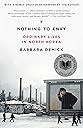
Nothing to Envy: Ordinary Lives in North Korea
Product ID: 221493
Desertcart purchases this item on your behalf and handles shipping, customs, and support to Greece.
NATIONAL BOOK AWARD FINALIST • An eye-opening account of life inside North Korea—a closed world of increasing global importance—hailed as a “tour de force of meticulous reporting” ( The New York Review of Books ) FINALIST FOR THE NATIONAL BOOK CRITICS CIRCLE AWARD • FINALIST FOR THE BAILLIE GIFFORD WINNER OF WINNERS AWARD • A KIRKUS REVIEWS BEST NONFICTION BOOK OF THE CENTURY In this landmark addition to the literature of totalitarianism, award-winning journalist Barbara Demick follows the lives of six North Korean citizens over fifteen years—a chaotic period that saw the death of Kim Il-sung, the rise to power of his son Kim Jong-il (the father of Kim Jong-un), and a devastating famine that killed one-fifth of the population. Demick brings to life what it means to be living under the most repressive regime today—an Orwellian world that is by choice not connected to the Internet, where displays of affection are punished, informants are rewarded, and an offhand remark can send a person to the gulag for life. She takes us deep inside the country, beyond the reach of government censors, and through meticulous and sensitive reporting we see her subjects fall in love, raise families, nurture ambitions, and struggle for survival. One by one, we witness their profound, life-altering disillusionment with the government and their realization that, rather than providing them with lives of abundance, their country has betrayed them. Review: A Showstopper of a Book - Many books about North Korea that I have read display the absurdity, pain, sadness, and blight existence of a nation gone rogue and gone wrong. Its blatantly obvious through these texts, histories, and other news outlets that North Korea is one of the most odd nations in surviving in a post-Communist world for so long at the cost of a miserable livelihood brought together by mismanagement, extreme repression, and an Orwellian control system. Testimonies, documentaries, and research, as well as visits to the low-key state bring about the same motifs of blind acceptance of their dear leaders, paradoxes in reality vs. what they are told, showcase capitals, and the true existence of North Koreans in the most heinous of circumstances all due to neglect. So coming to read "Nothing To Envy," I expected another matter-of-fact, been there, read that book that re-hashed these themes. Instead I was truly surprised that Barbara Demick goes beyond her journalistic tendencies to create one of the finest works on North Korea out there. If I were to recommend a book to someone who has never heard of North Korea, or is curious about it, I would drop this book on them. Demick's collection of testimonies of several recent refugees from NK, weaving them into a novel-like narrative, while dropping crucial information between each section of dialog and story, is one that she pulls off well and draws out raw emotion from the reader without getting throwing politics in it. Rather than Demick posing that North Korea is an evil state by giving her opinion like a sauce that she wants you to taste, she let's the testimonies themselves let you decide what to think, and there were times I shuddered at their former life and became thankful for what I do have, and pray for the people of North Korea. What Demick does rightly in the beginning of the book is to lay her cards on the table of how long the book took to research, interview, and compile the information together. Also, she wisely says that though she has wholesale relationships and stories from the defectors, there are moments where she cannot corroborate them because obviously it is difficult to get information from within North Korea itself. Then she begins her narrative. She runs through several refugees and their former lives, mostly from the city of Chongjin which is right near the Tumen River on the Chinese border. Demick describes a young couple, Mi-ran, coming from a low-class of North Koreans because her father was a South Korean, and her boyfriend Jun-sang whose family had come from Japan. Then she later tells the tale of Mrs. Song, a woman who was a stout believer in the Communist regime to the dotted i. She thought that nothing could go wrong with their 'eternal' leader Kim Il-sung. There's Dr. Kim, a petit trained physician with an iron will to do what is right. Demick describes these and others as normal human beings where they grow up and knew nothing else of their outside world and what they believed what was normal. In between each story and chapter Demick describes in more details/historical analysis of North Korea that gives background to each person's existence, such as the Communist nation's supposed equal status for everyone though they officially classify people based on their loyalty to the state, which has effects even on how much food rations that they could receive. Or what happened to Mi-ran's father, a former South Korean POW, and what happened to these people of circumstance who were not allowed to go back home. She describes in great detail the political state structure that creates an environment of mismanagement, like the infamous collective farms or the post-war fall of Communist regimes that led to less support of the Korean regime. Demick balances a human narrative with a historical background so that you identify with the palate of emotions these people go through while getting the necessary information of understanding their circumstances. The book climaxes with the disastrous famine that occurred around the time of Kim Il-sung's death and towards 1998. Millions died. Famine became noticeable when their food rations were cut. This is the most difficult part to read: there were moments I cringed on how hunger made people turn to beasts or opportunists at the expense of others. People of Dr. Kim's profession, a noble one, were forced to hunt in the mountains and hills for food and medicine. Or watching young children die of malnutrition. At the same time Demick doesn't write a section on blasting Kim Jong-il's regime. Yet the horror stories of lack of food and the absurdity of the government's "let's eat two meals a day" paints the worst sin a government will be ultimately judged by: inaction and neglect. At this time the author puts in a new view of how North Koreans survived, and it was at times ugly and illegal (at least according to their law), but they managed to survive. She describes Chongjin's citizens doing what it takes to trade, barter, or steal to put some substance in their bellies, even if it couldn't be digested. The section about orphans who pick up scraps off the ground was heartbreaking. The final sections of the book describe the the eventual danger and migration of the refugees out from North Korea to China to South Korea. The dangers of crossing, checkpoints of getting across to another country and their repatriation laws, surviving to the dangers of exploitation, finally to the promise land. And even there our North Korean friends we read about have more gut-wrenching moments of regret in leaving their homeland and the culture shock that follows from adjusting from state control, "you follow me" to land of opportunity. Again, one of the best reads on North Korea to date. I enjoyed reading Demick's writing style and putting together a story, not an informative, static, long newspaper article about North Korea. Its quality is renowned for good use of language, like describing the love story of Jun-sang and Mi-ran that makes you know that under the umbrella of repression and absurd rules, love abounds. How Demick describes how the darkness of night due to the lack of electricity proves to be the couple's ally in having an innocent love. Sometimes its what we don't have, or what we read others don't have, that makes us appreciate life and moves us to change for something better. Review: Demick is an amazing writer of a horrific story... - Have you ever wondered what life was like for the ordinary people of North Korea? We hear a lot about their politics and military, but very little about what life is really like there for people like you and me. This book takes a close look at a half dozen lives of ordinary North Korean citizens. The author interviews the (now) defectors and relays their stories to us as she peppers them with bits of Korean landscape and history. It's all compelling, but maddening at the same time. Demick's sole purpose of writing this book is to tell us in the masses what every day life is like in North Korea. She does exactly that in a clear, concise narrative of her subjects' lives over the course of a 15 year time period that includes the reign of Kim Il Sung and that of his son, Kim Jong Il. She is simply telling the stories of these families without any judgment at all. Just the facts are presented. As a reader though, you will judge. You will feel pity, you will be upset. I wanted to scream. But I hope the masses read it anyway. Many of the stories in this book take place in the 1990s. The 1990s! (I'm still shocked) This was a time when I was living in Chicago and living my version of the dream. It still astounds me that while I was living it up, people were living like this and not questioning it. In my lifetime. On our planet. It disgusts me. I knew nothing about North Korea before this book, other than what the news tells us. Lives there are horrific and people there are brainwashed into thinking their conditions are better than anyone else's in the world. Speaking of the world, there is no contact with it for a regular North Korean citizen. TVs and radios have all had their channel selectors welded to make only the government run channels available to residents. There is almost no electricity, very little running water and famine. Widespread famine. People do not have the luxury of meals, let alone access to the necessary food they need to live. You wouldn't believe what people there have had to do just to eat something. Adults are dying, children are dying. Demick thoughtfully interviews people of different ages, romances and education. Things that are normal to everyone, right? But, they happen in a world that is very much like Nazi Germany. With many, many rules. The maddening part of this is that many of the people of North Korea still worship "The Great Leader" or "The Marshal," as they're known, anyway. They don't know any different. They're told how evil the rest of the world is. They're constantly reminded of how poor the rest of the world is. They're even forced to keep and clean portraits of these men in their homes. (The government checks to make sure they're up and clean). At the least, their lives are a case study for brainwashing. The Great Leader forces them to work, without pay, because it's their "duty" to the Worker's party (that many of them can't be a member of anyway). He makes them wear certain types of clothes or hairstyles to make their "class" obvious to others. Class is a big thing to the North Korean leaders, and they use it to play against people constantly. It's an insane story, one that you might see in an apocalyptic movie. It is heartbreaking. It is maddening. But read it anyway. If there is any kind of happy ending to this book it's that the people Demick interviewed for it got out. Somehow they started thinking for themselves. They saw the hypocrisy. It took a lot of courage, bravery and sometimes quick thinking to literally save their lives and get out. Oh, and corrupt government "party workers" too. This might be the one time corruption may be helpful - hunger pains win over party loyalty I guess. The sad part for me is that this is all still going on for people who can't change (or don't see a reason to) their situation. I can't recommend this book enough. It's for anyone who is interested in North Korean life, international sociology, international politics or communism. This is the first book I've read on the subject, but it will not be the last. I appreciate how well this book has been written. Demick, an award winning writer AND reporter who now leads the Beijing Bureau of the Los Angeles Times, is an intelligent, gifted writer. She writes for us - the ordinary people who want to learn more. It's one of the best books I've read in 2013. But, warning: the story is horrific.

| Best Sellers Rank | #34,661 in Books ( See Top 100 in Books ) #2 in North Korean History #2 in South Korean History #5 in Asian American Studies |
| Customer Reviews | 4.6 out of 5 stars 12,120 Reviews |
M**N
A Showstopper of a Book
Many books about North Korea that I have read display the absurdity, pain, sadness, and blight existence of a nation gone rogue and gone wrong. Its blatantly obvious through these texts, histories, and other news outlets that North Korea is one of the most odd nations in surviving in a post-Communist world for so long at the cost of a miserable livelihood brought together by mismanagement, extreme repression, and an Orwellian control system. Testimonies, documentaries, and research, as well as visits to the low-key state bring about the same motifs of blind acceptance of their dear leaders, paradoxes in reality vs. what they are told, showcase capitals, and the true existence of North Koreans in the most heinous of circumstances all due to neglect. So coming to read "Nothing To Envy," I expected another matter-of-fact, been there, read that book that re-hashed these themes. Instead I was truly surprised that Barbara Demick goes beyond her journalistic tendencies to create one of the finest works on North Korea out there. If I were to recommend a book to someone who has never heard of North Korea, or is curious about it, I would drop this book on them. Demick's collection of testimonies of several recent refugees from NK, weaving them into a novel-like narrative, while dropping crucial information between each section of dialog and story, is one that she pulls off well and draws out raw emotion from the reader without getting throwing politics in it. Rather than Demick posing that North Korea is an evil state by giving her opinion like a sauce that she wants you to taste, she let's the testimonies themselves let you decide what to think, and there were times I shuddered at their former life and became thankful for what I do have, and pray for the people of North Korea. What Demick does rightly in the beginning of the book is to lay her cards on the table of how long the book took to research, interview, and compile the information together. Also, she wisely says that though she has wholesale relationships and stories from the defectors, there are moments where she cannot corroborate them because obviously it is difficult to get information from within North Korea itself. Then she begins her narrative. She runs through several refugees and their former lives, mostly from the city of Chongjin which is right near the Tumen River on the Chinese border. Demick describes a young couple, Mi-ran, coming from a low-class of North Koreans because her father was a South Korean, and her boyfriend Jun-sang whose family had come from Japan. Then she later tells the tale of Mrs. Song, a woman who was a stout believer in the Communist regime to the dotted i. She thought that nothing could go wrong with their 'eternal' leader Kim Il-sung. There's Dr. Kim, a petit trained physician with an iron will to do what is right. Demick describes these and others as normal human beings where they grow up and knew nothing else of their outside world and what they believed what was normal. In between each story and chapter Demick describes in more details/historical analysis of North Korea that gives background to each person's existence, such as the Communist nation's supposed equal status for everyone though they officially classify people based on their loyalty to the state, which has effects even on how much food rations that they could receive. Or what happened to Mi-ran's father, a former South Korean POW, and what happened to these people of circumstance who were not allowed to go back home. She describes in great detail the political state structure that creates an environment of mismanagement, like the infamous collective farms or the post-war fall of Communist regimes that led to less support of the Korean regime. Demick balances a human narrative with a historical background so that you identify with the palate of emotions these people go through while getting the necessary information of understanding their circumstances. The book climaxes with the disastrous famine that occurred around the time of Kim Il-sung's death and towards 1998. Millions died. Famine became noticeable when their food rations were cut. This is the most difficult part to read: there were moments I cringed on how hunger made people turn to beasts or opportunists at the expense of others. People of Dr. Kim's profession, a noble one, were forced to hunt in the mountains and hills for food and medicine. Or watching young children die of malnutrition. At the same time Demick doesn't write a section on blasting Kim Jong-il's regime. Yet the horror stories of lack of food and the absurdity of the government's "let's eat two meals a day" paints the worst sin a government will be ultimately judged by: inaction and neglect. At this time the author puts in a new view of how North Koreans survived, and it was at times ugly and illegal (at least according to their law), but they managed to survive. She describes Chongjin's citizens doing what it takes to trade, barter, or steal to put some substance in their bellies, even if it couldn't be digested. The section about orphans who pick up scraps off the ground was heartbreaking. The final sections of the book describe the the eventual danger and migration of the refugees out from North Korea to China to South Korea. The dangers of crossing, checkpoints of getting across to another country and their repatriation laws, surviving to the dangers of exploitation, finally to the promise land. And even there our North Korean friends we read about have more gut-wrenching moments of regret in leaving their homeland and the culture shock that follows from adjusting from state control, "you follow me" to land of opportunity. Again, one of the best reads on North Korea to date. I enjoyed reading Demick's writing style and putting together a story, not an informative, static, long newspaper article about North Korea. Its quality is renowned for good use of language, like describing the love story of Jun-sang and Mi-ran that makes you know that under the umbrella of repression and absurd rules, love abounds. How Demick describes how the darkness of night due to the lack of electricity proves to be the couple's ally in having an innocent love. Sometimes its what we don't have, or what we read others don't have, that makes us appreciate life and moves us to change for something better.
S**S
Demick is an amazing writer of a horrific story...
Have you ever wondered what life was like for the ordinary people of North Korea? We hear a lot about their politics and military, but very little about what life is really like there for people like you and me. This book takes a close look at a half dozen lives of ordinary North Korean citizens. The author interviews the (now) defectors and relays their stories to us as she peppers them with bits of Korean landscape and history. It's all compelling, but maddening at the same time. Demick's sole purpose of writing this book is to tell us in the masses what every day life is like in North Korea. She does exactly that in a clear, concise narrative of her subjects' lives over the course of a 15 year time period that includes the reign of Kim Il Sung and that of his son, Kim Jong Il. She is simply telling the stories of these families without any judgment at all. Just the facts are presented. As a reader though, you will judge. You will feel pity, you will be upset. I wanted to scream. But I hope the masses read it anyway. Many of the stories in this book take place in the 1990s. The 1990s! (I'm still shocked) This was a time when I was living in Chicago and living my version of the dream. It still astounds me that while I was living it up, people were living like this and not questioning it. In my lifetime. On our planet. It disgusts me. I knew nothing about North Korea before this book, other than what the news tells us. Lives there are horrific and people there are brainwashed into thinking their conditions are better than anyone else's in the world. Speaking of the world, there is no contact with it for a regular North Korean citizen. TVs and radios have all had their channel selectors welded to make only the government run channels available to residents. There is almost no electricity, very little running water and famine. Widespread famine. People do not have the luxury of meals, let alone access to the necessary food they need to live. You wouldn't believe what people there have had to do just to eat something. Adults are dying, children are dying. Demick thoughtfully interviews people of different ages, romances and education. Things that are normal to everyone, right? But, they happen in a world that is very much like Nazi Germany. With many, many rules. The maddening part of this is that many of the people of North Korea still worship "The Great Leader" or "The Marshal," as they're known, anyway. They don't know any different. They're told how evil the rest of the world is. They're constantly reminded of how poor the rest of the world is. They're even forced to keep and clean portraits of these men in their homes. (The government checks to make sure they're up and clean). At the least, their lives are a case study for brainwashing. The Great Leader forces them to work, without pay, because it's their "duty" to the Worker's party (that many of them can't be a member of anyway). He makes them wear certain types of clothes or hairstyles to make their "class" obvious to others. Class is a big thing to the North Korean leaders, and they use it to play against people constantly. It's an insane story, one that you might see in an apocalyptic movie. It is heartbreaking. It is maddening. But read it anyway. If there is any kind of happy ending to this book it's that the people Demick interviewed for it got out. Somehow they started thinking for themselves. They saw the hypocrisy. It took a lot of courage, bravery and sometimes quick thinking to literally save their lives and get out. Oh, and corrupt government "party workers" too. This might be the one time corruption may be helpful - hunger pains win over party loyalty I guess. The sad part for me is that this is all still going on for people who can't change (or don't see a reason to) their situation. I can't recommend this book enough. It's for anyone who is interested in North Korean life, international sociology, international politics or communism. This is the first book I've read on the subject, but it will not be the last. I appreciate how well this book has been written. Demick, an award winning writer AND reporter who now leads the Beijing Bureau of the Los Angeles Times, is an intelligent, gifted writer. She writes for us - the ordinary people who want to learn more. It's one of the best books I've read in 2013. But, warning: the story is horrific.
J**N
intriguing and incredible opening to the lives of ordinary North Koreans
The book follows the story of a few lives of people who were born and started life in North Korea and eventually, after years of social and economic deterioration struggle to survive, made the sacrifices and decisions to live in a free world. The progression of the state of the country, the people, and the economy is well represented. The personal accounts of the politics, the culture, and ultimately, the large amount of people starving to death and lack of food in general in the country is shocking and gut wrenching. Countries have sent so much aid to no avail and yet it is a country that continues to close off to the rest of the world. It took a couple chapters to warm up but soon I was intrigued and wanted to keep reading. The subject is very relevant today in 2013 and the insights, perspectives, and feelings offer a wide perspective. I would highly recommended read for anyone into current events and searching for a better understanding of the political, economical, and cultural exploration and discovery. I found the stories a bit thrilling at times and sobering and solemn in following along with the stories and lives of real people, some of whom eventually who got out. The perspective is someone outside of the inner and closely knit circles of conversation and only touches on Korean culture and behaviorism but still an admirable reporting and account of stories put together to form a picture of North Korean lives and living from an objective perspective.
A**Y
Excellent, informative, thought-provoking read
North Korea has been in the news a lot of late, or so it seems with Kim Jong-un’s continual efforts at upping the crazy quotient and the recent death of Otto Warmbier. This book was an in-depth look at what it’s really like north of the 38th parallel and a good reminder that real lives are at stake when we laugh at memes and shake our heads at the over-the-top press releases issued by the North Korean government. Demick has compiled a series of stories based on interviews with North Korean defectors all from the same city in the north not far from the border with China. The result is a book that reads like a novel, as Demick follows the individuals from their earliest memories in North Korea up until they find new lives in South Korea. The individual angle makes the book very compelling, Demick makes the reader care very much that things work out for these people. All of the stories are interesting and touching for their very ordinariness, but this was especially true for those individuals who whole-heartedly believed in the regime and came to realize the lie after a lifetime of dedication. My thirteen-year-old son devoured this book after me and I was glad he did. I was glad that he took such an interest in the plight of people on the other side of the world who live in a regime we know very little about day-to-day. Teens are notoriously self-centered, so if he was glad for even a nano-second that he doesn’t live in North Korea and he appreciates his life that’s a good thing. On a larger scale I am glad it made him think about the transmission of information to the citizenry of a country. North Korea is regarded as Crazy Town on the international playing field, and so it is easy to dismiss what goes on there as so outside the realm of possibility for the rest of the world that it’s funny. But the fact is we are all told what to think every single day. Often we seek out information that affirms our world view and we are comforted by that in an echo chamber of our choosing. But if we really want to live in the free society we believe we are living in, we need to view and read and think about a range of information from a range of sources and the free exchange of that information needs to be encouraged so that an inherent suspiciousness is maintained by citizens. Think it can’t happen here? That’s just wrong. I read an opinion piece just today on NPR where the author refused to link to an article she was objecting to because she didn’t think it needed any more traffic. She did suggest googling it, but the failure to link to the piece on which her article was based was at best childish and at worst in service of a larger agenda to discredit any other opinion but her own. This is a small example, but the age of trigger-warnings, characterizing things as “fake news” by both sides, and opinion pieces dressed up as news makes us much closer than we would like to North Korea. Read this book and remind yourself we don’t want to end up there.
D**K
A truly EXCELLENT BOOK, which weaves many stories, and many perspectives, into a fascinating narrative about life in North Korea
"Nothing to Envy" is an outstanding, highly illuminating book about North Korea. One of the very best. It is well written and engaging. It covers multiple time periods, because she beautifully captures the life experiences of entire families of North Koreans, thereby capture a fascinating sense of history, along with more contemporary life there. Most importantly, Demick's book draws on multiple sources, mostly refugees, which makes it far stronger than most books about North Korea. Most books either focus on one refugee (or one family), while others focus on facts rather than personal stories, often based on unknown sources (where it is impossible to separate fact from opinion, and high quality information from low.) In a country where propaganda is the norm and where people can literally lose their lives by criticizing the government, it is critical to understand the quality of sources used, and it is usually impossible to share the exact source of the information, due to the understandable need to guard anonymity. By getting independent confirmation of key points using multiple sources, Demick is able to triangulate her story, and to provide much stronger support than most books written on this very complicated country. Perhaps most impressively, Demick manages to get more comprehensive coverage of life in North Korea than most sources by discussing the experiences of refugees from many different social classes, which is critically important in such an explicitly hierarchical country. Some books pay far too little attention to those critical social differences (for example, "North Korea Confidential" published in 2015 focuses primarily on the emerging upper middle class market class - see my Amazon review of that book here: https://www.amazon.com/review/R1CDBYCL1O95CV/ref=cm_cr_rdp_perm), which Demick illustrates can be the difference between getting sent to a labor / death camp for the rest of your life along with three generations of your relatives, or not. I would recommend reading "Nothing to Envy" first, followed by "Only Beautiful Please", by John Everard, in 2012. The latter is a wonderfully rich book written by a former British Ambassador to North Korea. He is open about the fact that, as ambassador, he was primarily exposed to the lives of elite North Koreans, but he still brings a fascinating perspective to the table that compliments the stories told by Demick in many ways (and he is also a marvelous writer). Between the two books, one is provided with a reasonably comprehensive portrait of a fairly inscrutable country, so I highly recommend reading both. My Amazon review of Everard's also-wonderful book can be found here: https://www.amazon.com/review/R2PYGPBYSUGLY6/ref=cm_cr_rdp_perm
M**N
Real People Behind the Statistics
When she was assigned to Seoul as a correspondent for the Los Angeles Times, Barbara Demick started interviewing North Korean defectors who had settled in South Korea. She eventually expanded her research to include North Koreans in China and other places. The result is this fascinating and well-written account of some of the real people behind the statistics about starvation, repression, and the urge that drives people to leave family and familiar surroundings behind and strike out desperately for freedom. Demick decided to focus on people who came from one city in order to create a sense of real life in North Korea, including the ways in which family and neighbors interact with one another. This city, Chongjin, is North Korea’s third largest and is home to now-moribund industries that used to keep a good portion of the population busy. Demick’s apt description of North Korea as “a country that has fallen out of the developed world” certainly applies to Chongjin. As she follows the lives of several Chongjin residents who later defect to South Korea via various means, we see the city change from a factory city, to a city cut off (like most of the rest of the country) from centralized food distribution, to a city full of people trying to get by in surprisingly capitalistic ways through illegal or semi-legal markets. But this isn’t really a story of the faltering North Korean economy, though of course that is the background against which everything else takes place. It is more fundamentally a story of several lives that get caught up in the tragedy of the Kim family’s mad hold on power. These people include a student, a doctor, a street urchin, a teacher, and various others who, because of the constant fear of the state’s surveillance mechanisms, must make almost daily decisions about their degree of loyalty and, eventually, the lengths to which their despair will take them. The book’s title comes from one of the many songs in North Korea that extol the virtues of the state and the Kim family and remind North Koreans of their many advantages. “Our father, we have nothing to envy in the world. Our house is within the embrace of the Workers’ Party.” It’s not just the degree of repression, but also the level of ignorance of the outside world that is stunning. North Korean escapees report their shock when they first see South Korean television, whether in the Chinese towns bordering North Korea, or via programs viewed illegally (and at great risk) inside North Korea itself. Partly because they have lived such a sheltered existence, many have a difficult time adapting to life outside North Korea. The Seoul government always takes in those who have escaped if they can make it to South Korea (or to embassies in countries other than China, where Seoul is careful not to offend their hosts, who in turn have something of an agreement with Pyongyang to discourage defection). But South Korea itself is ambivalent about the refugees. On the one hand, it is part of the national psyche that Koreans, north and south, are one nation. On the other hand, many in wealthy and modern South Korea are worried about the costs of integrating North Korea into a national economy under any reunification scenario, and this often colors their reception of their neighbors from the north. Beyond the politics of intra-peninsular relations, though, the focus of Demick’s excellent book is on real people and many of the harsh realities of their daily lives: pain, struggle, desperation, bravery. People starve to death, people make compromises with the oppressive state, people do what they must to get by, people sneak off in the dark to spend a night walking with a boyfriend or girlfriend, people spy on their neighbors, people smuggle, people are sent to prison camps (sometimes never to return), people keep or break the rules, and in the end, thousands of them make their way across the river separating North Korea from China. Their future is unknown, but they know enough about what is behind them to risk it.
T**E
Lucky to be starving?
"What [Mi-ran] didn't realize is that her indifference was an acquired survival skill. In order to get through the 1990s alive, one had to suppress any impulse to share food. To avoid going insane, one had to learn to stop caring." Nothing to Envy follows the lives of "ordinary" (i.e., suffering, i.e. everyone not Kim Jong-Il) North Koreans. The title comes from a North Korean propaganda song. When it comes to patriotic songs in the hermit kingdom, what's featured of it in the book seems fairly tame when it comes to xenophobia. Others, not so much: "One of the songs taught in music class was "Shoot the Yankee Bastards": Our enemies are the American bastards Who are trying to take over our beautiful fatherland. With guns that I make with my own hands I will shoot them. BANG, BANG, BANG." The author does a fine job in setting up the most horrifying aspects of life in a country whose ruler proclaims that his people live in paradise, a paradise in which they must grind treebark until it's edible just to have a meal that day. The enforced belief in this place is that they are not unlucky -- quite the opposite, they are taught that they are the luckiest people in the world: In the years before her defection, [Mi-ran] had worked as a kindergarten teacher in a mining town. In South Korea she was working toward a graduate degree in education. It was a serious conversation, at times grim. The food on our table went uneaten as she described watching her five- and six-year-old pupils die of starvation. As her students were dying, she was supposed to teach them that they were blessed to be North Korean. There were a few moments, here and there, which it seems the author is dramatizing. Hard to say, since she is apparently taking these stories from people who have defected, and was not present most (if anything) that happened. A minor issue with an otherwise fine book. I would have been interested in a longer exploration of the problems North Korean refugees face when integrating to the South, as well as the attitudes South Koreans have towards them. Highly recommended. 4/5 stars.
M**D
The best way to learn about North Korea.
I took one day out of my paternity leave for pleasure reading. I selected a new Kindle book I bought after hearing the author interviewed on NPR: Nothing to Envy: Ordinary Lives in North Korea. It was utterly fascinating. I devoured it. Demick weaves a gripping narrative which puts the reader in contact with daily life north of the DMZ. And the story is more than just exciting and interesting: the relationship between Mi-ran and Jun-Sang (not their real names) has to be one of the most romantic stories I've ever read. Demick focuses on people from the area around the North Korean city of Chong-Jin. She can tell such intimate stories about citizens of a closed country under an oppressive regime because she spoke to them personally. They all defected (or, in one case, were tricked into defecting and only then defected!) to South Korea where Demick, the L.A. Times Korea correspondent, was able to interview them. Not all of the defectors were born dissidents. Several were classic true believers in the regime who only reluctantly gave up their religious faith in the "Fatherly Leader." Once inside South Korea, most of them expressed some desire (sometimes) to go back northward. Reading this work gave me a deep sense of righteous anger at Kim Il-Sung and his son Kim Jong-Il. I had already viewed the latter as a ridiculous man: he wears silly jumpsuits and is always followed by fawning military officials in massive caps. Now I view him as culpable for the deaths of millions. Ideas have consequences, and when your economic policies kill your own citizens you need to take responsibility and change the policies. Instead, the North Korean propaganda machine went into overdrive: "Let's all eat two meals a day!" Kim Jong-Il appears to believe his own propaganda. If everyone around you agrees with everything you say and proclaims you an expert on everything from industrial glass production to the best bovine fertility practices, perhaps it's inevitable that your pedestal's height starts to put you out of touch with the people on the ground. As I read I was filled with a desire to do something for these people--and then I started to realize what that might mean. South Koreans certainly have realized it, according to the book. Rehabilitating an entire half-nation and bringing them up to the high-tech standards of the other half would be costly and difficult. Add to this the fact that a lifetime of conditioning has influenced the thinking of everyone. Even defectors have a hard time making it in the South. They have to go through a special government deprogramming. But nonetheless I have prayed that the true King of this world would depose the leader He, for His own purposes, set up decades ago (Psalm 75:7; Romans 13:1). Kim Jong-Il deserves to answer for his crimes, primarily that of defacing the image of God by putting such little stock in the lives of God's image-bearers. Buy this book for an education on the politics and history of North Korea, and read and enjoy this book for the many personal stories that you can follow from their beginnings under oppression to their breakthrough to (political, at least) freedom.
A**A
A sobering read
The book starts with an almost optimistic tone to it. While life is obviously far from ideal, people find ways to find joy and meaning in life. As the book progresses and covers the “Arduous March” the book takes a dark turn real quick. Any thoughts of how you could see yourself perhaps living a restrictive, but also a content life are quickly squashed. The book provides an accurate and nuanced insight into life in North Korea, doing so while telling the moving stories of the defectors that were interviewed for this book. I could not help but feel guilty everytime I’d get a glass of water from the tap, or take some fruit from the fridge to eat while reading about the horrible reality during the famine.
Z**A
New facts about dictatureshup and Hunger. Really!
Un of the Most interesting Book ever.
C**E
This book is a must read.
I would recommend this book to all those people that in spite of having good, job, family members all together still complains about life. There are horrible things happenning to some people around the world that we can't imagine.
A**S
Revelador
Este libro narra las historias de un conjunto de refugiados norcoreanos que escaparon de su país. El libro adopta una perspectiva novelesca que lo hace muy entretenido de leer, sin llegar a caer en el exceso. Lo más importante de este libro es la perspectiva que da acerca de la vida en Corea del Norte y el absurdo de la ideologia de su régimen. En él se puede ver el día a día de miembros de diferentes estratos de la sociedad norcoreana. Gente muy sensible abstenerse, dado que el libro trata de manera extensa con el desastre de la hambruna sufrida por el país. Indispensable para comprender el calvario que atravesaron (y aun atraviesan) los norcoreanos.
A**T
Superb
Quality of book was good the stories of the book provide great insight in the life of North Koreans and the hardship they went or going through
Trustpilot
2 weeks ago
2 months ago