

The Essential Oil Maker's Handbook
Product ID: 21321914
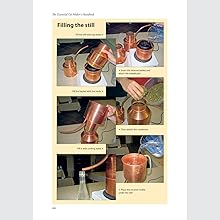
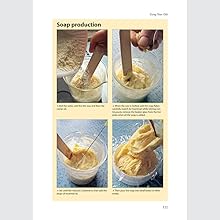
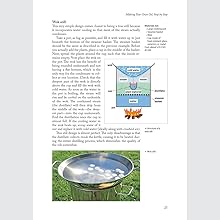
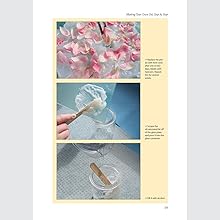
Extracting, Distilling, and Enjoying Plant Essences & Hydrosols: With their pleasing scents and uses in natural remedies, essential oils are more in demand now than ever. Unfortunately, modern production methods and unscrupulous labeling practices make it extremely difficult for consumers to know whether an oil is genuine or artificial, and increasingly the only way to be certain that your essential oils are free from chemical additives is to make them yourself. Producing your own essential oils and hydrosols in small quantities is easier than you might think, especially with the guidance of Austrian master distillers Helge Schmickl and Bettina Malle. Translated from its original German, The Essential Oil Maker's Handbook has been revised and updated to include information on hydrosols, the aromatic water once considered a mere by-product but now recognized as a valuable substance in itself. Learn how to make your own shower gels and creams using essential oils that you created yourself out of materials from your garden and pantry, without chemical additives. The authors provide guidance, based on data from their own experiences, on the harvesting, processing, and use of 130 indigenous and exotic plants as well as the necessary equipment for oil extraction. This guide covers in detail: Effective procedures Necessary equipment Suitable plants Practical uses for your oils Tips and tricks Including about 40 base recipes for personal care products - from bathing additives to facial and body care to perfume - this book provides a solid foundation for both beginners and professionals. This detailed and authoritative reference is indispensable in appreciating the production and wide range of applications of essential oils. Review: Outstanding handbook for small-scale production of essential oils and hydrosols - This book contains so much information! I didn't expect producing essential oils and hydrosols via steam distillation is so easy. The best of all, you don't need much. Between 10 and 20 ounces of plant material is enough for 2 to 20 milliliters of essential oil and 500 milliliters of hydrosol, depending on the used plant species. The authors describe in detail all issues to maximize oil yield and to receive the most intense hydrosol, whether it is still shape, amount of water, distillation process, plant preparation, harvest time, etc. Finally I've found a sensible application of unused or surplus material from my herb bed which I composted all the years before. It's even possible to use dried plant materials. Assembling your own still with equipment found in every kitchen is simple, no need to weld or solder. Nearly every imaginable essential-oil-plant is accurately described: which part to use, when to harvest, specific preparation, oil yield, and other special characteristics. The last part of the book contains step-by-step instructions for all kind of essential oil and hydrosol applications. An outstanding handbook for everyone who intends to produce his own essential oils and hydrosols. Review: Excellent guide for production of small batches of essential oils! - I haven't had time yet to collect the materials or equipment to produce my own oils, but I've read the book almost cover to cover already. It is very comprehensive, with excellent descriptions of the right way to get the most oil and best quality from many ingredients. There is good detail on many types of equipment, as well as the benefits and drawbacks of each, as well as common mistakes that could potentially ruin the batch of oil. I am looking forward to setting up my own "still room" and producing my own small batches of essential oils and hydrosols. I've made herbal tincures and salves from wild crafted herbs - it's time to take the next step! Edited to add: It should be noted that the authors sell stills and some of the information is focused on selling the two models they've developed. (All the other info can be applied to any distillation method.)

| Best Sellers Rank | #165,704 in Books ( See Top 100 in Books ) #28 in Aromatherapy (Books) #96 in Herb Gardening #143 in Homebrewing, Distilling & Wine Making |
| Customer Reviews | 4.7 out of 5 stars 565 Reviews |
D**R
Outstanding handbook for small-scale production of essential oils and hydrosols
This book contains so much information! I didn't expect producing essential oils and hydrosols via steam distillation is so easy. The best of all, you don't need much. Between 10 and 20 ounces of plant material is enough for 2 to 20 milliliters of essential oil and 500 milliliters of hydrosol, depending on the used plant species. The authors describe in detail all issues to maximize oil yield and to receive the most intense hydrosol, whether it is still shape, amount of water, distillation process, plant preparation, harvest time, etc. Finally I've found a sensible application of unused or surplus material from my herb bed which I composted all the years before. It's even possible to use dried plant materials. Assembling your own still with equipment found in every kitchen is simple, no need to weld or solder. Nearly every imaginable essential-oil-plant is accurately described: which part to use, when to harvest, specific preparation, oil yield, and other special characteristics. The last part of the book contains step-by-step instructions for all kind of essential oil and hydrosol applications. An outstanding handbook for everyone who intends to produce his own essential oils and hydrosols.
C**I
Excellent guide for production of small batches of essential oils!
I haven't had time yet to collect the materials or equipment to produce my own oils, but I've read the book almost cover to cover already. It is very comprehensive, with excellent descriptions of the right way to get the most oil and best quality from many ingredients. There is good detail on many types of equipment, as well as the benefits and drawbacks of each, as well as common mistakes that could potentially ruin the batch of oil. I am looking forward to setting up my own "still room" and producing my own small batches of essential oils and hydrosols. I've made herbal tincures and salves from wild crafted herbs - it's time to take the next step! Edited to add: It should be noted that the authors sell stills and some of the information is focused on selling the two models they've developed. (All the other info can be applied to any distillation method.)
C**J
A great book with excellent technical details
This book was written by two doctors, and has excellent technical information I was pleased with, but not so much as to be overwhelming. If you are interested in many varieties of still, a world of different techniques and options, you will enjoy this book. If you are less interested in knowing what a hydrosol is in a chemical sense, you can easily skip ahead and get right to the procedures. For me this was the perfect style.
M**E
The book explains the process to make oils as advertised
Good book, easy to follow and good explanations of how to create essential oils
M**E
Cannot go wrong with this book.
If you are looking for a theoretical book backed by practical facts on EO, this is it! I enjoyed the layout and the relèvent illustrations provided by the authors. I highly recommend it for those new to EO distillation.
0**P
Excellent Book on Distilling Essential Oils
There are 2 books by Bettina Malle and Hedge Schmickl. It is worth having both. The other is Crafting Distilled Spirits. Both books are released as high quality hardbound books. The photos and illustrations are excellent. Both books are very practical. If you are going to only buy one book, then this book on the Essential Oils goes more deeply into which types of stills work, and which ones are not as effective. The book on crafting spirits gets into how to prepare the mashes. Please keep in mind that the USA has very tight regulations on alcohol production .. you must pay taxes if you produce large quantities. But there are no problems with distilling essential oils. These authors are very experienced, and they know what they are doing. Highly recommended!
T**Y
Love it! Informative!
I've always wanted to learn how make my own essential oils! This book is awesome!
D**D
Buy this book now!
This book is FANTASTIC and you should buy it if your interested in the hobby BEFORE you purchase anything else. This book will become a valuable resource to you. I do wish there was more information on resin oil solvent extraction ie Myrrh (Maybe in a future edition??? :) )but this book keeps you busy and gives a great hostory and very detailed how too's. Thank you to the authors!
J**.
La guia de los aceites que necesitas
Un buen libro para entrar en el fascinante mundo de los aceites esenciales.
P**T
If you are really interested in extracting essential oil, buy this book.
I've read this book from cover to cover and can say it is really packed with hands-on information. Describes many extraction method. I believe it is an excellent reference for anyone wishing to start making their own essential oils.
C**N
Have You Ever Wondered...?
Have you ever wondered how scents are made? I have always known that it is a skilled art and that is why scents can be so pricey. This book gives me a great insight into the techniques involved. It draws attention to the shortcomings of artificially produced scents. It elaborates on the different methods of distilling the oils from their natural sources. My interest in the question was spurred on originally by learning of the health giving properties of sourced plants and the use of precious oils in religious ceremonies. I cannot recommend this book too highly.
F**B
se Recension
ok
C**N
Gerardo Marín
Excelente libro de referencia sobre el tema. Muy conciso y hecho por gente calificada técnicamente y conocedora de las aplicaciones y usos
Trustpilot
3 weeks ago
3 weeks ago