
DOWNLOAD THE APP


Customer Services
Copyright © 2025 Desertcart Holdings Limited
DOWNLOAD THE APP

The Story of More: How We Got to Climate Change and Where to Go from Here [Jahren, Hope] on desertcart.com. *FREE* shipping on qualifying offers. The Story of More: How We Got to Climate Change and Where to Go from Here Review: Required Reading - I feel this book should be required reading for every American. Jahren covers topics that we often do not see. She uses a great deal of research to back up her topic. For instance, she thoroughly discusses our food supply and how much gets wasted while people go hungry. I love her writing style; it is terse, no wasted words, she gets to the point. But there is often humor to make you smile. Along the way, she inserts her own life occurrences.She presents her research and information in a way that you realize you can make decisions to assist in our battle against climate change. Don’t miss reading this book! It is a life changer! Review: Great Book - In The Story of More Hope Jahren delivers a highly accessible –and surprisingly intimate –climate change narrative that encompasses a history of human population, innovation, consumption, and …herself. She brings mind-boggling statistics about world population, agricultural advancements, energy consumption, and climate change into the perspective of her own lifetime (which makes them even more astonishing) all while weaving in personal anecdotes that make for a memoir-like read. As a one who dwells within Earth’s overpopulation and indulges in what is probably more than their fair share of resource consumption I found myself kindly welcomed into Jahren’s smooth use of convicting statistics and her own life. I would recommend this book to anyone looking for a introductory run down of climate change and its history, or for any climate change know-it-alls looking for a bit of hope and comradery. As a person who has spent the last four years of my life studying environmental science and management –which may as well be called climate change: the study of pessimistic hope –this book left both convicted and optimistic. As Jahren kindly encouraged “having hope requires courage.”
| Best Sellers Rank | #84,615 in Books ( See Top 100 in Books ) #41 in Environmental Economics (Books) #46 in Climatology #93 in Environmental Science (Books) |
| Customer Reviews | 4.5 4.5 out of 5 stars (1,060) |
| Dimensions | 5.19 x 0.56 x 8 inches |
| Edition | First Edition |
| ISBN-10 | 0525563385 |
| ISBN-13 | 978-0525563389 |
| Item Weight | 2.31 pounds |
| Language | English |
| Print length | 224 pages |
| Publication date | March 3, 2020 |
| Publisher | Knopf Doubleday Publishing Group |
C**S
Required Reading
I feel this book should be required reading for every American. Jahren covers topics that we often do not see. She uses a great deal of research to back up her topic. For instance, she thoroughly discusses our food supply and how much gets wasted while people go hungry. I love her writing style; it is terse, no wasted words, she gets to the point. But there is often humor to make you smile. Along the way, she inserts her own life occurrences.She presents her research and information in a way that you realize you can make decisions to assist in our battle against climate change. Don’t miss reading this book! It is a life changer!
J**S
Great Book
In The Story of More Hope Jahren delivers a highly accessible –and surprisingly intimate –climate change narrative that encompasses a history of human population, innovation, consumption, and …herself. She brings mind-boggling statistics about world population, agricultural advancements, energy consumption, and climate change into the perspective of her own lifetime (which makes them even more astonishing) all while weaving in personal anecdotes that make for a memoir-like read. As a one who dwells within Earth’s overpopulation and indulges in what is probably more than their fair share of resource consumption I found myself kindly welcomed into Jahren’s smooth use of convicting statistics and her own life. I would recommend this book to anyone looking for a introductory run down of climate change and its history, or for any climate change know-it-alls looking for a bit of hope and comradery. As a person who has spent the last four years of my life studying environmental science and management –which may as well be called climate change: the study of pessimistic hope –this book left both convicted and optimistic. As Jahren kindly encouraged “having hope requires courage.”
T**N
Human progress and its downsides
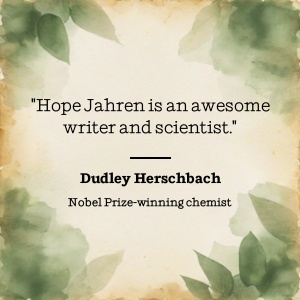
Hope Jahren is an award-winning scientist as well as a brilliant writer, and it shows. The book is filled with interesting and relevant facts with the associated references from reliable sources. The book is balanced, well-reasoned, educational and the author shows a deep understanding of the subject(s). This is in contrast to many books on science related topics written by journalists or lawyers. This book gives a great overview of human progress and its downsides, with special focus on what has happened since the author’s birth in 1969. She tells us about the improvements in health, longevity, wealth, crop yields, the sharp reductions in child mortality, and poverty. She tells us about population growth, increased production and consumption, the astounding growth of cities, the five doubling of air travel, and the three doubling of our use of fossil fuels. Unfortunately, human progress is a double-edged sword. With it comes habitat destruction, species extinction, climate change and ocean acidification. She tells us about factory farming, excessive meat production and wastefulness. We shouldn’t reverse human progress, but we can address the damage we are doing and distribute our wealth more evenly. However, there are a couple of things that I did not like about the book. First, she is not giving nuclear power a fair shake. Second, with respect to how we can improve the situation, she seems to put the onus on the purchasing habits of consumers while not discussing policy or information much. Politicians are shockingly misinformed, consumers don’t know how to make the best choices for the environment, information is politicized, and misinformation is widespread. Addressing this is very important. In general, we cannot decide where to get our electricity from (there are a few exceptions). That’s decided by large corporations and politicians, and we can influence that via various forms of political action. Therefore, I felt there were a couple of holes in an otherwise great story. Which is why I give the book four stars instead of five.
S**G
Hard but Necessary and not Without Hope
This was one book I was determined to finish before year’s end. I’m glad for these kind of milestones, as it got me off my stall. Why did I stall? I think because it’s easier to turn to bright shiny fun things (like Historical Fiction, my Brain Candy) than it is to digest hard truths. But we should all do hard things, if not once a day or once a week or month, certainly, then, once a year. So finish, I did. And I’m glad, for I’ve begun dedicating at least one yearly goal to doing something in reducing my footprint. Thankfully, Jahren leaves some well thought out ideas on how to do that, another reason to finish the book before the New Year. Or to read now, if you haven’t. Well done, and thank you, Hope Jahren. Great reading, too.
P**K
More cannot be said about the need to consume less stuff in fewer words than in this crisp work. Very US-centric but is of global relevance. Fact after fact is presented by Jahren about production and consumption, often in interesting nuggets. She is upbeat about how we can overcome climate catastrophe and the sixth mass extinction and offers the mantra that we should use less and share more. There are also tips on how to do this. If the facts she presents are correct, there is little reason to justify her optimism that things will turn out well. But “positive thinking” is an American condition and Jahren cannot escape it. The Indian middle class should take a look at Hope.
S**M
Amazing and sad. Much needed reading for everyone
R**S
Outstanding book. Conveys a great deal of information, although to be not so long.
F**S
Dead easy to get a hold of the concepts in this book. Easy to read, difficult to comprehend what it saying in that time has run out to wait to see if the scientists are wrong.
A**A
Está lectura solo incrementará en importancia con el tiempo y en un mundo post Covid.
Trustpilot
2 weeks ago
3 days ago