
DOWNLOAD THE APP


Customer Services
Copyright © 2025 Desertcart Holdings Limited
DOWNLOAD THE APP
Full description not available
B**Y
A Loremaster's Detailed Review of Heart of the Wild
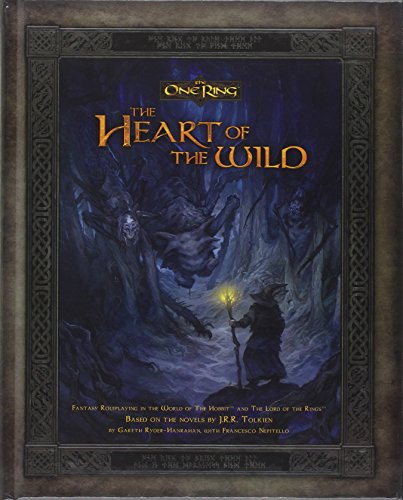
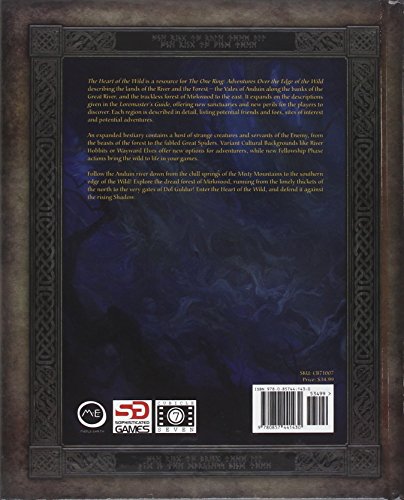
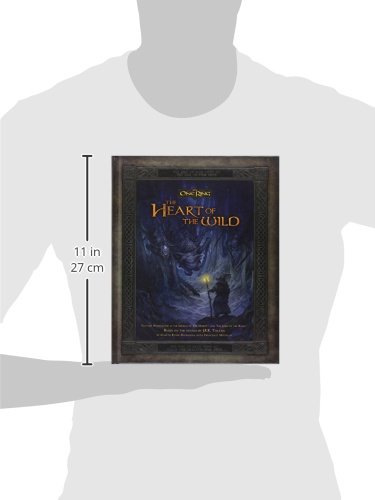
IntroductionHeart of the Wild is the most recent supplement for The One Ring. It's essentially a gazetteer to western and central Wilderland (the Vales of Anduin and Mirkwood; which is to say everything except the Dale-lands, Lake-Town, and the Long Marshes). The yet-to-be-released companion volume, Darkening of Mirkwood, is a plot point campaign sourcebook that requires Heart of the Wild (though you can use HotW just find without Darkening). It's most useful for Loremasters as a setting reference and a source for new Adversaries and NPCs, though there are some player options sprinkled throughout it.Production ValueThis is the first hardcover product in the line, and it makes all the difference. Previous softcovers (including the core rulebooks) had issues with the binding (my copies included), which is a sore point for an otherwise beautiful set of books. The hardcover format seems to have eliminated this problem, as the binding certainly seems as solid as any other RPG book I've owned. At 128 pages it's a little short for the price point.LayoutThe book is divided into 3 main sections (plus an introduction, an updated map, and an index), the Vales of Anduin, Mirkwood, and Adversaries. The two major regions are divided up into various sub-regions, which are treated separately. The subregions correspond to those on the maps, and while this makes the book convenient to reference if you're interested in a specific place on the map, it can be a little repetitive to read this way, especially with all of the similar-sounding regions (west upper vales, east upper vales, west middle vales, east middle vales, etc. through Anduin vales and nether vales). This is exacerbated by the fact that each region is given entries for wildlife, inhabitants, notable characters, and notable places. The wildlife entries in particular are tiresome, as most of them include the expected bears, deer, squirrels, etc. There are a few notable details like the swarms of insects that beset travelers in the East Nether Vales, which the wandering Erringmen fend off with fire-pots full of incense, but by and large I think that space could have been saved by detailing the general wildlife in the introductory section to the two major regions, and then if there are interesting wildlife for a given sub-region mentioning those in its summary. This is the one part of the book that feels like it was placed in to pad page count, which is all the more noticeable with only 128 pages.The art lives up to what we've come to expect from this line, which is to say that the style fits the setting very well. You get a mix of paintings and, for some specific NPCs, pencil drawings. There is at least one piece of recycled art (the portrait of Thranduil), but the vast majority of it is new. My one complaint is that a lot of the Mirkwood pieces look really similar, and don't seem to depict anything besides "ooooh, scary trees!" Given that similar pieces are found in the core books, it's tough to really appreciate some of the Mirkwood stuff.Sidebars abound in this book, and they run the gamut from new player options, to interesting details about characters ("Thranduil's Ring" and "The Crown of the Elvenking" being particularly nice touches), to short little stories that better demonstrate locations or situations ("A Campfire Tale," "Forgotten Treasures"), or advice about keeping already-visited locations fresh ("Strange Faces in Familiar Lands"). This is a great way to maintain the consistent region to region structure while still allowing for unique details to be given, and it visually informs the reader that something here is different, important, or is getting a different style of treatment. My only gripe is that while the sidebars are in the index, there is no notation that indicates they're sidebars (a minor gripe, to be sure).ContentAs a setting reference this book does what it needs to do, without over-detailing things. A description of the landscape for each sub-region, and a handful of versatile NPCs with motivations and personalities that seem relevant to the interests of adventurers. Some might end up as adversaries, some allies, while others could go either way. Concepts are generally not repeated, so you're getting something new and interesting with each NPC. The entries are short and to the point, with an attribute level given, Traits, Endurance, and ranks in any skills that the NPC is likely to demonstrate. One nice touch that updates Tolkien to the sensibilities of most modern gamers is that about half of the NPCs are female.A lot of the descriptions (of both NPCs and specific locations) act as hooks, to spark curiosity and inspire GM creativity. Personally, this is the type of published material that I tend to get the most use out of as a GM. A little "seed" that I can take off in my own direction. I supply most of the details and plotlines, but I wouldn't have ever thought of it if I hadn't read that interesting little initial description. For this reason I anticipate that Heart of the Wild might be sufficient for my GMing needs, in that Darkening might provide too much detail for my tastes. In other words, Heart of the Wild will probably still be useful to GMs who don't like running published adventures (which I don't).A few locations are given a more detailed treatment, to the extent that they're mapped out. These are the Halls of Thranduil (a much better version than the one from Karen Wynn Fonstad's "The Atlas of Middle Earth," though doubtless that's because more liberties were taken), Dol Guldur (an overhead view of the exterior with important features labeled), Beorn's house, and the three Woodmen settlements in Mirkwood (with a note that Mountain Hall is mapped out in Tales from Wilderland). Actually, there are a few locations where only a very short summary is provided, and the entry otherwise says "refer to Tales/Loremaster's Book." For example, Beorn doesn't get much treatment since the LMB goes into a lot of detail on him. This attempt to keep the book "dense" and not reprint information may be a pro to some, and a con to others who would rather have a more complete reference in one book. Going back to the maps, these hit a pretty sweet spot of providing enough detail to get a sense of how the place is laid out, but not going so far as to count individual houses and whatnot. For me as a Loremaster, this level of detail is enough to keep my description of the place consistent, but it's not so rigid that it locks me out of options.I think the biggest missed opportunity in this book is that there are no hazards provided at all. I thought the region-specific hazards in Tales from Wilderland were a very nice touch, and I expected an abundance of them in Heart of the Wild. Again, considering that the book only clocks in at 128 pages it's a bit mind boggling why these were neglected. The few general hazards listed in the LMB can get stale really fast, and while you could do a quick scan through the area's description to adapt them to a sub-region in a pinch, there's not a lot of ease-of-reference there, and there might not be something immediately obvious.AdversariesAt just 11 pages the Monsters of the Wild chapter is much shorter than the other two, but considering how limited the selection from the LMB is it is a pretty decent expansion to the number of foes available. Obviously Tolkien doesn't have the menagerie of monsters that a game like D&D does, so it's a fine line between giving the Loremaster enough options to keep his players interested and providing so much that it no longer feels like Middle Earth.Aside from basilisks, grim hawks, and wood-wights, all of the adversaries are more or less variations on stuff that the players have likely already come across. There are enough mechanical differences to be noticeable, though. There are some specific "boss" orcs (including one with a named weapon), forest goblins, a warg "boss," hill-men, wild men, a new type of spider, and a trio of...nah, I'm not going to spoil that one ;)Player OptionsThe most significant options for players are new Fellowship Phase Undertakings, though these will largely be linked to a very specific location, so your options are unlikely to be greatly expanded during any one Fellowship Phase. Some of them are interesting new twists on what can be gained from an Undertaking, with some being fairly generic (Hunt with the Woodmen) and others being very unique (Taming the Steed of the Moon). There are 14 altogether, and with so much variety they can easily be used as examples to inspire Loremasters to create custom Undertakings using the same or similar mechanics with tweaked or substituted details.There are 2 new "sub-cultures," which are the Wild Hobbits of the Anduin Vales and the Woodmen of Mountain Hall. The entries are disappointingly sparse, with some starting skill ranks being switched around and new Cultural Blessings being granted (though in the case of the Woodmen it's as simple as switching the wording of Woodcrafty from "in a forest" to "in the mountains"). Unlike the Men of the Lake from the Lake-Town book, there are no new cultural Virtues or Rewards, and no new backgrounds. What makes this especially puzzling is that for the Hobbits in particular, a lot of the options from the core rulebook don't fit thematically at all. Again, I stress that at 128 pages there could have been more here.Woodmen and Elves also get one new Cultural Virtue each. River-blooded represents a Woodman who has River Maiden ancestry, whereas The Call of Mirkwood can be taken to show how an Elf PC is beginning to fade.Final ThoughtsOverall I'd say this book is well worth it for GMs, and for anyone who wants a fairly comprehensive reference book on Wilderland. Though it's worth keeping in mind that as a reference book, it's not strictly canon as many liberties were taken to make it appropriate for use in an RPG. I still think it's a great read for getting a sense of what these lands are like, and what life would be like there. If you're just a player with only a casual interest in Tolkien lore you might not find much of use here.By and large it's a great addition to the TOR library, though it's not without its flaws. A lack of new Hazards, player options that could have been done in more detail, and a short page count for the price (but hardcover is awesome!) keep this from getting a perfect rating, but they're pretty minor issues and shouldn't get in the way of purchasing this book if you're on the fence. The book is absolutely stuffed with "seeds" that will provide GMs with inspiration for many adventures and campaigns, and it makes a great reference for adding color and detail to travel through these regions.
B**S
Glad I bought it.
Why some of these books command such high price is beyond me. However if one thing is certain, they are beautiful and made with love. The book arrived fast, and this one isnt (currently) crazy expensive. Well worth they money.
J**K
Yeppers!
Keep up the great work! As always, very high quality!
C**N
Highly Recommended, Cubicle 7 is worth supporting.
The Heart of the Wild is a wonderful supplement for The One Ring rpg, detailing the Wilderland region even more than what was shown in the corebook. The art, as always, is of the utmost quality and is fully worth the money for any Loremaster.
B**I
Beautiful Product
The information in the product is presented beautifully and it is well written and captures the subject matter, I am waiting to actually use it in a game.
L**S
First Thoughts
I only just purchased the Heart of the Wild from Cubicle 7's website, meaning I now have access to the PDF.I have not read the entire book yet (it is around 130 pages) but the materials I have read have been great.As a lover of Tolkien I very much appreciate the Cubicle 7 Team's commitment to preserving his world. Sections of the book are devoted to history of the regions, collaborating on the various Histories of Middle-Earth and the Silmarillion. As somebody who has read the Silmarillion and the trilogy multiple times it is very refreshing to enter into these sections and come away having learned things.As far as actual gameplay goes, there is a lot of material. There are many intermediate characters introduced that can be easy additions to a single campaign as well as big, treacherous enemies that can be the conclusion of a longer adventure. There are mysterious locations detailed, rumors of treasure ad mystical beasts, and many a new monster.The PDF at least is beautifully written and published. The artwork is consistent with previous publications, which means it is stellar. I love browsing it.My only complaint (and it's minor) is the 'two new playable races.' The snippit on Amazon makes it sound like there are two new races that are fully fleshed out (ala the Lake-town folk in its sourcebook). However, there are simply two small sections on how to change pre-existing races to these new ones. One, the hobbits of Mirkwood, hardly seems playable given their nontrust of any other being. Nonetheless, there is a fleshed out new skill list and cultural blessing. The wayward elves are very interesting on the other hand and a bit more detail is given to them. Again, that is extremely minor and is more a complaint about the way those were advertised than the actual content. I think they are both doable, I just wish that, given the description of 'two new races,' there were full sections in the back like there are in the Laketown book.All-in-all this is a most-buy for LMs. Especially if you plan on using the upcoming Darkening of Mirkwood Quest Book as Cubicle 7 specifically states this will be a needed source to play those adventures.Do yourself a favor and pick this up right now while Cubicle 7 is throwing in a free PDF (sorry Amazon).EDIT: I have since received the physical copy of this purchase and am thrilled! It is a beautiful hard-bound book with nice, glossy pages. The previous supplements and core books released had very poor binding. This new hard-cover binding has none of those issues and is very durable. If I could add a sixth star I would.
I**R
Buy it. Just buy it....,
Great source material for either Tales of Wilderland and Darkening if Mirkwood. Brings an already rich and enticing area to life. Covers the areas of Wilderland (Mirkwood and surrounging areas to the Misty Mountains) in individual sections. Even good to simply read through its so well written. I like it. You can tell.
E**Y
No complaints
At first glance I was astonished to see the price tag sticked on the front, but it came out perfectly (no glue residue). It arrived one day earlier and well packaged in a sturdy box, plus a plastic protector that I kept to protect the book.
J**A
Lovely artwork
Bought for my partner and he was very happy to receive this
D**D
Great
Great book and it's very useful, the way sourcebooks should be created. First observation: the present tome is not an autonomous island in a sea of knowledge. It travels in a well-established path, effortlessly blending in with both previous products as well as the books that followed it in the game line.
C**E
Excellent supplement!
Even though the book is a little slender for the price, it's worth it! The information given adds lots of depth to the setting of The One Ring RPG and will keep your players busy for a long time!
Trustpilot
3 days ago
1 month ago