Some deliveries may take a little longer than usual due to regional shipping conditions.

DOWNLOAD THE APP


Customer Services
Copyright © 2025 Desertcart Holdings Limited
DOWNLOAD THE APP
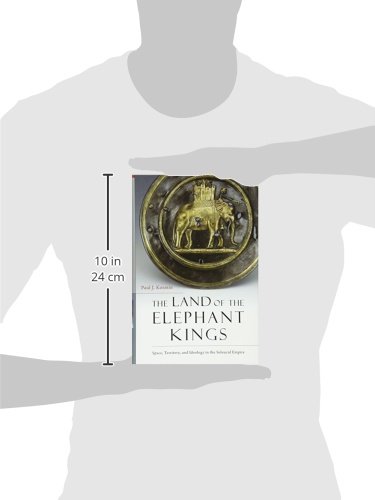
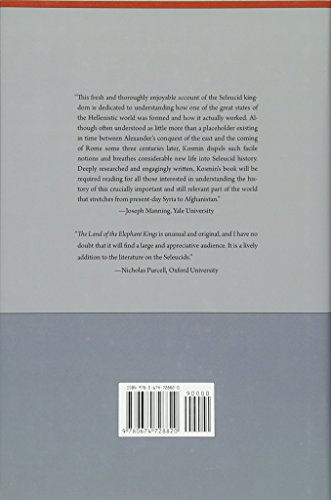

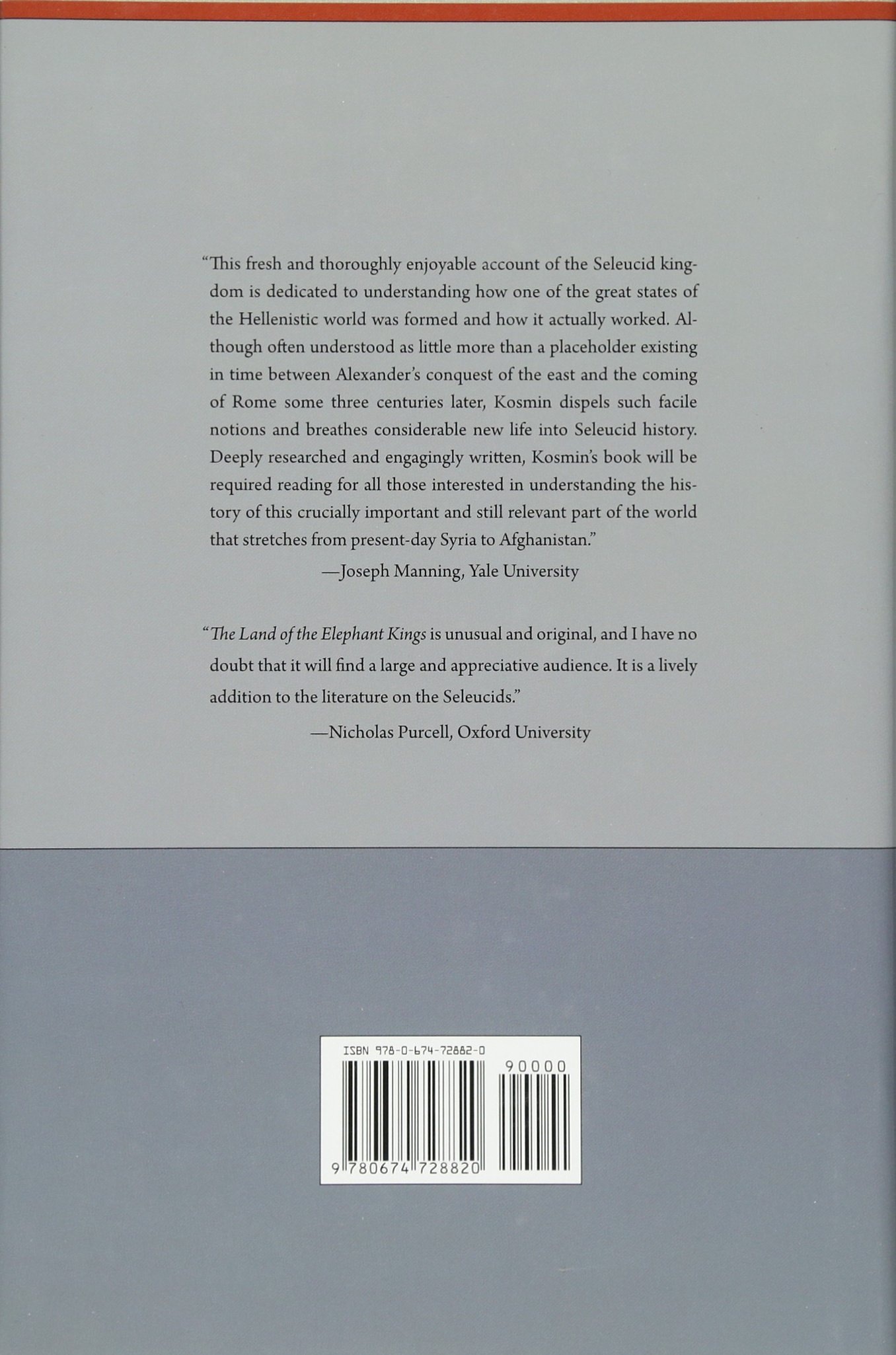
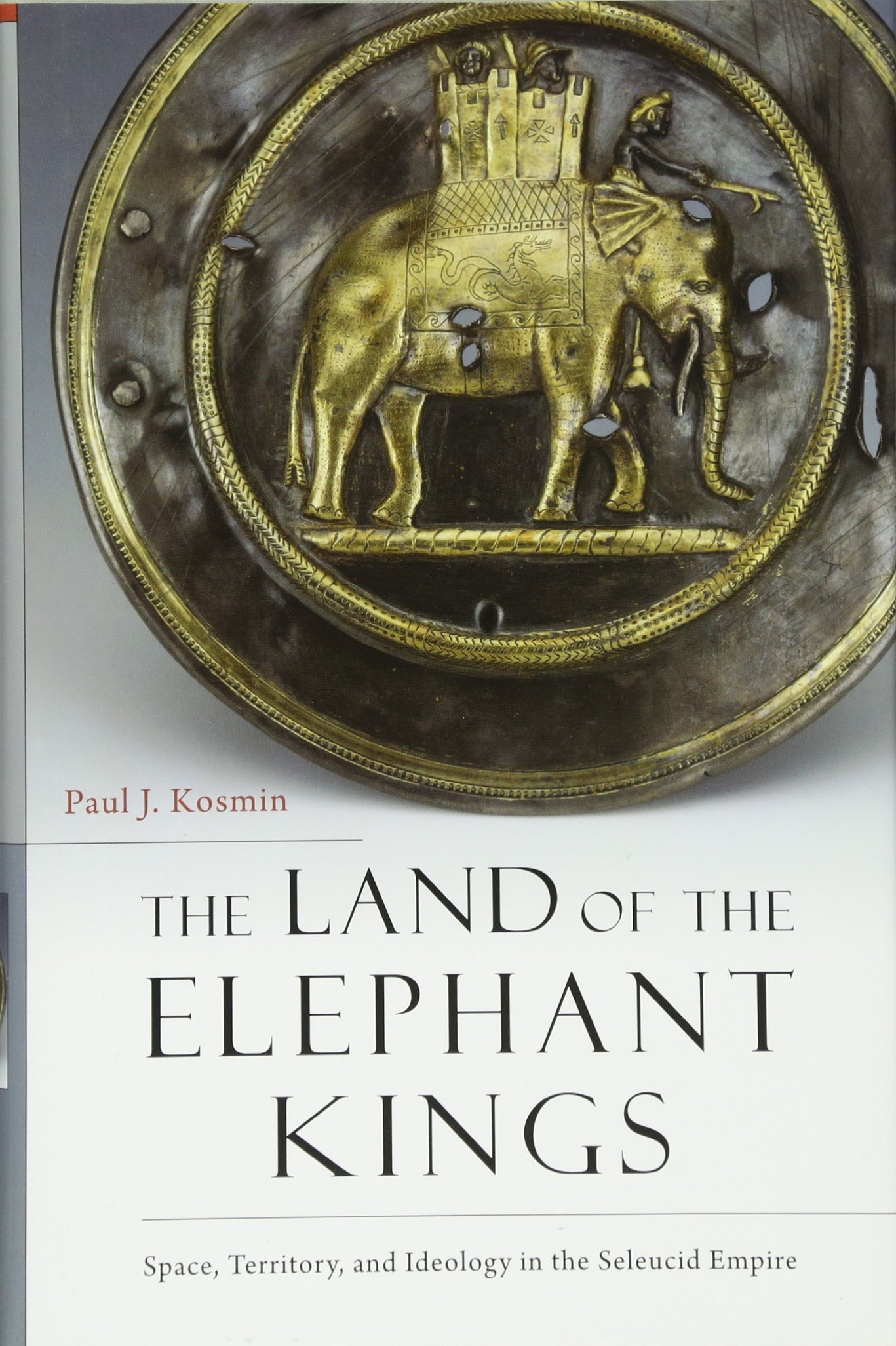
The Land of the Elephant Kings: Space, Territory, and Ideology in the Seleucid Empire [Kosmin, Paul J.] on desertcart.com. *FREE* shipping on qualifying offers. The Land of the Elephant Kings: Space, Territory, and Ideology in the Seleucid Empire Review: An extraordinary account of the Seleucid realm - Philip Kosmin's descriptions of the lands of the house of Seleucus are a very different approach than a normal historic narrative. Similar to W. W. Taren's Greeks in Bactria and India, Kosmin shows the bones beneath the narrative. The reason for this approach by both authors is the same: all we have for sources for this part of Hellenistic history are shattered fragments. The best nominative narrative remains Bevan's House of Seleucus. There are other interesting approaches, including Kuhrt and Sherwin-White, From Samarkand to Sardis and John Granger's numerous works. But Kosmin's account is very good and adds significantly to our understandings of the Hellenistic age. Using collections of underutilized primary sources, epigraphic, cuneiform, archeological, and source statements found in the fragments of later authors, the author draws an image of the Seleucid elite's understanding of themselves and their kingdom. By interposing contemporary statements with major events, Kosmin teases significant nuanced interpretations of Seleucid motivations and actions. His point is that if we had the lost histories of the Seleucid kingdom and the Hellenistic age, this is what we would find. This book is not an introduction to the Seleucid realm or its history. It is an extraordinary elucidation of what the Seleucids thought about themselves and how they wanted their world to see them. Review: Amazing book with some theroies. - It's not just chronological history the book tries to explain the ideology that served as a background force to the Seleucid Empire—a great book.
| Best Sellers Rank | #1,930,195 in Books ( See Top 100 in Books ) #45 in Syria History #2,821 in Ancient Civilizations |
| Customer Reviews | 4.2 4.2 out of 5 stars (44) |
| Dimensions | 6.25 x 1.5 x 9.75 inches |
| ISBN-10 | 0674728823 |
| ISBN-13 | 978-0674728820 |
| Item Weight | 1.82 pounds |
| Language | English |
| Print length | 448 pages |
| Publication date | June 23, 2014 |
| Publisher | Harvard University Press |
J**E
An extraordinary account of the Seleucid realm
Philip Kosmin's descriptions of the lands of the house of Seleucus are a very different approach than a normal historic narrative. Similar to W. W. Taren's Greeks in Bactria and India, Kosmin shows the bones beneath the narrative. The reason for this approach by both authors is the same: all we have for sources for this part of Hellenistic history are shattered fragments. The best nominative narrative remains Bevan's House of Seleucus. There are other interesting approaches, including Kuhrt and Sherwin-White, From Samarkand to Sardis and John Granger's numerous works. But Kosmin's account is very good and adds significantly to our understandings of the Hellenistic age. Using collections of underutilized primary sources, epigraphic, cuneiform, archeological, and source statements found in the fragments of later authors, the author draws an image of the Seleucid elite's understanding of themselves and their kingdom. By interposing contemporary statements with major events, Kosmin teases significant nuanced interpretations of Seleucid motivations and actions. His point is that if we had the lost histories of the Seleucid kingdom and the Hellenistic age, this is what we would find. This book is not an introduction to the Seleucid realm or its history. It is an extraordinary elucidation of what the Seleucids thought about themselves and how they wanted their world to see them.
C**N
Amazing book with some theroies.
It's not just chronological history the book tries to explain the ideology that served as a background force to the Seleucid Empire—a great book.
C**R
Two Stars
Warning! This book is riddled with thick academic writing. It is a slog.
R**T
good
Good
A**I
Necessary
If your interested in Seleucid empire this book is necessary , although it's not vast and fully detailed but yet again it's necessary , even for teaching purposes.
M**N
difficult but I learned from it
This book is very difficult, sometimes unnecessarily so. Nevertheless, I learned a bit from it. Before reading it, I was vaguely aware that the Seleucid Empire, like that of the Ptolemies in Egypt, was founded by one of Alexander the Great's subordinates after his death. But I don't think I was really aware of how weird (by modern standards at least) this empire was. Most empires, like the Roman Empire for example, start with a homeland and gradually expand. The Seleucid Empire was whatever the first king was able to conquer- not including his homeland of Macedonia, but including some or all of what is now Israel, Syria, Iraq, Iran and some smaller countries here and there. Thus, the empire never had anything resembling a coherent national identity. The first Seleucid kings created numerous cities, but (unlike some other kings) didn't really create one dominant city. Perhaps as a result, the Seleucid kingship was not exactly an easy or pleasant occupation. Instead of staying in a capital city while underlings did all the work, Seleucid kings traveled around - sometimes showing off their might, but often fighting wars. Most died violently, and many (especially in the empire's turbulent last century) were involved in civil wars against others who wanted the job.
T**S
written in a style that is fairly easily understood, then you had best try something else
A well-researched book but truly written for a small group of academics; this is NOT a book for general reading. If you want to read a book about the Seleucids, written in a style that is fairly easily understood, then you had best try something else. If you are doing graduate study on the topic of the book then you probably will find it useful.
O**E
Great
Great
I**G
If you want a surface level understanding this is not the book for you. It goes into great detail regarding the period. Definitely not here because of Rome: Total War…
B**D
A well written academic book on a subject rarely discussed. It introduced a fresh incite into the exciting period of the noble empire.
Trustpilot
5 days ago
2 weeks ago