
DOWNLOAD THE APP


Customer Services
Copyright © 2025 Desertcart Holdings Limited
DOWNLOAD THE APP
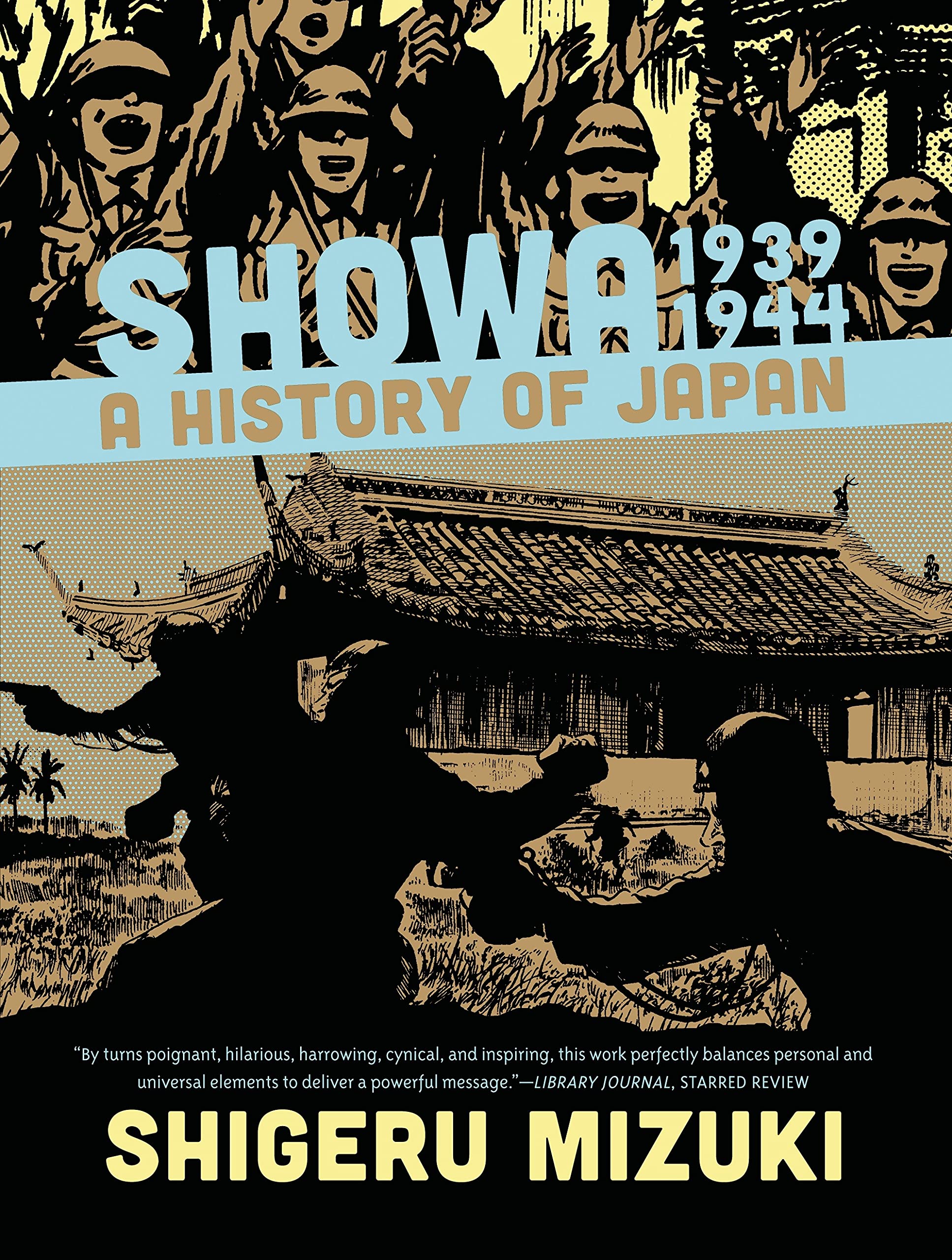
Showa 1939-1944: A History of Japan (Showa: A History of Japan, 2) [Mizuki, Shigeru, Davisson, Zack] on desertcart.com. *FREE* shipping on qualifying offers. Showa 1939-1944: A History of Japan (Showa: A History of Japan, 2) Review: Digestible 20th Century Japanese History. - Kinda review for the entire series. I'm currently reading this volume, that covers the WWII years. The series gives a rather in depth view of Japan during most of the 20th Century, in manga format. While also giving us a more personal POV from the author of how his life was impacted during this period. Foot notes are provided and referenced in the back of each volume. Review: The second volume of Shigeru Mizuki's monumental manga memoir... - Shigeru Mizuki's monumental manga memoir Showâ continues in Volume Two, which covers the years 1939 to 1944. All four volumes together, a massive undertaking, span the entire reign of Emperor Hirohito from his enthronement in 1926 to his death in 1989. Mizuki lived through them all. These represent modern Japan's most pivotal years as the tiny island nation sought to compete directly with the world's superpowers. This era ended largely in tragedy for Japan and its people. Volume One begins with the Great Kanto Earthquake and tracks the gradual rise of Japanese imperialism and fascism that quickly followed the "roaring 20s" Taishô era. Mizuki cleverly added his own biography in parallel to the more general history. His childhood in Sakaiminato, along with the backstory of his father and grandfather, situate him within those very interesting times. By Volume One's end Japan has altered considerably and Hideki Tôjô, who shouldered most of the blame for World War II's Pacific arena, enters the fray. Mizuki himself grows from boyhood to a wayward and irresponsible young adult who can't hold down a job and enjoys eating a little too much. His parents understandably worry about his prospects. Another familiar face, at least to Mizuki fans, Nezumi Otoko or "Rat Man," provides color commentary on both Japan's and Mizuki's history. The entire package presents an engaging, disturbing, beautifully ugly and sometimes humorous picture of the sudden rise and equally sudden fall of the Empire of Japan. Volume Two opens with Nezumi Otoko recapping some of Japan's earlier Meiji era history and its eventual desire to liberate and unify Asia in their own version of "manifest destiny." This leads to the "Greater East Asia Co-Prosperity Sphere," which in reality would mostly benefit Japan. They establish the Republic of China with Wang Jingwei as a token support figure. Japan manipulates him to meet their imperialistic ends. There follows a confusing miasma of political positioning that begins with Japan's Tripartite pact with Nazi Germany and Fascist Italy. World War II in Europe breaks out in 1939 with Hitler's invasion of Poland. Then Germany signs a non-aggression pact with the Soviet Union which confuses and infuriates Japan. The Imperial Rule Assistance Association creates a Nazi-esque political party that seeks to unite everything under its ethos. Military elites simultaneously push for a military dictatorship. Eventually the right wing takes control and imposes a war culture on all of Japan. A celebration of 2600 years of imperial rule soon gets squashed by posters declaring "the festivities are over!" Meanwhile, Mizuki fails miserably at newspaper delivery and flunks out of night school. In stark contrast, his father strikes it rich in Java and drums his rice bowls with joy. In the first in a series of interviews with the adult Mizuki, conducted by Nezumi Otoko, Mizuki relates the general misery of the times, pounds his fist and says "I don't know how the Japanese people endured it." Mizuki tries school again, only to get publicly shamed on his first day for not wearing his regulation cap. His science fiction stories don't go over well with faculty, either. Then his older brother receives his draft notice. After Tôjô tells Nezumi Otoko that he stinks, Japan politics its way around the A-B-C-D (American, British, Chinese and Dutch) line to gain control of French Indochina. Nezumi Otoko and "gramps" suggest that Japan has already spread itself too thin. Following a dispute with the United States over resources, and especially oil, Japan prepares for war. Tôjô becomes Prime Minister but retains his position as Army Minister. He soon declares that "we are invincible." Things escalate quickly. Japan bombs Pearl Harbor and the book depicts a smiling FDR saying "this is exactly the excuse we needed to go to war with Japan." Americans definitely continue to remember Pearl Harbor, but Japan also invaded Malaya, Singapore, Hong Kong, the Philippines, Guam, Wake Island and the Dutch East Indies at around the same time. At this time, Nezumi Otoko takes a brief diversion to explain some military terminology. He delineates all of the ranks and the makeup of troop formations such as squads, platoons, companies, battalions, armies, brigades and divisions. At this time Mizuki entertained himself with foreign movies and the Takarazuka Revue. He also takes part in mandatory military drills. War now rages in Asia and Europe. Casualties and heavy losses on both sides pile up along with virulent propaganda. Japan seems unstoppable, defeating the British and the USA. MacArthur, who will doubtless figure largely in the next volume, has to flee the Philippines, vowing "I shall return." War culture grips Japan so feverishly that, in another Nezumi Otoko interview, a young Mizuki says "all I can see is death." He reads religious and philosophical texts in a grasp to understand everything. Japan then sees its first defeat at Wake Island, but spirits remain high enough thanks to propaganda and spin. The song "Divine Warriors of the Sky" fills Japan. Then the inevitable happens: Mizuki receives his draft orders. Mizuki's time in the infantry seems filled with regular beatings for the smallest of infractions, although he does also break some big rules. The beatings never stop throughout the second half of the book. Tôjô inspects garbage cans for excessive waste. The Doolittle raid represents the first attack on Tokyo in history. Then the battle of the Coral Sea ends as a draw. Mizuki fares as well as a soldier as he did at newspaper delivery and, after many beatings, he finds himself in the bugle corps. He hates this intensely and demands a reassignment, but he soon finds himself shipped off to battle. The Battle of Midway in 1942 turns the war around for the Allies with a defeat so overwhelming that the Japanese population didn't know about it until after the war ended. Before this, Japan apparently had plans to invade Hawaii and California. Voluminous war scenes including superimposed large text brimming with battle onomatopoeia fill many pages. Mizuki learns that he is the Emperor's child and that his body belongs to the Emperor. Not only that, any mention of the Emperor requires a diligent clicking of the heels. He makes his way to Palau. Things then heat up in the Solomon Islands, especially at Guadalcanal island. Things initially look bad for the Americans, but eventually the war takes a permanent turn for the worst for Japan. Many defeated Japanese commanders, responsible for many "noble deaths," commit suicide. Then Americans shoot down famed Japanese Admiral Yamamoto's plane near Bougainville. Mizuki then gets shipped off to Koror in the famous, but now decrepit, ship Shino Maru. A piece of the handrail breaks off in Mizuki's hand. He ate a lot of carrots on that trip. Japan's resources begin to deplete and desperation sets in. As punishment for weaving palm fronds during an attack, Mizuki receives an unforgettable blow from a large wooden sandal. Owch. Back in Japan, his mother vows to the kami never to eat octopus until her sons return. Shipped off again to Zungen Point, and refusing the brothel line, Mizuki makes friends with some indigenous people. Later, he sees the remains of a fellow soldier eaten by an alligator, eats a slice of pig the size of a sugar cube , draws portraits for his squad commander and marches to Baien. There, he gets caught in an air raid, flies over a cliff and recovers only to see himself surrounded by enemies. He claims that his mother saw him in a dream and his parents pray for his safe return. Here the book ends. Right on a cliffhanger. As Nezumi Otoko says partway through this bulky volume: "Life can be a bitter pill to swallow sometimes." Many who find themselves trapped in war zones must have this same thought. Volume Two outdoes Volume One in action and drama overall. Mizuki's stories of wartime will sink deep into the conscience. The artwork maintains its overall excellent quality, ranging from the photo-realistic to the cartoony. One lingering absence is the Emperor Hirohito himself, especially considering that this entire series bears the name of his era. In Volume Two he only appears briefly in silhouette and indistinctly in other places. He seems distant, uninvolved, maybe only a helpess figurehead and symbol for the ambitions of others. Some controversy has raged over Hirohito's actual involvement in World War II. Perhaps subsequent volumes will address this topic, but as of Volume Two the Emperor still seems shadowy and detached. That Mizuki created Showâ from a Japanese perspective and for a Japanese audience may explain this away. Much more awaits, including the end of the Pacific War, in Volume Three.
| ASIN | 1770461515 |
| Best Sellers Rank | #1,144,791 in Books ( See Top 100 in Books ) #28 in Nonfiction Manga (Books) #59 in Drawn & Quarterly Comic & Graphic Novels |
| Customer Reviews | 4.8 4.8 out of 5 stars (179) |
| Dimensions | 6.53 x 1.86 x 8.68 inches |
| Edition | Translation |
| ISBN-10 | 9781770461512 |
| ISBN-13 | 978-1770461512 |
| Item Weight | 1.78 pounds |
| Language | English |
| Part of Series | Showa: A History of Japan |
| Print length | 536 pages |
| Publication date | June 3, 2014 |
| Publisher | Drawn and Quarterly |
R**R
Digestible 20th Century Japanese History.
Kinda review for the entire series. I'm currently reading this volume, that covers the WWII years. The series gives a rather in depth view of Japan during most of the 20th Century, in manga format. While also giving us a more personal POV from the author of how his life was impacted during this period. Foot notes are provided and referenced in the back of each volume.
E**K
The second volume of Shigeru Mizuki's monumental manga memoir...
Shigeru Mizuki's monumental manga memoir Showâ continues in Volume Two, which covers the years 1939 to 1944. All four volumes together, a massive undertaking, span the entire reign of Emperor Hirohito from his enthronement in 1926 to his death in 1989. Mizuki lived through them all. These represent modern Japan's most pivotal years as the tiny island nation sought to compete directly with the world's superpowers. This era ended largely in tragedy for Japan and its people. Volume One begins with the Great Kanto Earthquake and tracks the gradual rise of Japanese imperialism and fascism that quickly followed the "roaring 20s" Taishô era. Mizuki cleverly added his own biography in parallel to the more general history. His childhood in Sakaiminato, along with the backstory of his father and grandfather, situate him within those very interesting times. By Volume One's end Japan has altered considerably and Hideki Tôjô, who shouldered most of the blame for World War II's Pacific arena, enters the fray. Mizuki himself grows from boyhood to a wayward and irresponsible young adult who can't hold down a job and enjoys eating a little too much. His parents understandably worry about his prospects. Another familiar face, at least to Mizuki fans, Nezumi Otoko or "Rat Man," provides color commentary on both Japan's and Mizuki's history. The entire package presents an engaging, disturbing, beautifully ugly and sometimes humorous picture of the sudden rise and equally sudden fall of the Empire of Japan. Volume Two opens with Nezumi Otoko recapping some of Japan's earlier Meiji era history and its eventual desire to liberate and unify Asia in their own version of "manifest destiny." This leads to the "Greater East Asia Co-Prosperity Sphere," which in reality would mostly benefit Japan. They establish the Republic of China with Wang Jingwei as a token support figure. Japan manipulates him to meet their imperialistic ends. There follows a confusing miasma of political positioning that begins with Japan's Tripartite pact with Nazi Germany and Fascist Italy. World War II in Europe breaks out in 1939 with Hitler's invasion of Poland. Then Germany signs a non-aggression pact with the Soviet Union which confuses and infuriates Japan. The Imperial Rule Assistance Association creates a Nazi-esque political party that seeks to unite everything under its ethos. Military elites simultaneously push for a military dictatorship. Eventually the right wing takes control and imposes a war culture on all of Japan. A celebration of 2600 years of imperial rule soon gets squashed by posters declaring "the festivities are over!" Meanwhile, Mizuki fails miserably at newspaper delivery and flunks out of night school. In stark contrast, his father strikes it rich in Java and drums his rice bowls with joy. In the first in a series of interviews with the adult Mizuki, conducted by Nezumi Otoko, Mizuki relates the general misery of the times, pounds his fist and says "I don't know how the Japanese people endured it." Mizuki tries school again, only to get publicly shamed on his first day for not wearing his regulation cap. His science fiction stories don't go over well with faculty, either. Then his older brother receives his draft notice. After Tôjô tells Nezumi Otoko that he stinks, Japan politics its way around the A-B-C-D (American, British, Chinese and Dutch) line to gain control of French Indochina. Nezumi Otoko and "gramps" suggest that Japan has already spread itself too thin. Following a dispute with the United States over resources, and especially oil, Japan prepares for war. Tôjô becomes Prime Minister but retains his position as Army Minister. He soon declares that "we are invincible." Things escalate quickly. Japan bombs Pearl Harbor and the book depicts a smiling FDR saying "this is exactly the excuse we needed to go to war with Japan." Americans definitely continue to remember Pearl Harbor, but Japan also invaded Malaya, Singapore, Hong Kong, the Philippines, Guam, Wake Island and the Dutch East Indies at around the same time. At this time, Nezumi Otoko takes a brief diversion to explain some military terminology. He delineates all of the ranks and the makeup of troop formations such as squads, platoons, companies, battalions, armies, brigades and divisions. At this time Mizuki entertained himself with foreign movies and the Takarazuka Revue. He also takes part in mandatory military drills. War now rages in Asia and Europe. Casualties and heavy losses on both sides pile up along with virulent propaganda. Japan seems unstoppable, defeating the British and the USA. MacArthur, who will doubtless figure largely in the next volume, has to flee the Philippines, vowing "I shall return." War culture grips Japan so feverishly that, in another Nezumi Otoko interview, a young Mizuki says "all I can see is death." He reads religious and philosophical texts in a grasp to understand everything. Japan then sees its first defeat at Wake Island, but spirits remain high enough thanks to propaganda and spin. The song "Divine Warriors of the Sky" fills Japan. Then the inevitable happens: Mizuki receives his draft orders. Mizuki's time in the infantry seems filled with regular beatings for the smallest of infractions, although he does also break some big rules. The beatings never stop throughout the second half of the book. Tôjô inspects garbage cans for excessive waste. The Doolittle raid represents the first attack on Tokyo in history. Then the battle of the Coral Sea ends as a draw. Mizuki fares as well as a soldier as he did at newspaper delivery and, after many beatings, he finds himself in the bugle corps. He hates this intensely and demands a reassignment, but he soon finds himself shipped off to battle. The Battle of Midway in 1942 turns the war around for the Allies with a defeat so overwhelming that the Japanese population didn't know about it until after the war ended. Before this, Japan apparently had plans to invade Hawaii and California. Voluminous war scenes including superimposed large text brimming with battle onomatopoeia fill many pages. Mizuki learns that he is the Emperor's child and that his body belongs to the Emperor. Not only that, any mention of the Emperor requires a diligent clicking of the heels. He makes his way to Palau. Things then heat up in the Solomon Islands, especially at Guadalcanal island. Things initially look bad for the Americans, but eventually the war takes a permanent turn for the worst for Japan. Many defeated Japanese commanders, responsible for many "noble deaths," commit suicide. Then Americans shoot down famed Japanese Admiral Yamamoto's plane near Bougainville. Mizuki then gets shipped off to Koror in the famous, but now decrepit, ship Shino Maru. A piece of the handrail breaks off in Mizuki's hand. He ate a lot of carrots on that trip. Japan's resources begin to deplete and desperation sets in. As punishment for weaving palm fronds during an attack, Mizuki receives an unforgettable blow from a large wooden sandal. Owch. Back in Japan, his mother vows to the kami never to eat octopus until her sons return. Shipped off again to Zungen Point, and refusing the brothel line, Mizuki makes friends with some indigenous people. Later, he sees the remains of a fellow soldier eaten by an alligator, eats a slice of pig the size of a sugar cube , draws portraits for his squad commander and marches to Baien. There, he gets caught in an air raid, flies over a cliff and recovers only to see himself surrounded by enemies. He claims that his mother saw him in a dream and his parents pray for his safe return. Here the book ends. Right on a cliffhanger. As Nezumi Otoko says partway through this bulky volume: "Life can be a bitter pill to swallow sometimes." Many who find themselves trapped in war zones must have this same thought. Volume Two outdoes Volume One in action and drama overall. Mizuki's stories of wartime will sink deep into the conscience. The artwork maintains its overall excellent quality, ranging from the photo-realistic to the cartoony. One lingering absence is the Emperor Hirohito himself, especially considering that this entire series bears the name of his era. In Volume Two he only appears briefly in silhouette and indistinctly in other places. He seems distant, uninvolved, maybe only a helpess figurehead and symbol for the ambitions of others. Some controversy has raged over Hirohito's actual involvement in World War II. Perhaps subsequent volumes will address this topic, but as of Volume Two the Emperor still seems shadowy and detached. That Mizuki created Showâ from a Japanese perspective and for a Japanese audience may explain this away. Much more awaits, including the end of the Pacific War, in Volume Three.
P**F
The art of war
My eldest is going through junior high school in Japan and I was happy to hear she was studying aspects of the Second World War. As far as I can tell from her textbook (and I could well be missing something) those aspects are the Nazis and the Holocaust, and that's about it. To be fair, there was no room on the double-page spread covering the war to refer to any part Japan had to play in it, I suppose talking about genocide in Germany is distressing enough for 12-year-olds without bringing up Japan's less than auspicious past in Nanking or its own mini-genocide inflicted on the Chinese by Unit 731. Much easier to start with the Nazis and Anne Frank and all that. The trouble is, I doubt it will develop into much more introspection, which would be fascinating, if not to my daughter, then at least to her old man. So I don't look to Japan's schools to learn much about the war. That's what comic books are for. I enjoyed the English translation of the first instalment of Shigeru Mizuki's Showa manga covering 1926-1939, so I just had to get the second (covering 1939-1944). You might quibble that a manga can only skirt the surface of such a momentous time, and yeah, it does at times feel like a school history textbook, jam-packed with just enough facts to tell the story of The Key Events of the war. The Bataan Death March receives little more than two frames (and an aside from Mizuki that as horrific as it was, the death toll was as much to do with the heat and general Japanese unpreparedness to deal with POWs as anything particularly evil. And "Comfort Women" sexual slavery receives just a fleeting reference, on one page. But don't get me wrong, Mizuki is no revisionist. He's relaying the war through his experiences. He has undisguised contempt for the architects of war and has no time for jingoism. He's just trying to explain what happened, point to where it all went wrong, and get the hell out of the firing line. Pulp the textbooks and replace them with Mizuki's manga. We might all learn something then.
M**I
Excellent view of the world during WWII from the Japanese persective
Excellent view of the world during WWII from the Japanese perspective. Gave me a chill as an American to read about the fire bombing of Japanese cities done deliberately to decimate civilian populations. I donated the book to my local library after reading it.
L**G
A good book to read
fascinating! We think of history as static, but it is far from that. Perspective changes, understanding changes, the world changes. A good book to read.
H**G
Great book
This was a refreshing view of The Japanese perspective of war. Of particular interest was the Japanese view of the naval war against the U.S..
M**H
A grim history, subtly told
For me, this graphic history-autobiography is a fine way to get insight on the history and culture of Japan. I loaned the book to a close Japanese friend born in 1930, and he said it reflects reality as he experienced it as he grew up -- although he was too young to be shipped off to fight. The author/artist was in the thick of things, but amazingly seems to have retained a sense of humor though it all. He vividly describes how soldiers on remote islands during the last years of the war were in an impossible position: they were told to glorify themselves and the Emperor by dying in suicidal attacks on the enemy. That way they would no longer require shipping to protect and supply them, nor would they have to be transported back to Japan, which was running out of ships and aircraft.
N**P
By tying the story of his bumbling youth to the ...
By tying the story of his bumbling youth to the outbreak of WWII, Shigeru Mizuki has created something really special with this book.
G**L
Shigeru Mizuki is one of the masters of Japan's Manga art. In Showa he tries to explain his own experiences before and in World War II and connect it to Japan's wartime history. The books are unique as they are among the few graphic novels from Japan that try to actually describe all the horrors committed by Japan's Imperial Forces. While the concept and the graphic style are doubtlessly powerful and skillful, the storytelling aspect seems a bit less compelling. Compared to books like Barefoot Gen, Showa lags a bit behind. It is more difficult to actually be fascinated by the key figures. It is a little bit less intriguing to follow the protagonists. Anyway a great graphic novel with an (unfortunately) new look upon Japan's past - at least from a Japanese perspective.
J**É
Pour ceux qui aiment les mangas sérieux. Une série historique de haut niveau. Chaque volume raconte une époque . C'est un merveilleux cadeau 🎁 à s'offrir.
M**O
Shigeru Mizuki è uno dei più famosi mangaka giapponesi, specializzato nelle storie del folklore nipponico. In questo caso di focalizza sulla storia del Giappone dell'era Showa (1939-1944) e ci narra parte della sua vita. E' un manga molto interessante, pesante sotto alcuni aspetti, ma adatto soprattutto agli appassionati di storia o della cultura/storia del Giappone. Nel volume, Mizuki, utlizza tecniche artistiche differenti: da semplici disegni a schizzi molto realistici degli eventi di quegli anni. Nel secondo volume della quadrilogia ci narra dell'inizio della Seconda Guerra Mondiale, le conquiste delle forze armate giapponesi, le condizione sociale in Giappone, il duro trattamento che dovette subire l'autore durante il servizio militare fino alla sconfitta nipponica nella campagna della Nuova Britannia.
E**N
One of the greatest mangas I’ve read, if you’re interested in japans history through the Showa period this is a must read, I would recommend this to anyone. I’m proud to have this on my shelf and look forward to re-reading this over the years.
M**T
I couldn't put it down. I really enjoyed the combination of pure historical facts mixed with autobiographical parts. Great drawings!
Trustpilot
5 days ago
2 months ago