Some deliveries may take a little longer than usual due to regional shipping conditions.

DOWNLOAD THE APP


Customer Services
Copyright © 2025 Desertcart Holdings Limited
DOWNLOAD THE APP
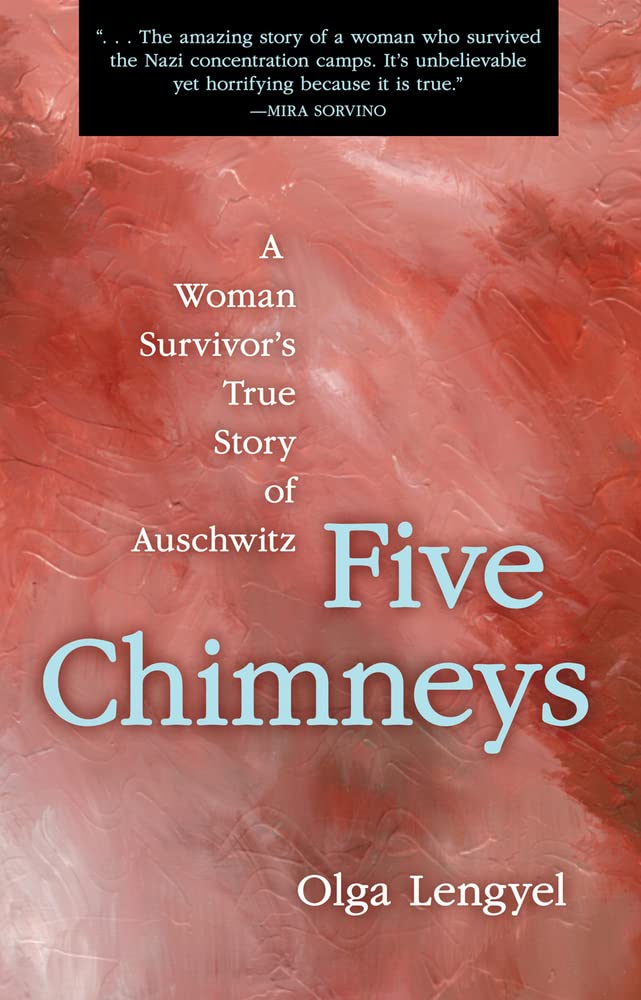
Five Chimneys: A Woman Survivor's True Story of Auschwitz [Olga Lengyel] on desertcart.com. *FREE* shipping on qualifying offers. Five Chimneys: A Woman Survivor's True Story of Auschwitz Review: Heart breaking and hard to read, but you must! - Sometimes you read a book that tears you up inside and you know you will never be the same after. Five Chimneys is a perfect example. I knew going into it that this story would be difficult to read, but I also feel obligated to honor those who experienced Auschwitz. I have read a few books on the subject before but nothing as gut wrenching and horrifying as this one. Some of the content I had read before, but unfortunately there was so much I was learning for the first time. I still don’t understand how this went on for so long and how we as humans could be so disgusting to treat others this way. “I had then two reasons to live: one, to work with the resistance movement and help as long as I could stand upon my two feet: two, to dream and pray for the day to come when I could go free and tell the world, “This is what I saw with my own two eyes. It must never be allowed to happen again.” -Olga Lengyel Olga Lengyel worked as a first surgical assistant to her husband, Dr. Miklos Lengyel. They had two boys and a really happy life. One day in May Miklos was called to the police station and Olga learned he was being sent to Germany immediately. Olga went home and told her parents she must go with him, they have to stay together. Her parents decide that they must all go together because they can’t possibly imagine in their worst nightmare what awaits them when they stepped onto the train. Packed beyond capacity with no food, water, or restroom they traveled for days. Those who were ill or weak died and everyone suffered greatly. As soon as they arrived at the camps they were separated and everything they owned taken from them. They took their clothes, shaved their heads, and striped away their dignity. Olga tells the story of how the people were separated and some sent to the camps and others straight to Birkenau to be gassed. This included her parents and her two boys. The guilt and utter turmoil she felt knowing it was she who was responsible for her family being there was too much to bear. Olga describes her life at Auschwitz and the inhumane treatment of all the men and women who were prisoners at the camp. Unspeakable stories of starvation and brutal beatings, slave labor and unthinkable acts of betrayal. I learned so much from Olga’s journey and I’m so happy she survived and her story was published so those of us who don’t know what happened behind the gates now can mourn along with her. Review: Memoir of a great horror that echoes our current dystopia. - Five Chimneys is the memoir of Olga Lengyel’s time as an inmate in the Auschwitz-Birkenau Nazi concentration camp complex in 1944 and 1945. It is her eye-witness account of horrors inflicted on innocents from attitudes and policies persisting still in the world. MS. LENGYEL AS AN EYEWITNESS Ms. Lengyel was a surgeon’s assistant at a hospital in Clug, Transylvania (in Hungary) in 1944. The surgeon she assisted was her husband, Dr. Miklos Lengyel, who also ran a hospital. Hungary was occupied by the Germans but most people lived more-or-less normally under their rule, not believing the rumors of internment camps where dissidents and undesirables were executed en-mass. But then Dr. Lengyel was arrested for allegedly boycotting the use of German pharmaceutical preparations in his clinic. Some fast-talking got him released, but only for a short while. Soon, he was taken by the SS (or “Schutzstaffel,” German for "Protective Echelon") again and did not return. Questioning the SS, Ms. Lengyel was told that her husband would be relocated to Germany and that she and her family could accompany him. She later found that this was a common ploy of the Germans to get families to voluntarily go the camps with other family members and bring possessions (which the Germans confiscated). At the train station, with her parents and two children, Ms. Lengyel was hustled into a cattle car and taken to Auschwitz. There, children and old people were sent straight to the gas chambers. Olga’s children and parents were among them. Her husband was also made an inmate there, though he eventually was sent to work as a doctor in the nearby camp of Buna. Ms. Lengyel spent several weeks learning the rules, procedures, and degradations of the camp. She is shaven, dressed in rags, and beaten. She discovered there was a market in sexual favors for food, even though engaging in it was punishable by death (as were most infractions). She did not participate in that degradation, though she was forced to be a part of others. Because of her background as a surgeon’s assistant, Ms. Lengyel was ordered to work in the infirmary. This was simply a designated barracks and the personnel working there were given few medical supplies. Through her infirmary contacts (patients), she became active in the camp “resistance.” She “delivered mail,” secretly distributing packages and letters as directed. Ms. Lengyel met many of the Germans who became infamous criminals in the workings of the camp. These included Joseph Kramer (Commander-in-Chief of a large part of the camp), Dr. Fritz Klein (”Chief Selector”), Dr. Mengele (”Angel of Death”), and Irma Griese (the “blonde angel”). Her report on her interactions with these people confirm that their murderous reputations were deserved. MORE HERE THAN A RECITATION OF HORRORS Ms. Lengyel’s account is more than a recitation of horrors, though it is that. It is a lucid account, told honestly with compassion and providing insight for current readers. One striking theme of her narrative is the constant manipulations the Germans employed to control people. They were brilliant at this, in an evil way. So families were encouraged to accompany arrested members and bring their possessions, implying a stay from which they would return. Doctors were told to bring their medical bags, implying they would be working in their profession somewhere else. Such deceptions extended to the soap and towels handed to people as they were herded into gas chambers, promising showers rather than death. Countless other lies were spun to keep people from panicking and so becoming uncontrollable. In every case, execution was the intended fate of all those so deceived. Consequently, the inmates became distrustful of anything the Germans told them. I see the same situation today, where people are constantly propagandized through television and Internet. Most people believe what the government says and take comfort in the cocoon created for them. Ms. Lengyel was amazed and appalled at the degree of reality denial among her fellow inmates. Many refused to believe in the mass executions up to the moment they were being pushed into a gas chamber. The Germans’ lack of value for human life made death a daily constant. As related by Ms. Lengyel, the Germans were frequently making “selections” of people to be executed. These were often done as punishments, but also for no apparent reason. Death could come at a whim. The SS authorities carried pistols and used them often. Even the “doctors” were not above shooting inmates. Those German camp “doctors” are known today for their moronic cruelty, and Ms. Lengyel’s account verifies this. The degree of brutish ignorance and pretense at science that she describes is amazing. It reached barbaric levels, based on the view of humans as “meat sacks” and the idea that specific groups of people are inferior. The current medical industry is just as materialistic, motivated only by profit. WELL-WRITTEN ACCOUNT, THOUGH NOT LINEAR Five Chimneys is well written. Ms. Lengyel was quite literate and a capable writer (she wrote at least two other books about Auschwitz). Her narrative here, though, is not completely linear. She moves around in time, sticking more with themes than with a time-line. This adds some difficulty in following her ordeal, but she does start at the beginning and stop at the end (of her imprisonment). Overall, she spent about seven months in Auschwitz (I’m sure it felt longer to her and even the narrative feels like a longer time span). NEVER AGAIN? Five Chimneys is valuable on a number of levels. It is an articulate, eye-witness account of what the Nazis did at the Auschwitz-Birkenau detention complex. Even more, Ms. Lengyel was in a position to interact with a number of the camps’ authorities and so offer insight into their depraved motivations. Near the book’s end, Ms. Lengyel voices the hope, shared by many Holocaust survivors, that this repugnant crime not be allowed to happen again. Personally, I think it is building to happen again. Many Nazis, motivated by ideas of technocracy and eugenics, were brought to the US via Operation Paper Clip. It seems their ideas were popular among the elites and are still the guiding ideas for world leadership. That insight is the value of this book for me. Ms. Lengyel notes that, even after her horrific experiences, she retains some faith in humanity. In the face of the Nazi’s inhuman mass-murder machine, there were those who resisted and, though they usually paid with their lives, refused to be debased. That’s something to consider when contemplating current events.
| ASIN | 0897333764 |
| Best Sellers Rank | #62,438 in Books ( See Top 100 in Books ) #44 in Jewish Holocaust History #302 in World War II History (Books) #1,442 in Memoirs (Books) |
| Customer Reviews | 4.6 4.6 out of 5 stars (10,803) |
| Dimensions | 5.5 x 0.53 x 8.5 inches |
| Edition | 2nd |
| ISBN-10 | 9780897333764 |
| ISBN-13 | 978-0897333764 |
| Item Weight | 2.31 pounds |
| Language | English |
| Print length | 232 pages |
| Publication date | October 1, 1995 |
| Publisher | Academy Chicago Publishers |
W**R
Heart breaking and hard to read, but you must!
Sometimes you read a book that tears you up inside and you know you will never be the same after. Five Chimneys is a perfect example. I knew going into it that this story would be difficult to read, but I also feel obligated to honor those who experienced Auschwitz. I have read a few books on the subject before but nothing as gut wrenching and horrifying as this one. Some of the content I had read before, but unfortunately there was so much I was learning for the first time. I still don’t understand how this went on for so long and how we as humans could be so disgusting to treat others this way. “I had then two reasons to live: one, to work with the resistance movement and help as long as I could stand upon my two feet: two, to dream and pray for the day to come when I could go free and tell the world, “This is what I saw with my own two eyes. It must never be allowed to happen again.” -Olga Lengyel Olga Lengyel worked as a first surgical assistant to her husband, Dr. Miklos Lengyel. They had two boys and a really happy life. One day in May Miklos was called to the police station and Olga learned he was being sent to Germany immediately. Olga went home and told her parents she must go with him, they have to stay together. Her parents decide that they must all go together because they can’t possibly imagine in their worst nightmare what awaits them when they stepped onto the train. Packed beyond capacity with no food, water, or restroom they traveled for days. Those who were ill or weak died and everyone suffered greatly. As soon as they arrived at the camps they were separated and everything they owned taken from them. They took their clothes, shaved their heads, and striped away their dignity. Olga tells the story of how the people were separated and some sent to the camps and others straight to Birkenau to be gassed. This included her parents and her two boys. The guilt and utter turmoil she felt knowing it was she who was responsible for her family being there was too much to bear. Olga describes her life at Auschwitz and the inhumane treatment of all the men and women who were prisoners at the camp. Unspeakable stories of starvation and brutal beatings, slave labor and unthinkable acts of betrayal. I learned so much from Olga’s journey and I’m so happy she survived and her story was published so those of us who don’t know what happened behind the gates now can mourn along with her.
R**F
Memoir of a great horror that echoes our current dystopia.
Five Chimneys is the memoir of Olga Lengyel’s time as an inmate in the Auschwitz-Birkenau Nazi concentration camp complex in 1944 and 1945. It is her eye-witness account of horrors inflicted on innocents from attitudes and policies persisting still in the world. MS. LENGYEL AS AN EYEWITNESS Ms. Lengyel was a surgeon’s assistant at a hospital in Clug, Transylvania (in Hungary) in 1944. The surgeon she assisted was her husband, Dr. Miklos Lengyel, who also ran a hospital. Hungary was occupied by the Germans but most people lived more-or-less normally under their rule, not believing the rumors of internment camps where dissidents and undesirables were executed en-mass. But then Dr. Lengyel was arrested for allegedly boycotting the use of German pharmaceutical preparations in his clinic. Some fast-talking got him released, but only for a short while. Soon, he was taken by the SS (or “Schutzstaffel,” German for "Protective Echelon") again and did not return. Questioning the SS, Ms. Lengyel was told that her husband would be relocated to Germany and that she and her family could accompany him. She later found that this was a common ploy of the Germans to get families to voluntarily go the camps with other family members and bring possessions (which the Germans confiscated). At the train station, with her parents and two children, Ms. Lengyel was hustled into a cattle car and taken to Auschwitz. There, children and old people were sent straight to the gas chambers. Olga’s children and parents were among them. Her husband was also made an inmate there, though he eventually was sent to work as a doctor in the nearby camp of Buna. Ms. Lengyel spent several weeks learning the rules, procedures, and degradations of the camp. She is shaven, dressed in rags, and beaten. She discovered there was a market in sexual favors for food, even though engaging in it was punishable by death (as were most infractions). She did not participate in that degradation, though she was forced to be a part of others. Because of her background as a surgeon’s assistant, Ms. Lengyel was ordered to work in the infirmary. This was simply a designated barracks and the personnel working there were given few medical supplies. Through her infirmary contacts (patients), she became active in the camp “resistance.” She “delivered mail,” secretly distributing packages and letters as directed. Ms. Lengyel met many of the Germans who became infamous criminals in the workings of the camp. These included Joseph Kramer (Commander-in-Chief of a large part of the camp), Dr. Fritz Klein (”Chief Selector”), Dr. Mengele (”Angel of Death”), and Irma Griese (the “blonde angel”). Her report on her interactions with these people confirm that their murderous reputations were deserved. MORE HERE THAN A RECITATION OF HORRORS Ms. Lengyel’s account is more than a recitation of horrors, though it is that. It is a lucid account, told honestly with compassion and providing insight for current readers. One striking theme of her narrative is the constant manipulations the Germans employed to control people. They were brilliant at this, in an evil way. So families were encouraged to accompany arrested members and bring their possessions, implying a stay from which they would return. Doctors were told to bring their medical bags, implying they would be working in their profession somewhere else. Such deceptions extended to the soap and towels handed to people as they were herded into gas chambers, promising showers rather than death. Countless other lies were spun to keep people from panicking and so becoming uncontrollable. In every case, execution was the intended fate of all those so deceived. Consequently, the inmates became distrustful of anything the Germans told them. I see the same situation today, where people are constantly propagandized through television and Internet. Most people believe what the government says and take comfort in the cocoon created for them. Ms. Lengyel was amazed and appalled at the degree of reality denial among her fellow inmates. Many refused to believe in the mass executions up to the moment they were being pushed into a gas chamber. The Germans’ lack of value for human life made death a daily constant. As related by Ms. Lengyel, the Germans were frequently making “selections” of people to be executed. These were often done as punishments, but also for no apparent reason. Death could come at a whim. The SS authorities carried pistols and used them often. Even the “doctors” were not above shooting inmates. Those German camp “doctors” are known today for their moronic cruelty, and Ms. Lengyel’s account verifies this. The degree of brutish ignorance and pretense at science that she describes is amazing. It reached barbaric levels, based on the view of humans as “meat sacks” and the idea that specific groups of people are inferior. The current medical industry is just as materialistic, motivated only by profit. WELL-WRITTEN ACCOUNT, THOUGH NOT LINEAR Five Chimneys is well written. Ms. Lengyel was quite literate and a capable writer (she wrote at least two other books about Auschwitz). Her narrative here, though, is not completely linear. She moves around in time, sticking more with themes than with a time-line. This adds some difficulty in following her ordeal, but she does start at the beginning and stop at the end (of her imprisonment). Overall, she spent about seven months in Auschwitz (I’m sure it felt longer to her and even the narrative feels like a longer time span). NEVER AGAIN? Five Chimneys is valuable on a number of levels. It is an articulate, eye-witness account of what the Nazis did at the Auschwitz-Birkenau detention complex. Even more, Ms. Lengyel was in a position to interact with a number of the camps’ authorities and so offer insight into their depraved motivations. Near the book’s end, Ms. Lengyel voices the hope, shared by many Holocaust survivors, that this repugnant crime not be allowed to happen again. Personally, I think it is building to happen again. Many Nazis, motivated by ideas of technocracy and eugenics, were brought to the US via Operation Paper Clip. It seems their ideas were popular among the elites and are still the guiding ideas for world leadership. That insight is the value of this book for me. Ms. Lengyel notes that, even after her horrific experiences, she retains some faith in humanity. In the face of the Nazi’s inhuman mass-murder machine, there were those who resisted and, though they usually paid with their lives, refused to be debased. That’s something to consider when contemplating current events.
C**L
Lesson inhistory
Read many books about the concentration camps. This one is also goid accounts of life in the camps. Teenagers should read this book.
A**N
This book is brilliant which is an understatement. Clearly conveys the horrors of Auschwitz in a way only someone who was a victim can do. There is sufficient detail to capture how awful it was such as the lack of food, clothing, medicine, standing for hours in the cold and the heat and random nature selections. How the will to survive distorted behaviour. The explanations of how the camp worked are far ahead of many academic books. In simple concise language the book describes some of the worst criminals Irma Grese, Mengele etc. - being a victim provides unique insight. You might read many books on Auschwitz and the holocaust but ensure you include this one.
S**N
Fantastic read and terrified with the Holocaust and passed to next century generation to read and stop the inhuman acts in the name of war and power..must read
J**T
Important History written by a surviver.
M**N
Je suis en train de le relire une 2e fois.
L**P
One of the best books that I’ve read.i highly recommend reading this
Trustpilot
1 month ago
5 days ago