
DOWNLOAD THE APP


Customer Services
Copyright © 2025 Desertcart Holdings Limited
DOWNLOAD THE APP


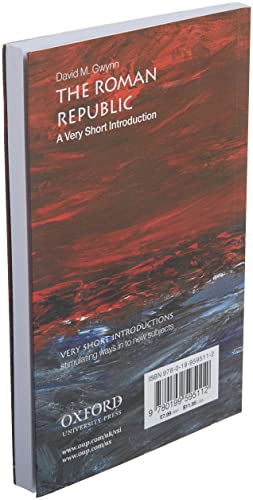
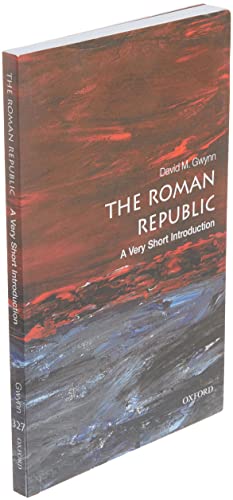
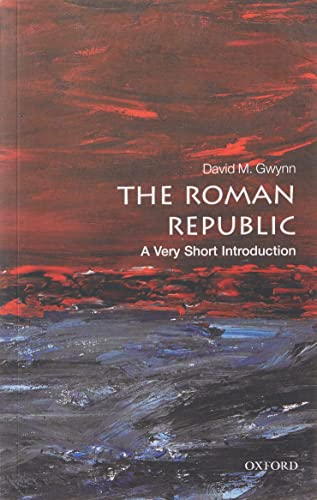
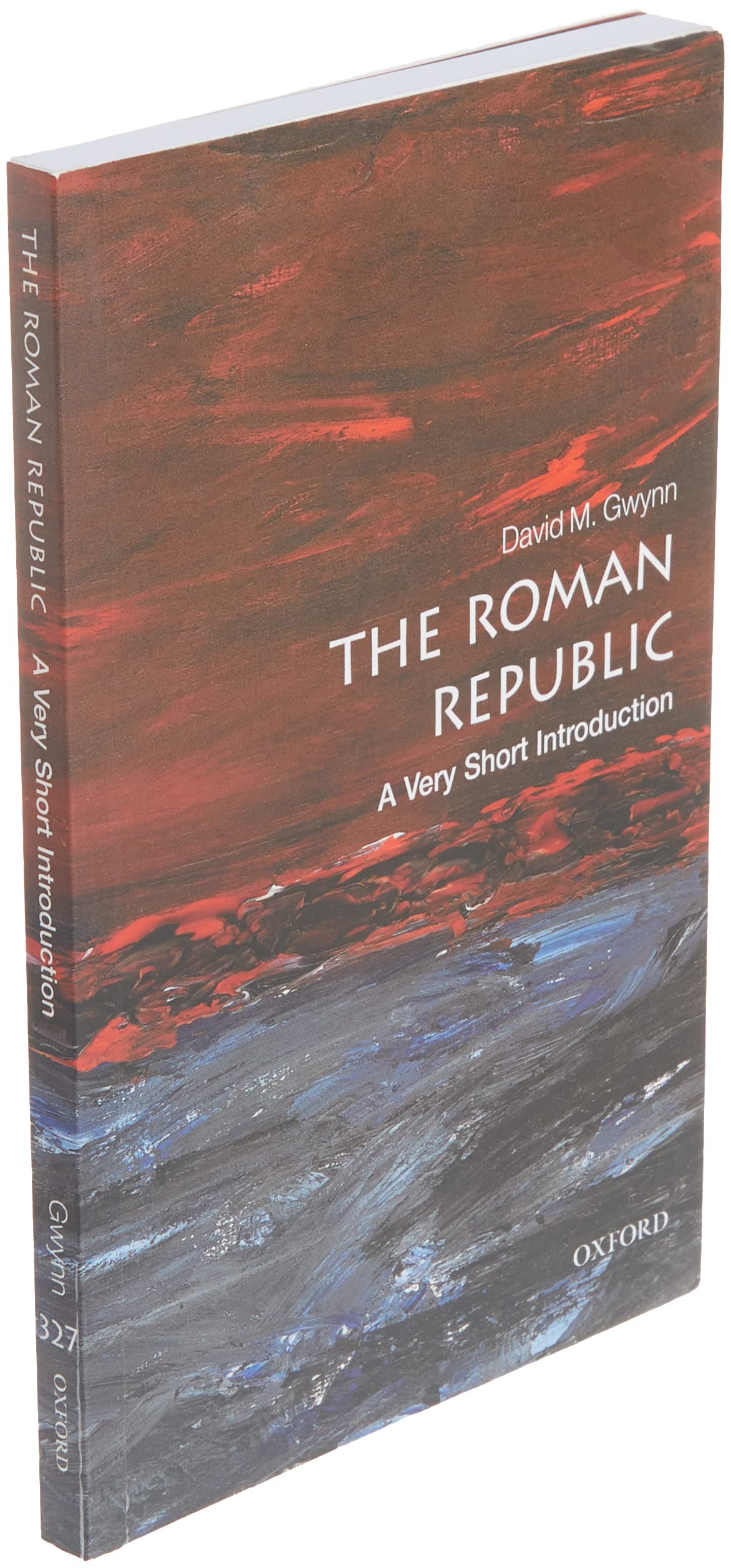
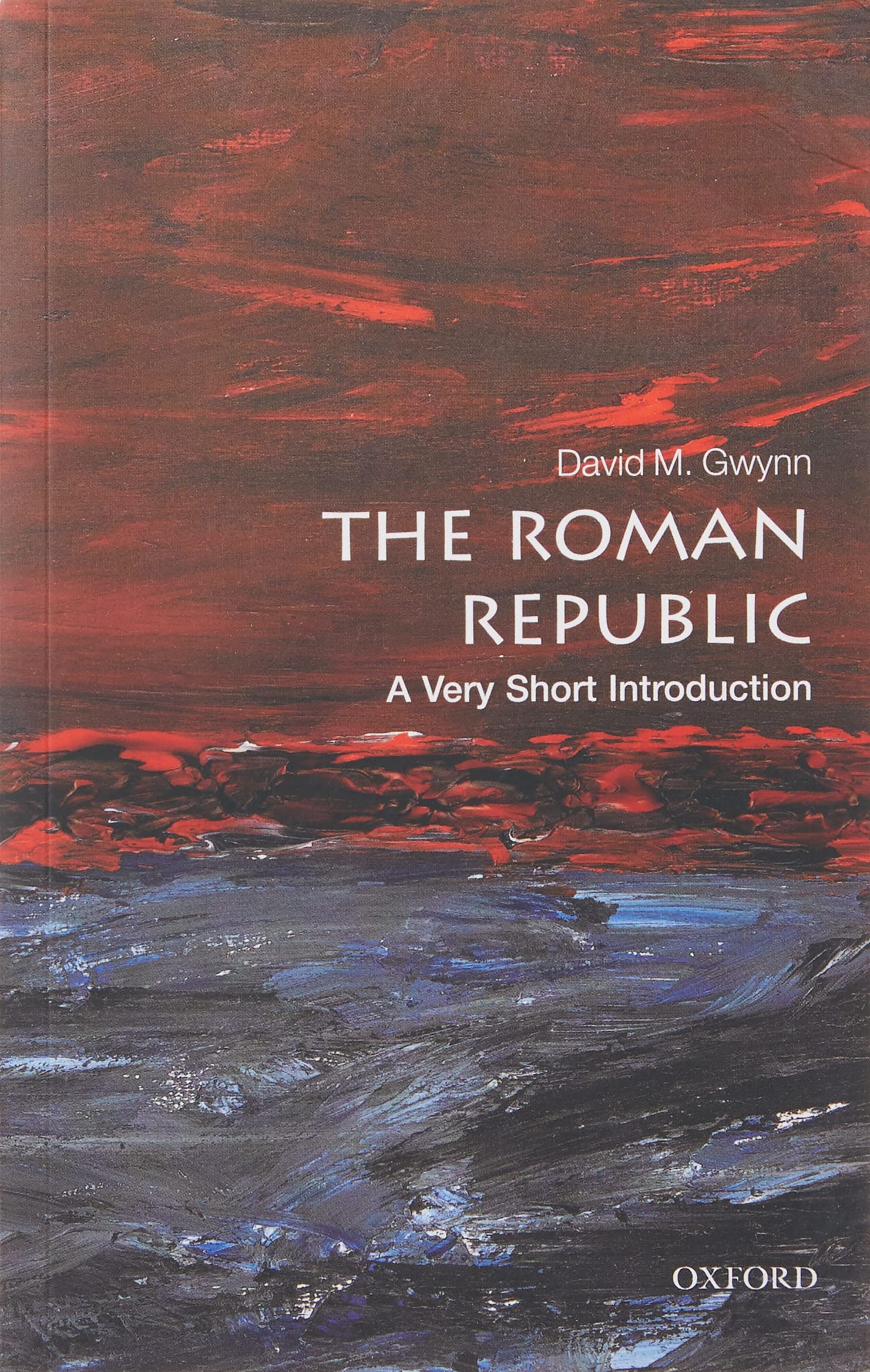
desertcart.com: The Roman Republic: A Very Short Introduction: 9780199595112: Gwynn, David M.: Books Review: A nearly perfect very short introduction - This book is exactly what a short introduction to an historical subject should be. The reader gets an excellent chronological overview as well as a thorough introduction to the society, art and politics of the Republic. Unfortunately, the book on the Roman Empire that follows this one, by a different author, does not take the same approach and is far weaker. Review: A Good Read - My review is going to be a very short review, commensurate with the brevity of the book...which is well executed, considering the limited page count. What stood out, particularly, was the author's grasp for how large a role the pursuit of gloria among aristocratic rivals played throughout the history of the Republic. From the very beginning, the Republic was to be led by an aristocratic senate, as the stronger element within a mixed constitution. Throughout its history, ambitious individuals challenged the fragile harmony among these ambitious peers, until the last century of its existence, when a deluge of these individuals proved too much for the Republic to bear. Apart from this main theme, the book takes interesting detours into matters of Republican culture...particularly, pertaining to literature and sculpture, emphasizing the Romans' original contributions, such as Satire, as well as skillful adaptations of Greek crafts, such as the more "earthy" portrayal of public figures in busts. The book also includes a helpful "Suggestion for Further Reading," which is up-to-date. The prose are easy, and made for an enjoyable read.

| Best Sellers Rank | #178,758 in Books ( See Top 100 in Books ) #28 in Ancient History (Books) #162 in Ancient Roman History (Books) #1,068 in European History (Books) |
| Customer Reviews | 4.6 4.6 out of 5 stars (370) |
| Dimensions | 6.7 x 4.3 x 0.5 inches |
| Edition | 1st |
| ISBN-10 | 0199595119 |
| ISBN-13 | 978-0199595112 |
| Item Weight | 2.31 pounds |
| Language | English |
| Part of series | Very Short Introductions |
| Print length | 147 pages |
| Publication date | October 25, 2012 |
| Publisher | Oxford University Press |
A**G
A nearly perfect very short introduction
This book is exactly what a short introduction to an historical subject should be. The reader gets an excellent chronological overview as well as a thorough introduction to the society, art and politics of the Republic. Unfortunately, the book on the Roman Empire that follows this one, by a different author, does not take the same approach and is far weaker.
H**D
A Good Read
My review is going to be a very short review, commensurate with the brevity of the book...which is well executed, considering the limited page count. What stood out, particularly, was the author's grasp for how large a role the pursuit of gloria among aristocratic rivals played throughout the history of the Republic. From the very beginning, the Republic was to be led by an aristocratic senate, as the stronger element within a mixed constitution. Throughout its history, ambitious individuals challenged the fragile harmony among these ambitious peers, until the last century of its existence, when a deluge of these individuals proved too much for the Republic to bear. Apart from this main theme, the book takes interesting detours into matters of Republican culture...particularly, pertaining to literature and sculpture, emphasizing the Romans' original contributions, such as Satire, as well as skillful adaptations of Greek crafts, such as the more "earthy" portrayal of public figures in busts. The book also includes a helpful "Suggestion for Further Reading," which is up-to-date. The prose are easy, and made for an enjoyable read.
T**S
Overall a good condensed overview of the Roman Republic
It is a bold endeavor to try and cover the Roman Republic in just over some hundred-odd pages so the author David Gwynn should get some props beforehand. Overall, the author did a good job of condensing what needed to be and omitting things that simply would not fit into such a short title. Only in a few instances was the detail too thin leaving just a skeleton of information on a topic. Once such instance would be in the overview of the different magistrates and how the actual government of Rome actually operated on a day-to-day basis. However, the author does a good job making clear that it was really the senate (until the end of the Republic) that controlled Rome. "The Republic was governed by the Senate and People of Rome, very much in that order." (Page 24) Also, the consolidation of Italy was rather bleak. There were also extremely few instances where the text did not follow easily. In discussing the Roman hegemony over Greece, the author states that Rome kept its word and let Greece remain independent under its protection without garrisons or even tribute. Then a paragraph later he states that the Aetolian League (a league of Greek city-states in north/central Greece) had "grown disenchanted with Roman freedom" (Page 65) just a few years later, enough to have them join Rome's enemy Antiochus, ruler of the Seleucid Empire. No explanation is given over the sudden change of heart. Still, this book has many highlights. The discussion on Roman religion was concise but well done, especially the remarks on Roman religion not being either tolerant or intolerant and the preeminence of orthopraxy over orthodoxy. The author David Gwynn also used an excellent source that I was unfamiliar with, the Laudatio Turiae, which is always a pleasant surprise. He also uses some great stats on Roman wealth and how much one was expected to have for different social classes. This information highlights the wealth disparity of the senatorial elite with most everyone else in the Republic. I also felt that the chapter on culture was well done and demonstrated that the Romans didn't simply copy the Greeks on everything. Probably David Gwynn's best chapter was on the transformation of the Republic into Empire from Sulla to Augustus. This chapter is filled with such lines as "The Roman world began to divide into two camps, for even Rome's empire was not large enough to contain both Pompeius and Caesar." (Page 111) Lastly, there is an interesting ending chapter on how the Roman Republic has been interpreted by others who have come after. One warning to future readers. The author's central point about the actual reason for the Republic's collapse is over the importance of the elites in Rome to garner dignitas and gloria above all others who have ever come before. This competitive ambition essentially becomes unstable and eventually "warlords" appear to challenge even the Senate. This will be a dead horse that will be beaten often in this book. While I agree with this theory generally, I do feel it is stretched a bit far. He deems Scipo Africanus as the first of these "warlords" to emerge, but Scipio's career and later life did not really act or resemble much of the dictators or triumvirs of the first century. All in all, I felt that this book did a noble job of telling the overall story of the Roman Republic quickly in a condensed fashion. If you are new to the topic or enjoy the Very Short Introduction series, then I would recommend this book. 4 out of 5 stars.
A**R
Incisive, thoughtful, and engaging summary
The thesis of the competition for Gloria and dignitas as the primary drivers of the Republic's collapse made sense. It would be helpful to explain how this relates to the account that makes the opposition between the optimates and populares central.
E**O
A well-balanced book
David M Gwynn’s ‘The Roman Republic’ is a concise book about a vast subject. Yet one does not feel overwhelmed with minutiae, as Gwynn judiciously selects some pivotal moments and takes his time exploring them. The narrative interweaves chapters on historical milestones - the foundation of Rome, the conquest of Italy, the Punic Wars and the collapse of the Republic - with explorations of Roman culture, political organization and social structure of that era, thus providing a nuanced understanding not only of historical facts but also of the individuals who shaped them - their values and the societal context in which they operated. The concluding chapter examines how the Roman Republic has been perceived throughout history. From early Christians and medieval scholars to the Renaissance humanism of Machiavelli and Shakespeare and the revolutionary mind of the French and American eras, Gwynn demonstrates not only how culture influences historiography, but also how much the Roman Republic inspired the future.
T**O
Perfect approach to the matter
If all you want is a concise and objective approach to the Roman Republic, this is it. The bibliography suggests lateral extensive reading, if you are willing to deepen your knowledge of, say, the Punic Wars, the transition to the empire, or any other subject of interest. Still, this is as sound a start as you could wish for, comprehensive, well written and documented. A splendid little book!
S**T
Republics
A good introduction to a very complex subject that intrigued our framers of the Constitution. After all, if the Roman Republic, lasting almost 500 years, could fall, what chance did America have to build a lasting republic. If the subject interests you, you will need to read more on it. -- perhaps Cicero's Orations?
H**W
Three Stars
Not the best in the "very short" series.
C**N
Tous les livres de la série sont très bien faits.
V**R
Bom
G**D
I just wanted to learn more about government and went to the origins of the Republic which evolved mostly in Rome and it is a fascinating story. There is so much history that repeats itself and this was an excellent read and abbreviated form of the beginnings of our own government
J**N
In this 'Very Short Introduction' the writer puts forward a clear and concise argument for how the forces that led the Roman Republic to gain an empire can, in hindsight, be seen to have led to its collapse into civil war with the emergence of Augustus as first emperor of imperial Rome. The writer moves beyond the political and military to consider the role of contemporary writers and artists in shaping what people thought the Roman Republic was or should be. It also includes a brief section on the subsequent reception of the Roman Republic - the uses that have been made of the idea of the Roman Republic in different historical contexts. Finally, there is a helpful further reading section at the end of the text to enable the reader to delve deeper into aspects of this fascinating topic. Overall, a really useful introductory text.
S**0
It's a little boring in the way it is written. Very factual but monotone. A good go to book if you're studying roman history but if you're just wanting to read about it yourself I recommend something a bit more interesting. I had to force myself to read it to the end. 500 years of the Republic squeezed into 128 pages.
Trustpilot
3 days ago
1 week ago