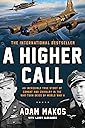
A Higher Call: An Incredible True Story of Combat and Chivalry in the War-Torn Skies of World War II
Product ID: 1372482
Desertcart purchases this item on your behalf and handles shipping, customs, and support to Greece.
THE INTERNATIONAL BESTSELLER: “Beautifully told.” —CNN • “A remarkable story...worth retelling and celebrating.”— USA Today • “Oh, it’s a good one!” —Fox News A “beautiful story of a brotherhood between enemies” emerges from the horrors of World War II in this New York Times bestseller by the author of Devotion , now a Major Motion Picture. December, 1943 : A badly damaged American bomber struggles to fly over wartime Germany. At the controls is twenty-one-year-old Second Lieutenant Charlie Brown. Half his crew lay wounded or dead on this, their first mission. Suddenly, a Messerschmitt fighter pulls up on the bomber’s tail. The pilot is German ace Franz Stigler—and he can destroy the young American crew with the squeeze of a trigger... What happened next would defy imagination and later be called “the most incredible encounter between enemies in World War II.” The U.S. 8th Air Force would later classify what happened between them as “top secret.” It was an act that Franz could never mention for fear of facing a firing squad. It was the encounter that would haunt both Charlie and Franz for forty years until, as old men, they would search the world for each other, a last mission that could change their lives forever.
| Dimensions | 5.93 x 1.08 x 8.99 inches |
| Edition | Reprint |
| Isbn 10 | 0425255735 |
| Isbn 13 | 978-0425255735 |
| Item Weight | 1.1 pounds |
| Language | English |
| Print Length | 400 pages |
| Publication Date | May 6, 2014 |
| Publisher | Dutton Caliber |
| Reading Age | 18 years and up |
User
Best book since Hillenbrand's Unbroken! Must-Read!!!
Every now and then I cross paths with a book that strikes a chord somewhere deep within me, a book that shares my waking hours and my sleep. This is one of those books, as was Laura Hillenbrand's Unbroken. Coincidentally, both tell a true story from World War II ... Unbroken tells of Louis Zamperini who survived to tell about his adventures as a US pilot in the Pacific, subsequent capture and imprisonment by the Japanese." A Higher Call: An Incredible True Story of Combat and Chivalry in the War-Torn Skies of World War II" tells of two pilots, one German and one American who meet high in the skies over Germany on December 20th, 1943. Both of these books will stay with me, I am sure, for a lifetime. A Higher Call grabbed me and simply won't let go.December 20, 1943, in the skies over Bremen, Germany. Charlie Brown is the pilot of a B17 bomber, just finishing a raid on an aircraft production facility. His plane has been hit multiple times by German flak. It was missing a rudder and had sustained serious damage to its hydraulic and electrical systems, not to mention that only one engine out of four was functioning at peak, one crew member was dead and several others seriously injured, and now Charlie faces flying through enemy flak to get north of Germany over the North Sea and back to Great Britain, a feat beyond all imaginings. Suddenly from behind he spots a German fighter plane and Charlie knows he and his crew have no chance to survive if the fighter shoots so much as a rock launched from a slingshot at their plane. This edge-of-the-seat action enhances, but does not dominate the story. The pilot in the German Bf109 is Franz Stigler, a man who joined the German Air Force (Luftwaffe) to avenge his brother's death. One look at the B17 and Stigler knew it didn't stand a chance. He remembered the words of his former leader and mentor, Gustav Roedel, who had once told Franz, "you score victories, not kills ... you shoot at a machine not a man", and decided in less time than it took the thought to form that he not only couldn't shoot down that crippled bomber but that he would do everything he could to save the men inside. There were two dangers to this, but Stigler barely registered them. The first, of course, was that the bomber would fire on him first and knock him out of the sky (he didn't know that the bomber's guns were frozen, all but the turret gun whose range was so limited that he was never really in any danger from that). But the other, perhaps greater danger was that if the German command ever found out that he had the chance to dispatch this bomber and didn't, he could be court-martialed and sentenced to death. On Stigler's mind at that moment in time, however, was how he could keep the crew on this bomber from either being sent to a fiery death by German flak or an icy death in the North Sea. Ultimately, he led them through the German flak and left them over the North Sea with a salute and a prayer that they could stay safe. And it is in this one episode that Franz Stigler became a hero in my book. He would go on to fight some 487 missions in the war and is now in history books as a German flying ace, but for me it was that one act of human kindness, of human compassion, that made him a hero.Though the book centers around the heroic acts of Charlie Brown and Franz Stigler in the air over Germany that day, the event itself actually occupies less than 4% (15 pages out of 368) of the book. Had I realized this in the beginning, I might never have bought the book and that would have been my loss. The bulk of the book follows Stigler's career and rise as a flying ace throughout the war and it is from this that I, who have nursed a hatred of all things pertaining to the German military almost since my birth, came to realize that not every soldier in Germany was a Nazi and not every soldier in Germany lacked a heart. The Luftwaffe, or German Air Force, in this book is shown to be no less human than any man in the USAF or any other branch of the Allied military. Overwhelmingly, the Luftwaffe were NOT members of the Nazi Party and did NOT support Hitler and his programs. They were simply there to do their jobs and defend their nation and its people. In fact, most were not aware of Hitler's "Final Solution" (the extermination of Jews) and the death camps until near the end of the war. For the most part Germans, including the Luftwaffe, were as afraid of the SS (Gestapo) as were we.Many years after the end of the war, both Brown and Stigler wondered what had become of one another. Neither knew the other's name, yet neither had forgotten that strange encounter in the skies over Germany. Eventually they would have their reunion and become brothers not of shared blood, but of shared life. Notably, though fifty years had passed since the end of WWII, once this story became public, Franz Stigler began receiving hate mail, presumably from Germans who felt that he should have blown Charlie and his crew out of the sky. I guess hatred is in no danger of becoming extinct any time soon.This is Adam Makos' first published book, though he has been editor of the military magazine Valor, for some fifteen years, and frankly I was intrigued when I read a synopsis of the storyline, but was not expecting great writing from this first-time author. I was wrong. The writing is as seamless and spell-binding as almost any I have read. This is a heart-warming, yet edge-of-the-seat true story that reads like a novel and leaves the reader wanting much more. Sadly, both Charlie Brown and Franz Stigler died in 2008. However there are photos and video clips of their reunion some 50 years later on the author's website: [...]. If you read no other non-fiction book this year, do yourself a favor and read this one. It will stay in your mind and in your heart for a good long time, maybe forever.
User
Not just a story but an experience reading this book. An absolute must read.
I cannot give this book enough stars. The writing draws us in, making us feel as though we are there with the flight crews through their different journeys. The story itself reveals a riveting insight into the German and American pilots of WWII and the expectations of their governments. And finally the crux of the book, this act of humanity at the peak of the air war. As a student of history, this is one of THE best books I’ve ever read. Absolutely recommend this book to anyone. It’s by far an incredibly well-written account of a moment in time that should never be forgotten.
User
this book is about the best of human nature. Truly rare.
This story is incredible. It should be required reading in every school and every country. The message transcends all walks of life. It shows what a pure spirit can do in this world. In the midst of war two people who are supposed to do everything in their power to eliminate the other come together and forge a bond that now stretches through generations. Grab a Kleenex and settle in and read this story...once you do you will never ever forget it.
User
Excellent read for those interested in WW II aviation
I read a review of this book online in December. I think it was USA TODAY. I immediately ordered the book from Amazon. I have been interested in WW II aviation since I was a young teenager when I built model airplanes and read books like " The First And The Last" by Adolf Galland and "Stuka Pilot" by Hans Ulrich Rudel. I have been reading books about WW II aviation ever since and have been especially interested in books about the USAAF and the Luftwaffe. There is a family connection for me too as my mother's cousin was a B-17 pilot who flew 30+ missions in 1944 and was killed as a member of the 3rd Scouting Force while on a mission on January 15, 1945. Also my girlfriend's father was a bombardier flying A-20's and A-26's over Europe in late 1944 and 1945. About two thirds of this book "A Higher Call" is about Luftwaffe Lt. Franz Stigler. The name did not ring a bell at first. I researched him and found his name on lists of Luftwaffe Aces and he is also mentioned in the book " Battle Over Bavaria" by Robert Forsythe ( in connection with JV 44) and "Fighters Over The Desert" by Christopher Shores and Hans Ring ( in connection with North Africa in 1942 and the "Vogel flight" controversy), The book shows Franz Stigler as a human being which is refreshing because Luftwaffe aces are usually portrayed as arrogant killers- a prime example being " Pretty Boy" in the movie "Red Tails". In the USAAF, bomber crews initially flew 25 missions and were then rotated home ( this was later increased to 30 and then 35 toward the end of the war). American fighterS flew 200 " combat hours" before rotating out. Luftwaffe pilots flew until they were killed, captured, severely wounded or had a mental breakdown. A few lucky ones were detached as flying instructors or were promoted to a non-flying position. Due to this policy, a few highly skilled ( and lucky) pilots flew hundreds of sorties and many victories, Erich Hartmann, the top German "expert" had 352 victories and flew 1456 sorties. Gerd Barkhorn flew 1104 sorties to gain 301 victories ( he had flown more than 100 sorties before his first victory). Adolf Galland had 103 victories and 705 sorties. Franz Stigler was credited with 28 victories ( and 30 damaged or probables) in 487 sorties. Franz Stigler was shot down a total of 17 times crash landing or ditching 11 times and taking to his parachute the other 6. This contrasts with American aces such as Francis " Gabby" Gabreski who had 28 kills in 166 sorties, Robert Johnson 27 kills in 89 sorties, "Hub" Zemke with 11 kills in 154 sorties and Chuck Yeager who had 12.5 aerial victories in 64 sorties. It must also be remembered that the Germans were on defense at this stage of the war and had no shortage of targets and if shot down over their own territory they were often able to return to duty while surviving allied aircrew were usually made POW. The book tells the story of Steigler from his interest in aviation as a boy ( his father was a WW I pilot) to his stint as a Lufthansa airline pilot and years as a flight instructor. By the time he was posted to JG 27 in North Africa in 1942 Franz was an unusually experienced pilot having flown many different types of aircraft ranging from small single engine trainers to ponderous multi-engined seaplanes. Franz had good luck in meeting the great ace Hans Marseilles who gave him advice on the best way to shoot down enemy aircraft which was simply to get close until the enemy airplane filled your gun-sight and you were so close you could not miss. Franz also had the misfortune to be associated with the "Voegel flight" where his flight leader and his wingman was suspected of making false claims of aerial victories. This tainted Franz Steigler's image for a while as his comrades thought he had a case of " throat ache" in that he was anxious to be awarded the coveted " Knight's Cross of the Iron Cross. ( This brings to mind subplots of the movies " The Blue Max" and " Cross Of Iron"). Franz goes on home leave ( partly to escape the taint of the " Voegel flight" scandal). In early 1943 Franz is posted to Sicily. He is engaged in the so called " Palm Sunday Massacre" where dozens of Ju 52 transports are shot down by allied fighters and Franz and most of his squadron are shot down and Franz is forced to ditch his Bf 109 off the coast of Sicily. It is also over Sicily where Franz has his first encounter with the American Boeing B-17 heavy bomber and realizes how difficult it is to shoot down and a change in tactics is needed. Later in 1943, Franz Stigler and his unit II/JG 27 is posted to north-west Germany for defense of the Reich duties. It is here where he has the memorable encounter with Charlie Brown and his B-17. This encounter seems to have changed Franz to some extent. He lost his case of " throat ache" and often does not claim victories for allied planes he has shot down or gives credit to new pilots to bolster their confidence. Franz is wounded in 1944 and is withdrawn from combat. In early 1945 he learns to fly the Messerschmitt Me-262 wonder weapon and becomes an instructor. He later joins Adolf Galland's JV 44, bringing his own jet " White 3" with him. Here he joins a squadron of experts such as Walter Krupinski, Gerd Barkhorn ( who Franz taught to fly a few years earlier), Johannes Steinhoff, Heinz Baer, Guenther Luetzow and several others. Franz flies several sorties with JV 44. He claims 2 more victories and is put in for the Knight's Cross by Galland but in the confusion of the last weeks of the war, neither the medal or confirmation of the victories goes through. Franz survives the war and after much hardship in postwar Germany moves to Canada. Many years later he reunites with Charlie Brown in an incredible set of circumstances outlined in the book. The book is very good but not enough to give it 5 stars. It is obvious that the authors are not pilots and some aviation terms are not properly used. ( This does not bother me as I am not a pilot either), There are a few minor historical things that are not correct ( not counting transistors in WW II radios which all used tubes). Franz's brother August flew with Kampfgruppe 806 ( K. Gr. 806) not KG 806. The book indicates that the crew of "Ye Olde Pub" shot down German Ace Sgt. Ernst Suess of 9/JG 1 on December 16, 1943. All the sources I have found indicate he was shot down by American fighters, probably P-38's. Suess was able to get out of his stricken Bf-109 but was shot and killed while hanging in his parachute. I would like to have heard more about the crew of " Ye Olde Pub" and some of Franz Stigler's exploits are out there on the 'net and should be in the book. Finally, this book should have an index. However I can recommend this book to both the WW II buff and casual reader.
User
A suspense-filled non-fiction read, and an eye-opening look at the Luftwaffe
I absolutely loved, loved, loved this book, for so many reasons. First, it's a fast and suspenseful read. I had a hard time putting it down. Second, the author is a good writer. I know nothing about airplanes (and previously did not find them all that interesting), but the author describes them in layman's terms - to the point where I now feel as though I could identify some WWII aircraft, just from his descriptions. He also does a good job describing the somewhat large cast of characters. Finally, this book puts a decent face on what I perceived as the faceless Nazi Air Force. I had no idea that many Luftwaffe pilots were not members of the Nazi Party. In general, I had assumed that the majority of the German military were Hitler-worshipping fascists, but I learned that this was never the case. Many high-ranking members of the Luftwaffe were decent, anti-Party men who knew the war was over long before they were able to surrender. And of course, the main German character in this book, Franz Stigler, was a man of courage and integrity.The book starts by following Franz's life, and then we are introduced to Charlie Brown, the American bomber pilot who silently interacted with Franz. The lead-up to their meeting in the skies over Germany was among the more suspenseful book scenes I've ever read. It was almost hard to read, since the men were forced to face unimaginable horrors.(Note: This is sort of a spoiler alert - but not really, since we know the two lived through the war from the book's foreword.) The reunion of the two men late in the book made me cry. Their search for each other and their eventual meet-up was really stirring.I highly recommend this book. One note: There aren't too many pictures in this book, but I did find them too small on the Kindle. However, a quick Google image search will net you most of the pictures anyway, so this did not detract from the book.Review follow-up: After writing this review, I read several other reviews that claimed the book whitewashed history to paint the German Air Force in a better light. This is probably somewhat true, since the book only followed a select few members of the Luftwaffe without speaking much at all about the war crimes committed by this branch of the German military. There are also few mentions of war crimes committed by the Allies. This book is definitely not meant to be an exhaustive and detailed account of the Luftwaffe or the American Air Force during WWII. It is an in-depth look at the the actions of two men, a German and an American, during the war. And I stand by my assertion that this book did give me a new perspective on members of the German military during the war. Not all of them were bad. Not all of them were Nazis. Many of them were just kids who believed they were fighting for their country and feared the Nazi Party. I think there is still value in a story about two young pilots and the daily fears they faced during the war.
User
My God, what a book!
My God, what a book! Adam Makos with Larry Alexander bring us this harrowing and chivalrous story of two World War II Air Forces. This is not just a story about an incident involving a German Messerschmitt BF 109, and a U.S. B17 Flying Fortress. No, it's also about both sides fighting with courage and perseverance, while maintaining a healthy respect for each other. The German Air Force fighter pilots were not Nazi Party members, in fact their attitude was a thorn in the hat of the German Reichsmarshall Hermann Goering ( German spelling ). They fought because they had no choice, fly or die. On page 288, the pilots attitude is confirmed when Major Hohagen of the German Air Force tells a joke to one of the book's protagonist, Ace Franz Stigler: " Hitler, Goering, Himmler, and all of their friends are out on a boat at sea, there's a big storm and their boat sinks! Who's saved?" Franz knew the joke. "Germany." If a political officer overheard this joke, by law they both would have been executed. Herr Goering would occasionally slip a political officer into the ranks of the Air Force to get the flavor of the pilots. I extol the effort the authors made to bring the readers this compelling non-fiction Pulitzer Prize worthy story. I know that says a lot, but you haven't read this book.The book opens with the story of Franz Stigler, a German Messerschmitt BF109 fighter pilot, who completed 487 missions by the war's end. It focuses on his time served in North Africa, and his service defending Italy and Germany from U.S. and British bombing raids. The reader meets many aces; such as, Hans-Joachim Marseille, the Star of Africa, and General Adolf Galland, leader of all fighter pilots. Most of the fighters we meet are holders of the Knights Cross ( 30 or more victories ). Bear in mind that you are going to feel empathy for these men, even though they are the enemy. They fought bravely for their country, not for the Nazi Party. They fought with honor and with a knights chivalry throughout the war. They had a code of ethics similar to the American fighters and bombers: they didn't shoot a parachuting enemy pilot, nor mistreat them as a POW. Unfortunately, that can't be said if the SS did the capturing. It's sad that the typical German citizen hated the German fighter pilot at the end of the war because: "You didn't keep the bombs from falling." That's a pretty sad statement since no one could stop thousands of B17's dropping bombs everyday. The Germans called our monstrous B17 flying fortress, "the four motors." Each plane rained down twelve 500 pound bombs each trip.The second part of the book tells the story of a twenty year old American pilot, 2nd Lt. Charlie Brown ( Not of Snoopy's Red Baron squad ). He is a member of the 379th bomber group stationed in England. You are going to like his crew; Al `Doc' Sadok, Robert `Andy' Andrews, and Spencer `Pinky' Luke, to name a few. They get into a now famous incident with Franz Stigler on Charlie's first bombing raid as a Captain that winds up becoming the title of this book. My definition of `A higher call' is " vacating a duty for a better one, or " It's God's wish ". I don't know if the author had my definitions in mind, or not. You might ask, What is the incident? Well, I can't tell you! I guess you will have to read this wonderful story yourself. By the way, this book doesn't read like the history that it is, instead it reads like a novel, such as Erik Larson's In the 'Garden of Beasts'.The third part of the book deals with Goering's dissatisfaction with Germany's famous fighter pilots led by General Galland. He would like them executed for treasonous statements, and he accuses them of being cowards, but they are too popular, so he makes them form the JV-44's unit ( the squadron of experts ). They are responsible for defending Germany against the massive U.S. bombing raids in the last months of the war. Goering figures that they will die quickly against overwhelming odds. He forgets that these men are legends in their own time: Franz Stigler, Major Gerhard Barkhorn ( 301 victories! ), Col. Luetzow, Oberst Steinhoff, Oberst Roedel, Major Hohagen, Oberst Trautloft, and Hauptmann ` the count' Krupinski are the main flyers. This part of the book was very exciting and sometimes very sad. The rest of the book deals with: What happened to these men ( German and American ) after the war was over, and the ensuing years? Well, like Arte Johnson on the 'Laugh-In' show used to say: "It's very interesting". So is this gripping book!
User
A Paean to Franz Stigler
While this book is hyped as a dual bio-narrative of WW2 foes in the skies over Europe in 1943, in reality it is a paean to Lt Franz Stigler, the German (non-"Nazi") fighter pilot. The authors seize upon an incident of remarkable honor and courage involving Stigler and American B-17 pilot Charlie Brown to try to build a parallel narrative of the two combatants. This event, unprecedented as it was, lasted maybe 15 or 20 minutes, and Stigler and Brown parted ways, never to encounter one another again until old age brought back their reflections, and an ultimate meeting.Brown and his surviving crew went on to fly other planes, completed their quota of missions without incident, and returned safely stateside. He reported the details of his unusual rescue, but his account was classified Top Secret, and he and his crew forbidden to discuss it. Stigler, for his part, fought out the war with many feats of derring do, and his remarkable story is well documented here.Stigler began by learning to fly gliders in 1927, at age 12. The Versailles Treaty prohibited Germany from the manufacture of engine-powered fixed-wing aircraft, so the future Luftwaffe cut its teeth by building and flying gliders. In this endeavor, Franz was tutored by his older brother August (killed early in the way flying a Ju-88), and by his father, a WW1 pilot.By the late '30s Stigler was a pilot (Ju-52) and instructor for Lufthansa, the premier European airline of the day. Though Stigler was a civilian, the new German Air Force (Luftwaffe) was in control of his flight instructor duties, and the authors document this well, the Nazi purpose being the training of a large pilot corps for war purposes.Eventually, after 4 years as an airline pilot and instructor, Stigler was to become a Luftwaffe enlistee, and his fighter pilot career commenced. Early in the war he served training pilots, but in 1942 began his fighting career in North Africa, flying the workhorse of the Luftwaffe fighter fleet, the Messerschmitt Bf-109, which he flew for most of the war, until the last days, when he flew the new jet-propelled Me-262. The authors stress Franz' preoccupation with confirmed "victories"--the downing of enemy fighters--as a given number of such led to promotions, honors and national repute. Thus did Stigler chalk up victories in North Africa, Sicily, Italy and finally over Europe. The authors spent many hours interviewing living members of his former mates and commanders, leaving a vivid picture of fighter combat in those years.Stigler rescued Charlie Brown's battered Ye Olde Pub, by escorting it out of Germany, using a ruse to bypass deadly anti-aircraft batteries, until the distressed B-17 cleared safely over the North Sea, where Stigler peeled off, giving Brown a salute and a wave. This experience softened Stigler's view of the importance of glory and honors, to the point of giving other new pilots credit for planes he himself had destroyed.Although Stigler might have acquired higher awards and honors than he officially achieved, his encounter with Ye Olde Pup over his fatherland, answering "the higher call", gave him the greater satisfaction. This work is well worth the reading, so I give it a 5
User
Excellent book for military history buffs or anyone who likes people stories
I don't believe in automatically giving everything five stars, especially books. This one merits them. This well-written, well-researched book tells the story of a remarkable incident that happened in December 1943, when a heavily damaged American B-17, piloted by 2nd Lt. Charlie Brown, encountered a German BF-109 piloted by ace Franz Stigler, in the skies above Oldenburg, Germany. What happened next (I won't spoil it) is testament to the fact that human decency can be found even in the middle of war.The book's main character--dare I say it, hero-- is Stigler, and the story follows his career as a pilot from childhood, as a commercial pilot, as a fighter pilot in the Luftwaffe of WWII, through the end of the war and beyond. It discusses the commanders and colleagues who influenced him and his approach to flying. (I would like to note that Stigler was never a Nazi, nor were most men in the regular military; in fact, the Nazis were disliked and resented, but also feared.) The book later introduces our second protagonist, Charlie Brown, a 21-year-old rookie pilot on his first combat mission, and his crew. We get to know both Franz and Charlie as they progress through their WWII careers and experience the challenges and successes, failures and terrors of flying combatants. The book humanizes both men, showing them as enemies but as decent people.If you get the book, be sure to read the introduction. It's worthwhile and provides context.I first learned about Charlie and Franz and their encounter through the Sabaton song "No Bullets Fly." If you want to know what "A Higher Call" is about before reading, check it out on YouTube (the story version!). YarnHub on YouTube has a somewhat more fleshed-out version. There are other videos examining the incident, and you can find articles, etc. by searching.
User
Libro WWII
Gran historia. Recomiendo leerla
User
Muhteşem
Son zamanlarda okuduğum en iyi anı kitaplarından biri. Aslında kitabın adı ve kapağı 2. dünya savaşında yaşanan eşine az rastlanır bir olay ile ilgili olsa da kitap çoğunlukla Alman as pilotu Franz Stigler'ın hikayesini anlatıyor. Son üçte Birlik kısım ise Amerikalı pilot Charlie Brown'a ve ikisinin kaderinin kesiştiği o güne ayrılmış. Bunun sebebini de kitabın henüz başında C. Brown çok güzel özetlemiş: "Ben bu hikayede sadece bir figüranım, asıl kahraman Franz Stigler'dır. Bu olayı asıl ondan dinlemeniz gerekir".
User
good book
cheap & good book
User
Eccezionale!
Una delle migliori storie di guerra che io abbia mai letto, documentate da Makos in modo preciso e professionale.. Peccato non ci sia una edizione in italiano.
User
Brilliant Read
I was surprised that a large chunk of this book told of the life and times of the German fighter pilot ace as I was expecting to read mostly of the actual incident and the lead up to it.However, as someone who would not normally had a desire to read about the German side of WW2 I suddenly found myself engrossed into what life was actually like for these people as well as their thoughts and views of the war. It certainly wasn't a bed of roses for them either.I guess what I am saying is that even if your main or even sole interest is the western allies, don't let the fact that a large chunk of this book tells the story of life on the German side put you off. As it is, I am sure you will agree after reading it Franz Stigler is a true gentleman and deserves to have his story told.In reality it is extremely enlightening. You actually feel you are there with them during the description of many scenes such is the skill of the writer. The book is very easy to read. It is poignant and moving. It is sad and brought tears to my eyes more than once. Yet it is heart warming and shows just how much goodness can be found in people even in the midst of battle.Most of all it tells the real life story on both sides, of true gentlemen who are also true hero's amidst the darkness of war.A must read!
Trustpilot
1 week ago
5 days ago