
Desertcart purchases this item on your behalf and handles shipping, customs, and support to Greece.
👑 Unlock the secrets of Tudor royalty—because knowing history is the ultimate power move.
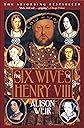
The Six Wives of Henry VIII is a meticulously researched and critically acclaimed biography by Alison Weir that brings to life the complex personalities and fates of Henry VIII’s six queens. Combining scholarly rigor with accessible storytelling, this book ranks among the top historical British biographies and ships next day from the UK, making it a must-have for history enthusiasts and professionals seeking a richly detailed, immersive read.
| Best Sellers Rank | #42,373 in Books ( See Top 100 in Books ) #14 in Historical British Biographies #14 in England History #14 in Royalty Biographies |
| Customer Reviews | 4.5 out of 5 stars 4,191 Reviews |
S**L
Entertaining read.
I love Alison Weir's Tudor books. I am about to finish my second history degree and love to read Weir's book as a break from the stuffy textbooks I sometime have to read. Her style of writing brings the characters life for me. But as a history major I know that a great deal of weir's book is conjecture. That's not to say its wrong. In fact I am extremely impressed with the amount of research that has gone into this book. But history to some extent is a guessing game. Yes we know the dates and events that took place but those are just the bare bones of the skeleton of the past. To add meat to the bones so to speak requires some educated guesses about the motives, thoughts, and feelings of those involved. This is what Ms. Weir does quite extensively in this book. She uses her historical research to make educated guesses as to the thoughts and feelings of those in the Tudor court and I personally don't begrudge her for it as most of her conclusions are historically sound. Also I have noticed some reviewers commenting on the amount of detail and time spent on Henry's first two wives in comparison to the latter three. This is due to the wealth of historical data about Catherine of Aragon and Anne Boleyn that still exists. Sadly there is surprisingly little information on his other wives. This of course is no fault of the writer and considering this I believe she did a commendable job. Over all I think this book is a must read for anyone interested in Tudor or British history.
R**R
Detail-oriented Tudor Fans will appreciate
The incredible amount of research that went into this daunting volume is impressive, as is the way in which the author fits together the pieces of the story without excessive speculation or forays into into the realm of fiction and fantasy. The work is based upon an array of credible sources and rooted in fact, which is the way I prefer my history lessons served up. That said, I think it could have been an even more compelling read had some of the intricate and occasionally excessive details been left out. Much ink is spilled, particularly in the early chapters on Katherine of Aragon, on describing virtually every pageant, masque, ball or feast the royal couple attended or presided over. Outfits worn and portraits painted are described at some length, and as they are presented in more or less the same order for each wife, tend to give the book a plodding and predictable feel. For this reason I tend to agree with the Kirkus review on the perspective that facts can feel "piled on" . Oddly, Weir sees fit to include irrelevant, extraneous and ill placed details on the conditions of the corpses of Henry VIII (which is interjected at the end of the chapter on Jane Seymour, making it feel particularly out of place) and that of Katherine Parr, along with Anne Boylen's facial expressions after decapitation. One wonders what such facts lend to the overall story. Macabre details aside, the one thing I objected most to was a statement by Weir that the King's refusal to acknowledge Mary Boylen's son as his child should be taken as "conclusive proof" that Henry VIII was not his father. I almost tossed the book down at that point. Though it may be likely that the assumption is correct, given that he had no problem acknowledging his bastard son by another mistress and would have perhaps been all too pleased to once again demonstrate that he was capable of fathering a healthy son, I think most scholars would refrain from calling this conclusive evidence. A few other minor annoyances... there is occasionally a noticeable, sloppy repetition of facts in some sections, while in others Weir neglects to provide the reinforcement we need -- particularly in sorting out the identities of a confusing parade of Dukes, Duchesses, Earls or Ladies mentioned in passing in early chapters and then reintroduced later on without further hints as to their identity. Examples - we are told that the Privy Council kept the young King Edward VI short on funds at least three or four times within a few pages of each other; earlier, when Henry suspects Anne may have been responsible for death of the Duke of Richmond, there's a question on the readers mind as to who that is since it is only mentioned once considerably before this section that this was the title given to King's illegimiate son by an early mistress. A more thorough editing job should have eradicated these somewhat annoying yet minor issues. Last and most disappointing, the book fades out on a decidedly weak note with the details of the funeral of the one last surviving wife, and arguably the least interesting, Anne of Cleves. A mixed bag of engaging character development interspersed with suspenseful episodes and monotonous detail, the book is a must read for those who desire a highly detailed accounting of the lives of Henry VIII's wives. Though I have not read M. Loades book on the same subject, having skimmed a bit of it I would suggest this as an alternative to those who appreciate a much faster pace, written by a recognized expert on the subject who has spared much of what some might consider frivoulous details.
A**A
A Thorough, Entertaining & Engaging Look Into the Lives of Six Fascinating, Royal Women
The first time I became aware of the Tudors was when I was in second grade and found in my school library a fiction children's book, written in the format of diary entries, and was purported as the childhood diary of King Henry VIII youngest daughter, Elizabeth. Being a seven year old little girl, I was fascinated by all things pertaining to royalty, especially that of the life of a Princess. I checked the book out and started reading it as soon as I got home. I finished it within a week and from that point on, the craving of knowledge of all things pertaining to England's monarchy, especially the Tudors, was planted in my head. That seed lay dormant in my subconscious for 14 years when, one night as I was watching TV, I saw a preview for a new show that was to premier on ShowTime a few months later. That show was The Tudors. After watching The Tudors from beginning to end, my interest in this most famous royal dynasty was reawakened, and I started researching and reading online everything I could find about them. Thus I came upon a plethora of non-fiction literature about them and I chose this book, Alison Weir's "The Six Wives of Henry VIII", to be my first to introduce me to this genre of literature...and this book did not disappoint. If you're as interested in the Tudor family as I am I highly recommend this book. It's a lengthy book but very much worth it to read. Weir presents the facts of these women's lives and her exhaustive research to tell the truth about them shows and, thankfully, the book flows smoothly as if reading a story instead of just being pages upon pages of facts presented in a boring essay format. This style of writing is what pulled me in at page 1 and kept me interested until the very last word; so interested, in fact, I regretted every time I had to put it down. I now look forward to reading more of Alison Weir's books about the Tudors, as well as other author's works about them. If you decide to read this book, you won't regret it.
A**K
Excellent and Engaging!
Really really enjoyed this. The writing style is very engaging, and I hardly knew I was reading a scholarly work. It flows very well and is packed with information. I couldn't put it down. No, really -- last Sunday night I was so engrossed with Anne Bolyn's troubles, I looked at the clock at it was 2:55 a.m.! (Its not like I didn't know what was going to happen). Its witty, insightful and puts the reader right into Henry's court. This is not my first foray into the Tudor's lives, and I wouldn't necessarily recommend it to a firt-timer. But, after reading various historical novels of the period, as well as the Show-Time series, I was eager for the real story -- and its all here. I feel like I know all the principals, and like them all. Even Henry improves with understanding where he came from and how he came to be. While I may disagree with a few conclusions drawn by the author as to motivations of the personalities, the conclusions she draws are few, far between and never laid down as absolute. She tells the story, and lets me draw my own conclusions for the most part. Well written, easy to understand, and almost impossible to put down! Loved it.
A**R
An heir an heir, my six wives for an heir!
This is a much-abridged version of the complete review as it appears (http://ianwoodnovellum.blogspot.com/2015/05/the-six-wives-of-henry-viii-by-alison.html">at my blog dedicated to reading, writing (no 'rithmatic!), movies, & TV. Spoiler alert! In the end, they all die! This book was very readable and painted a clear picture of these poor women who had to put up with this ruthless dick-head of a king. That said, a couple of the women were quite as ruthless as Henry himself was, and these were the ones he tended to behead. Katherine of Aragon, or to give her her much more beautiful Spanish name, Catalina de Aragón y Castilla was first in line, and her marriage was needed to cement a relationship with what we now call Spain, as a bulwark against the French. Of course at other times Henry would seek to marry into the French royal family to cement an alliance against Spain. it wasn't that long before Henry had become enamored of a scheming little vixen, one of the ladies-in-waiting, by the name of Anne Boleyn - who I used to feel sorry for, before I read this. Henry had of course already set his eyes on his third bride before Anne ever climbed those stairs, and Jane Seymour, only a few years younger than Anne, actually did provide him with a male heir, who was named Edward before going on to have a great acting career (I might have made-up that last bit). The truth was that she died within a week or two of Edward's birth. Enter Anna von Kleve, better known as Anne of Cleves. Anna went easiest of all, the marriage being annulled and she being treated and addressed as the King's sister, and living in comfort the rest of her life. She was not the longest lived of Henry's wives (that being Catalina), but she was the last to die. Catherine Howard and Anne Boleyn were first cousins, which makes it darkly interesting that these were the two he accused of of adultery and treason, and beheaded. Catherine failed to produce an heir, and really was (more than likely) guilty of adultery. The treason charge was simple trumped-up so they could behead her. An act of parliament made it a treasonable offense for a new queen to fail to disclose to the king, within twenty days of the marriage, a previous affair, and evidently this was retroactive. Catherine was nineteen when she was beheaded. Finally there arrived a queen who out-lived Henry while she was still queen. Catherine Parr was almost twice her predecessor's age and Henry was, at this point, perhaps marrying for comfort having given up on everything else. Catherine also married almost as many times as Henry did - four in all, including her last one in secret, just six months after Henry died. Divorced, beheaded, died, divorced, beheaded, survived.
T**Y
Weir or Fraser?
What’s Great: the writing, which makes this book a delight to read. Weir paints each wife with color and depth so that we come to know them across the centuries: the “staunch but misguided woman of principle,” the “ambitious adventuress with a streak of vengeance,” the “strong-minded matriarch,” the “good-humored woman,” the “empty-headed wanton,” and the “godly matron” with a weakness for “handsome rogues.” Why I don’t give this book 5 stars: because I don’t know how much of the information I can trust. Weir is a novelist who embellishes her narrative with colorful flourishes that make for excellent reading, but which may also distort the actual events and influence our perceptions. Saying that Henry stomped off in a huff is certainly more lively than saying he left the room, but unless his emotional state is corroborated by witnesses, Weir’s depiction is artistic license rather than documented fact. It’s also sometimes hard to tell when Weir is presenting her own conclusions and when she is relaying what she’s found in source material. When she writes that Henry wanted Elizabeth “kept out of his sight” after Anne Boleyn’s execution, is this her interpretation or what a contemporary actually observed? What also makes me question Weir’s interpretations is that I don’t always find her explanations convincing. For example, she postulates that Jane Seymour’s delay in conceiving was probably due to Henry and his “advancing infirmity,” as evidenced by the fact that his later wives bore no children. We can never really know why it took Jane several months to conceive. She could have had irregular menstrual cycles. Henry’s physical condition in 1536 was very different from his state in the 1540s, and any impotence there may have been during his later years would not necessarily have afflicted him earlier. The reasoning just seems flimsy to me. Lastly, some of Weir’s information is not corroborated by professional historians, making me question her analysis and assessment of sources. . Still, I can’t deny that I enjoyed reading this book, and found it accurate enough (that is, the information matched what I’ve found in other books) to recommend. For reading pleasure, I put it ahead of Antonia Fraser’s book of the same title, but Fraser’s is the one I believe. She seems less prone to presenting her opinions as facts and offers more plausible explanations for her views than Weir.
C**A
Stunning, fascinating book
I cannot recommend this book strongly enough to anyone who's even slightly interested in the story of Henry VIII and his six wives. This is a gorgeous, cohesive book, easy to read and full of historical detail that enriches the story rather than overwhelms it. There were many times when I forgot I was reading non-fiction, the story was so cleanly presented. This is a far cry from the dry, confusing history lessons I had in high school. Weir makes these women (and the men around them) come back to life, warts and all. Normally reading a book like this, I'd need a flow chart to keep track of all the dukes, duchesses, ladies, lords and scheming religious zealots, but I had no trouble at all remembering who was who, even during the period where every woman was apparently named Katherine, Anne or Elizabeth. It was especially interesting to see how kind history has been to Anne Boleyn, a woman who may actually have been deserving of the executioner's axe. My one miniscule gripe (not enough to drop my review from 5 stars) is that once in a while, Weir puts the story ahead of the timeline and will insert details out of sequence. One example of that is that during a segment discussing the latter years of the marriage of Henry and Anne Boleyn, there's a short paragraph discussing a gift Anne gave to Henry early on in their relationship. There really wasn't any reason why that tidbit couldn't have been presented chronologically; the only thing I could think of was that perhaps the author didn't want to interrupt the narrative about the acrimony between Anne and Katherine of Aragon by tossing in the bit about the gift. There are about a half dozen or so instances like this, and while they don't at all disturb the flow of the book, they struck me as a little annoying given the meticulous detail to the timeline in every other instance. This is a truly masterful book; I plan on immediately purchasing Weir's other books in this genre.
A**H
Fascinating Historical Nuggets Buried In A Sea Of Non-Linear Minutiae
Confession: I only made it about 20% of the way into this tome. It does provide some fascinating historical nuggets about the time period and the historical figures involved with the Tudor court, but unfortunately they're mired in pages upon pages of minutiae and non-linear narration. I don't feel like I need to know the details of every outfit, piece of jewelry and hairstyle worn at the various state events, for example, and the way the narrator jumps back and forth through time forced me to keep flipping back through the book to try and maintain some kind of cohesive timeline of events and people in my own mind. The book does provide its own timeline chart of dates with significant events, but in the Kindle book it's too tiny to easily read and even if it were larger, I don't like having to constantly flip back and forth in a book in order to follow the thread. At the point where this became more like homework than pleasure reading, I gave up.
E**V
An immensely readable and fascinating account of Henry VIII's wives
The six wives of Henry VIII are a source of endless fascination for me. They are definitely among my favourite historical figures. I sincerely admire most of them, and even those to whom I relate less, like Jane Seymour and Catherine Howard, have always held a great interest for me. So of course I knew I had to read The Six Wives of Henry VIII by Alison Weir sooner or later; and, after waiting for quite a lot of time, I finally gave in and bought it as a Christmas present for myself. I immensely and thoroughly enjoyed this biography. To be honest, it is not perfect: Weir is a little biased sometimes, and the book is a little dated regarding some topics (for example the causes Anne Boleyn's fall). I recall reading somewhere that Weir intended to re-write this book adding new informations - is that true? I would definitely enjoy reading it. Anyway, despite some faults, this book is a solid 5 stars read for me. It definitely deserves its popularity, and I warmly recommend it to all interested in these fascinating women. The wives are represented not only by their actions, but also by their interests, relationships and characters: they truly come alive. The book is also highly enjoyable, and reads more like a novel than like a non-fiction. I found it extremely easy to follow, more than Wives of Henry VIII by Antonia Fraser, which is still a fantastic biography, but a little more academic. But if you are new to the subject, and want to learn as much as possible without struggling too much, you should probably try Weir's first.
A**C
Excellent read
The book was interesting and well written. Her research was well done. Absoutely loved it.
M**S
"The Six Wives of Henry VIII" Livro Usado.
Em ótimo estado, maravilhoso e super recomendo! Chegou bem antes do prazo!
K**4
Fraserよりは専門的
英語のレベルとしても、内容としても、フレイザーよりは難しめで、入門書というか、一般向けにはフレイザーの方がいいと思います。 専門書としては、アン・ブーリンに対する見方が古いというか、六本指の魔女から抜け切れてないなというところ。もっとも、ジェイン・シーモアに対しても似たような人間としているところは公平ですね。 分厚くてやたらに重量のある本だとか、文句は色々ありますが、完璧な本というのはないので、満足してます。
S**L
Excellent
I am halfway through this book. I love reading about the Tudors and this is an excellently researched book. 10/10
Trustpilot
2 months ago
2 days ago