
DOWNLOAD THE APP


Customer Services
Copyright © 2025 Desertcart Holdings Limited
DOWNLOAD THE APP


🚀 Take Flight with Confidence!
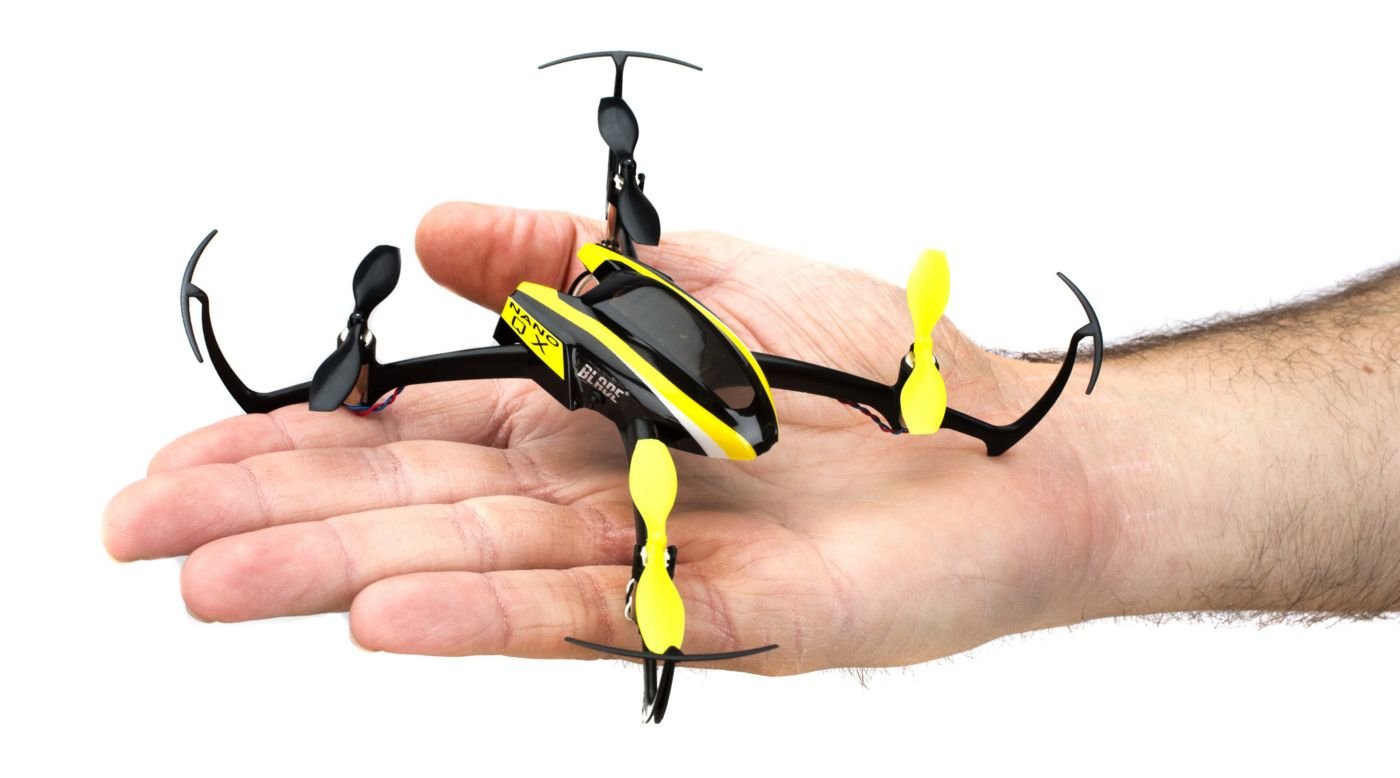
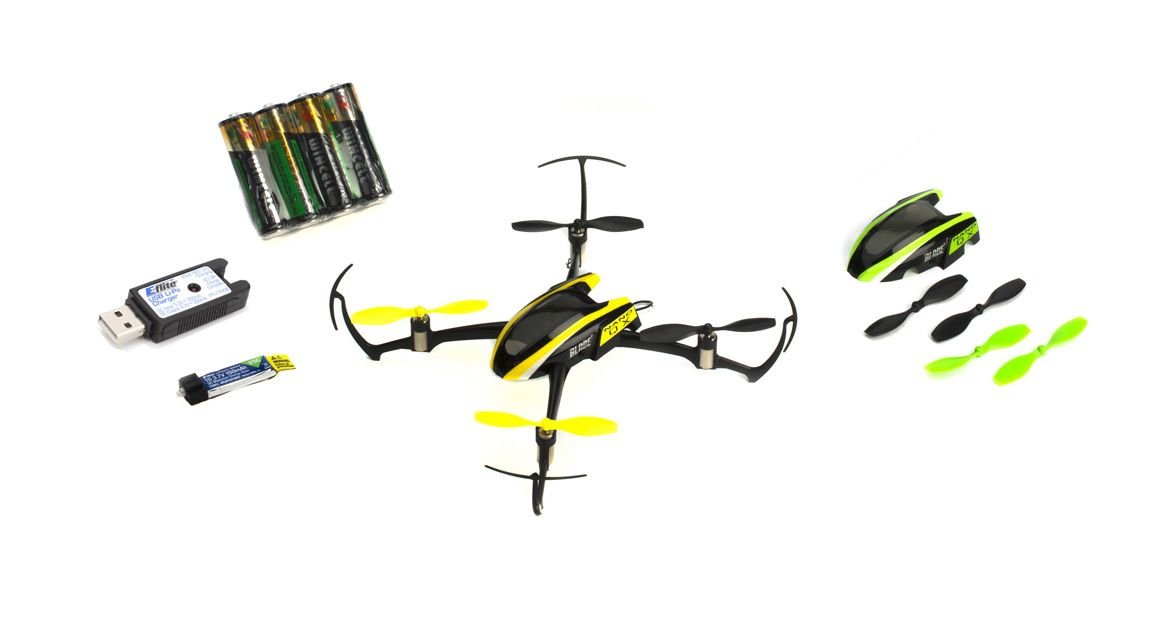
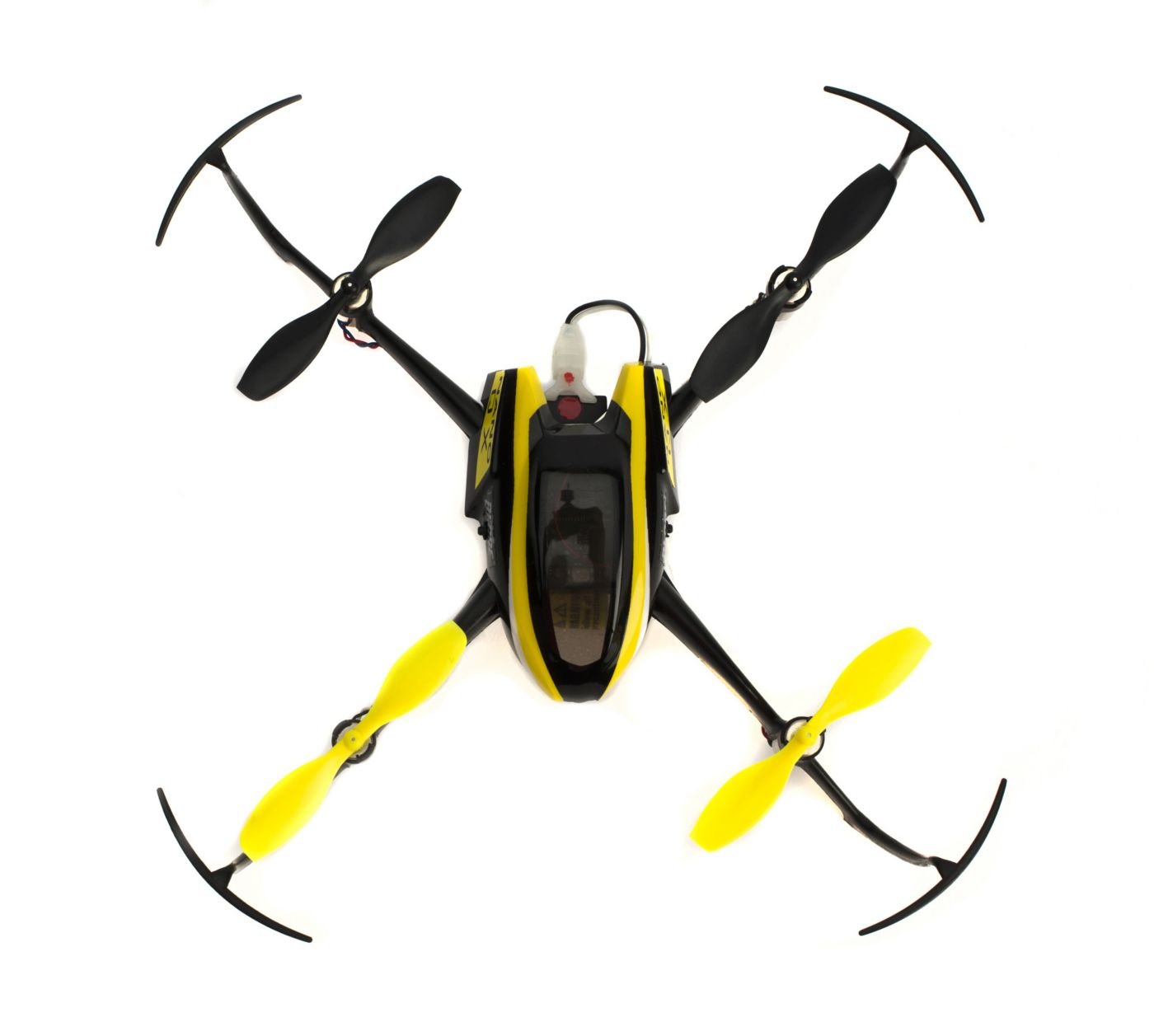
The BLADE Nano QX BNF Quadcopter is a compact and agile drone designed for indoor flying, featuring exclusive SAFE technology for enhanced stability and control. It requires a compatible DSM2 or DSMX transmitter and boasts powerful brushed motors for smooth operation, making it perfect for both beginners and experienced pilots.


S**E
easy to fly
The Nano QX is a real gem.I have flown several consumer quads, and the Blade Nano QX has given me the most value per dollar by far -- which is saying quite a lot, because there are plenty of quads on the market.The Nano is affordable, easy to fly, stable, responsive, durable, and feather-light.It's small, but not the smallest quad on the market. There are smaller, cheaper designs, like the Proto X.I got one of those when I was first getting into quads... but discovered clumsy, difficult handling (at least partly due to the low-quality controller), and very limited flight time with a fixed internal battery. No swapping.The entire Proto X is built on a single circuit board; the board is the frame. This is efficient and practical, but it makes the structure very rigid and actually kind of inconvenient around people. It won't maul anybody, but it definitely bites a bit if it hits you. With the exposed edges of the circuit board, it could scratch or conceivably draw blood, which means you need to take a bit more care around bystanders.But most of all, most designs like the Proto X are hampered by the functional limitations of the cheap toy-grade transmitters they ship with. The sticks are so clumsy and tiny, I'm still not sure what the actual performance limitations of the quad are.In comparison, the Nano is about the same amount of circuit board, but with more battery, motor, and a flexible plastic frame. The frame makes the design bigger; the Nano will never be eligible for a "smallest quad" cuteness award. But It's actually a lot more crowd-friendly than most smaller quads. The weight (all 19 grams of it) is distributed widely. The big props turn slower and don't bite as hard (they're also quieter than the tiny, high-speed props on the small quads), and the flexible frame absorbs the impact of collisions brilliantly.This all adds up to a brilliantly people-friendly indoor quad. It's about as safe as a paper plane; you wouldn't want it to hit an open eye, but that's about the only way it could hurt anyone. Anything less than that, and it's not even an issue.And the control is fantastic. Given enough vertical space, the Nano can flip, but my feeling is leave the aerobatics to helicopters; quads were meant to race. Thanks to torque cancellation, Quads in general have great control and precision in tight spaces, and the gryos on the Nano are particularly reliable. Also, thanks to DSMX binding, hobby-grade transmitters can take full advantage of the Nano's excellent handling characteristics. The Nano is absolutely rock steady in a hover, and smooth as silk in acceleration and cornering. My friends and I have a few in the office, and we have fairly regular races in the break room / cafeteria. The Nano flies very naturally in that sort of space; it can fly in a smaller room, but larger rooms (maybe 20 by 30 feet) are perfect for racing. Our course involves a figure-eight around two pillars, with a "touch and go" at a table near the pilot area. We can get about 25 laps on a full charge of 180mAh battery... and we bring a bag of 12 or so.Speaking of which, the use of standardized batteries is a big plus. The batteries are cheap. Bring a bag, and fly as long as you want. I highly recommend getting the 4-port charger. The same batteries work with most ultra-micro planes from Blade, Eflite, Parkzone etc, and even a few Blade helis -- so there's a lot of potential for re-use.The plastic frame seems flimsy to touch, but it is perfectly designed for its purpose; it's exactly the strength it needs to be. In dozens (if not hundreds) of flight hours, I managed to break one prop-guard -- and only then by slamming the poor quad repeatedly into pavement from 20 feet up, while first trying to learn to flip. If you take the sensible precaution of flying over grass, I don't think you will be able to break the frame, even if you make deliberate efforts to punish it. The only real hazard for a Nano QX is trees. The prop guards love to catch on things. Be warned.Other than the potential to get caught on things, the only real weakness of the Nano QX is its limited payload. It is a fast and athletic machine, but its performance depends entirely on the leanness of the construction. It is very hard to carry external stores on the Nano. A new model is coming out soon with very lightweight FPV camera, but apparently that achievement was only possible by lightening the frame even further and integrating the camera completely. The same camera (sold as an independent item) is too heavy to lift when taped on externally; I've tried. So... don't expect to monkey with the design much unless you are an expert at lightweight construction.It was however just strong enough to lift this costume : https://www.youtube.com/watch?v=gP7J0boqcU8The next step up (180 QX) is also a single-cell design with limited lift; enough for the incredibly bad lightweight camera it comes with, but nowhere close to lifting a GoPro (though I hear the 200 can do that, and I'm liking my 350QX2 just fine). But none of those quads are going to let you race around the rec-room with your friends. Nor will heavier single-cell designs like the Traxxas Alias or the Hubsan X4.In its niche, the Nano is just perfect.Speaking of the 350 QX2 though, I got one recently, and discovered that my past practice with the Nano was hugely valuable. If you're even remotely considering a big heavy photography drone, the best possible thing you can do is buy a Nano first and race it until it feels completely natural. It is totally forgiving, and a perfect learning platform. Then when you start launching thousands of dollars into the air, you can be confident they will land where you want them to.
J**F
For a WIDE range of experience. So much fun!
Quick summary: This thing is a blast to fly! SAFE mode makes for an enjoyable, easy experience right out of the box -- it doesn't matter if you've never flown a heli or quad before. Turn on SAFE to learn it, turn off SAFE to master it. Buy this quad, it will make you happy.Long winded version:First, let's get a quick first-timer thing out of the way since people still ask about it (you can ignore this part if you already have a transmitter): If you don't have a transmitter yet and you're not thinking about expanding much in the hobby, then consider the RTF version of the Nano QX instead of this one. It includes a basic controller for an extra $20. On the other hand, if you don't have a transmitter but you think this might be something that will hold you interest for a while (and possibly lead you to buy more helis/quads/planes in the future), then consider spending the extra cash on a better transmitter, like the Spektrum DX6i , which can hold the setup information for 10 models. Then, buy the BNF versions of the models you're interested in, save $20 per model and you don't have a pile of RTF radios sitting around.Now, on to the Nano QX.I have a couple of other models already. Namely, I have two Blade MCX2 coaxial helis that I bought off of eBay, and one Blade msr X fixed pitch heli. I'm not particularly skilled yet -- I'm fine with all of them when hovering and nose-out maneuvering, but once they're facing other directions, after a few seconds my wires get crossed and I start messing up. This is easy to correct on the Nano QX (with SAFE enabled) and the MCX2 because they are both neutral and stable machines. So they're great to learn on.If anything, I feel like the Nano QX is the easiest of all of them to start with. When SAFE is enabled, you really can just bring up the throttle and watch it go into a stable hover with little or no manipulation of any other channel. Even the MCX2 with it's extremely stable coaxial setup requires a little more effort. The Nano QX's stability in SAFE mode is probably partially due to the fact that it really only needs to make adjustments to the four motors to assist with stability. Unlike a helicopter, there are no additional moving parts. That reduction in variables really seems to make a difference in ease of use. In fact, from a standing position you can easily just drop the QX, get your hand on the radio, and bring it to a stable hover before it hits the ground.The SAFE mode's gyro stabilization also means that the quad rights itself after you tilt it in any direction. So for example, if you push the aileron to the right and have it tilted 20 degrees to the right, once you let off the stick it returns to a hover. With SAFE off, releasing the aileron stick will keep it where you left it, at 20 degrees roll right. You would then need to roll it left 20 degrees to put it back to a hover position. SAFE mode will also attempt to correct for unexpected breezes if you're outside, with varying degrees of success. Clearly it won't be able to handle significant wind gusts, that would be asking too much. If you put it into a hover outdoors, you can actually see it trying to correct for the light breezes that it encounters. It looks like it's malfunctioning because it gets a little twitchy even though there's no stick input, but that's just the stabilization trying to keep it in one place.Once you turn off SAFE mode, it feels like a very different beast. It WILL require plenty of stick input to keep it stable, because the quad is no longer assisting you to maintain stability. This feels much more like flying the msrX and will require plenty of time to master. It's fast and darty in this mode. You can switch between modes mid-flight if you like, so if you manage to catch it before you completely lose control, there's a chance SAFE mode might save the day. That said, depending on how you have the mode switch mapped on your transmitter, you may not be able to get to it in time.I also love how light it is. It weighs practically nothing. Don't worry about messing up your nice wood floors by dragging it along the ground on its skids or dropping it or diving uncontrollably to the ground. It's like trying to damage your floor by crumpling up a piece of notebook paper and throwing it as hard as you can on the ground. Not going to happen. Not saying it's a good idea to bounce it off of the nice TV or the flower vase or anything like that, but you get the point. I have crashed it a number of times with no damage to the quad, so that speaks well of its durability.Buy it. Enjoy it! Use it as a stepping stone to something bigger, or don't. It's awesome on its own.P.S. -- For anyone that has decided to buy one and is looking for example transmitter settings, I'll add mine in the comments of this review.
G**A
Love it bought another one also
Ha ha .. Love it bought another one also.. Cute as heck and flies well even in the wind. Great inside also when theweather is too nasty to go outside. A beginner should purchase the item RTF though and then later buy moreas BNF as you already have the transmitter. Hope this helps anyone thinking of flying for the first time.Ken
C**G
An awesome indoor quad copter for beginners and for experienced pilots ...
An awesome indoor quad copter for beginners and for experienced pilots who want a rainy weather option.In 'S.A.F.E' mode it is really stable and so easy to fly and is as nimble a quick as you would expect in agile mode.The blade guards are designed perfectly to protect the rotors.
V**A
Three Stars
The blades got spoiled too soon !
M**N
but flies great, I hope its as strong as advertised
looks very flimsy, but flies great,I hope its as strong as advertised.
H**!
Five Stars
great fun. This thing has survived several crashes already!
Trustpilot
2 months ago
3 days ago