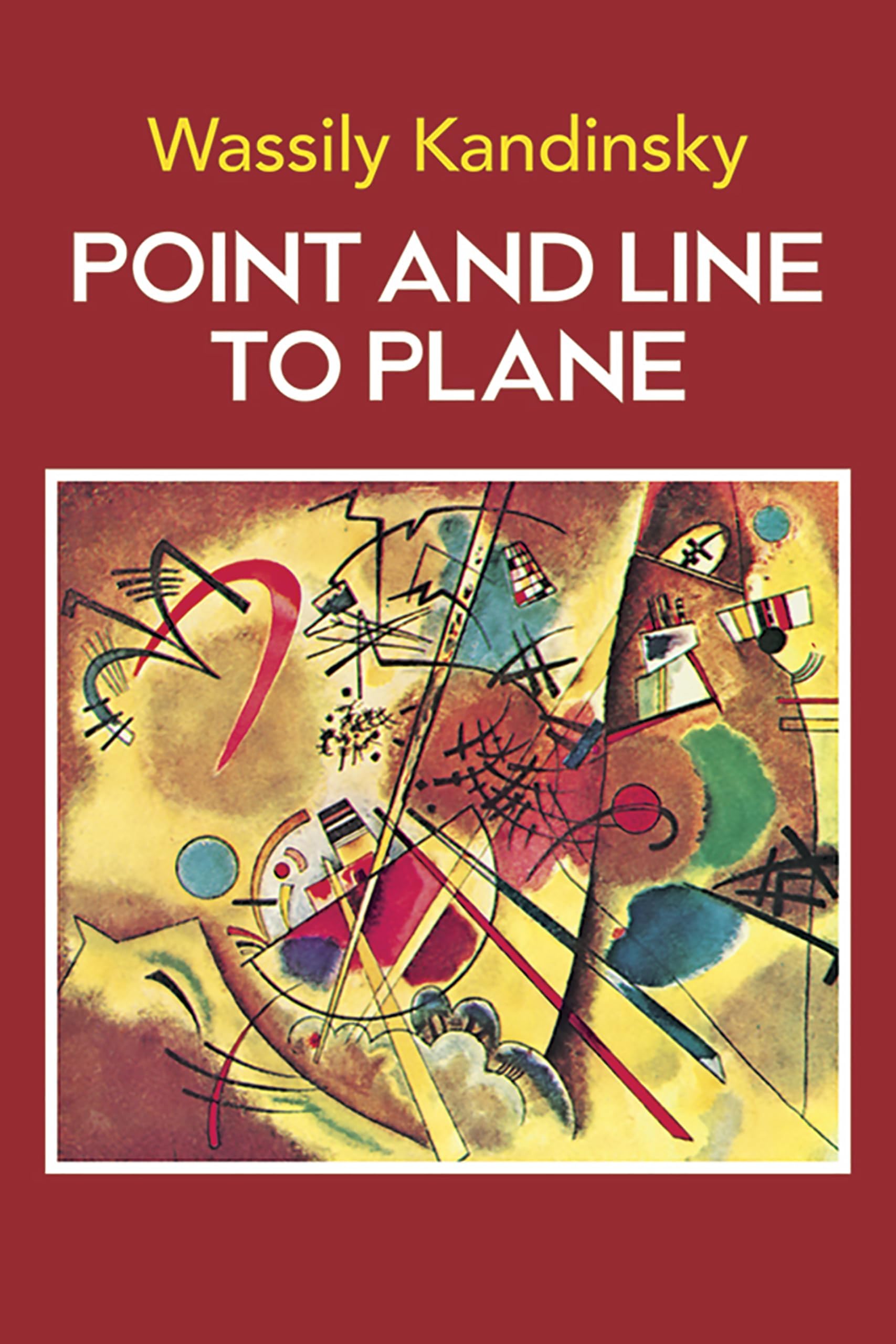
Point and Line to Plane (Dover Fine Art, History of Art)
Product ID: 13251020
🎨Foundational abstract art theory
📚Classic 1926 edition
🖋️Insightful artistic terminology
Desertcart purchases this item on your behalf and handles shipping, customs, and support to Greece.
🎨 Unlock the blueprint of abstract art mastery with Kandinsky’s visionary guide!
Point and Line to Plane, originally published in 1926 by Wassily Kandinsky, is a seminal art theory book that dissects the fundamental elements of abstract painting. It presents a detailed analysis of how points, lines, and planes interact to form a unique visual language, influencing modern art and the Bauhaus movement. This edition remains a cornerstone for art historians, critics, and professionals passionate about the evolution of non-objective art.
| Best Sellers Rank | #168,750 in Books ( See Top 100 in Books ) #373 in Arts & Photography Criticism #529 in Individual Artists (Books) #694 in Art History (Books) |
| Customer Reviews | 4.6 out of 5 stars 251 Reviews |
N**A
Great book, one of the must have in library
Must have
C**J
Love Kandinsky
Kandinsky talks about the basic plane and how shapes relate to this plane. He focuses on balance and symmetry and how to achieve this. Great book to learn about balancing the plane and color harmonies. If you are into abstract art or Kandinsky, this is a great read.
A**R
First book to read to master composition
As engineering student till date, and wannabe photographer, i was introduced to this book by one of the best. This is where it starts. Very basics of composition. Must read for anyone who wants to understand basic principles of “elements” which in turn, form composition. Prepare to get bored ... and amazed at the same time. It takes serious amount of time to understand terminology this guy ia trying to establish, once you get it, it gets interesting. It’s funny, how much time it takes to digest something like this in 21st century, and how this guy established it so early. Good luck going through this !! -Rahul
R**Z
Kandinsky
Very complicated
M**Y
Interesting technically written book
If you like reading about the technicalities for design this is the book for you.
J**N
Great description of abstract language
Very highly recommended to anyone trying to find their own abstract language Comprehensive explanation of what points/lines/planes are, what they can mean in an abstract painting Almost too much information to absorb Main points clear at beginning of paragraphs, don't need to read every word Black and white illustrations
J**O
Kindle is a great asset but there are some books that just require ...
I've started reading this and wish I had gotten the printed book. Kindle is a great asset but there are some books that just require a hard copy.
J**N
Interesting insight into the mind of a synesthesiac artist. ...
Interesting insight into the mind of a synesthesiac artist. He sees things (colors in music) that I don't and never can.
A**L
wonderful
This is a classic book about art and Kandinskys understanding of art is very deep. Everybody, who likes art, photography or music should read this book, because one learns something about the tension and the relation of the different elements of a painting or artwork.
A**R
worthwhile
Inspiring
P**A
Excellent
Thank you
H**T
Getting the point now....
I've been reseraching Paul Klee and in doing so, it is impossible not to look at WK. To keep this short, none of the developments that happened in visual art happened in total isolation; as always there are influences. Understanding the thinking behind the point, line and plane is fundamental to decyphering a lot of more abstract work particularly from the 1950s onwards (Geoffrey Clarke for example). Easy read, lots of fundamental "truths" to get to grips with and if you too are looking for the altrnative to representational or figurative art, this is a great place to start.
A**.
Thought provoking investigation of the basic point, line, and plane
Kandinsky seems to me to be doing to painting what the Russian Formalists did to literary analysis. That same preoccupation with defining the tools and techniques of the artist into measurable units shines brilliantly in this breakneck nosedive into the medium. This book deals with understanding what points, lines and planes fundamentally and innately are, not as translations of 3D form as in “objective art”. As such, Kandinsky’s observations lay the near-scientific foundations for disciplined, considered abstract art. But don’t worry: this book is not an artistic statement, it is a treatise. Kandinsky’s spiritualism reveals itself here and there but only in passing, and his instructional tone never fades. While I am not interested in abstract art myself, the investigation into what points and lines mean *in themselves* is disciplined and rigorous enough as to provide me with valuable insights. These I plan to apply in my study on how to transition from 3D, geometric conceptualization of my linear drawings up the ladder of abstraction into ‘mere’ lines. I’d like to pay a special compliment to Kandinsky’s writing style. It is succinct and tightly woven, covering astounding depth with economy. No paragraph is useless or filler; at worst, they contain information not relevant to your interest.
Trustpilot
2 months ago
1 week ago