๐ท Elevate your vision โ shoot like a pro, share like a star!
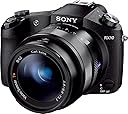
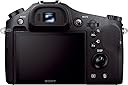
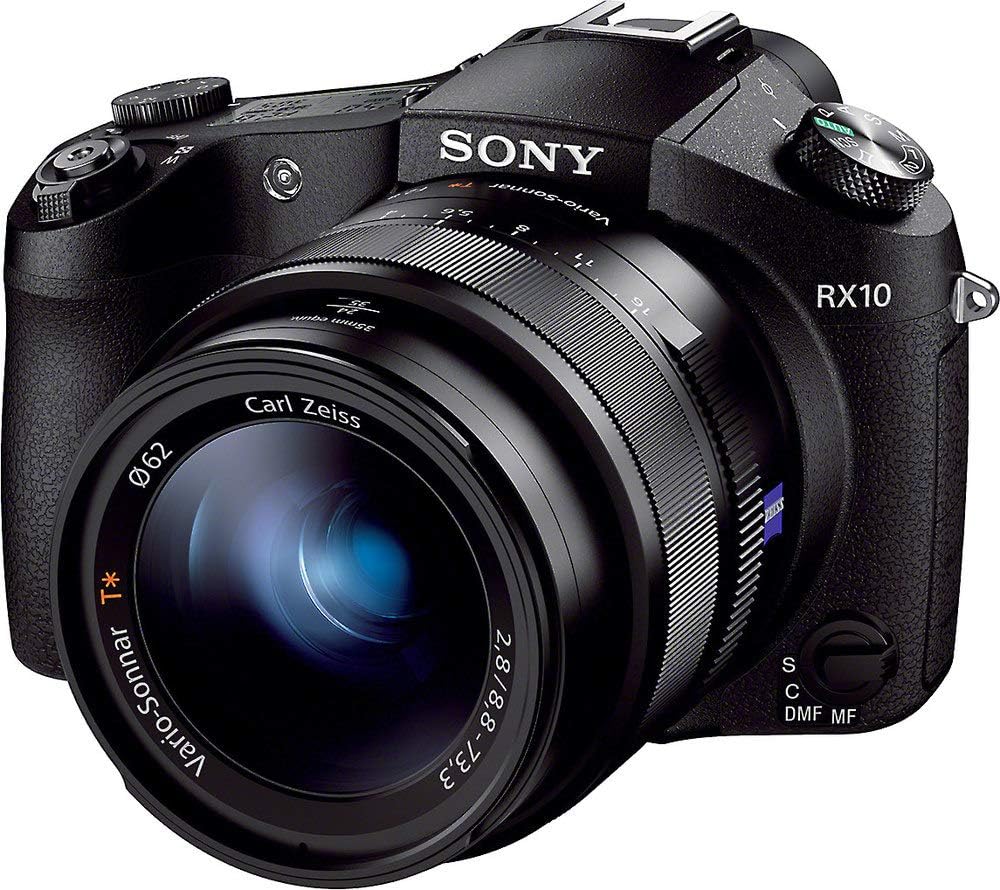
The Sony DSCRX10 Cybershot is a powerhouse bridge camera featuring a 20.2MP 1-inch Exmor R sensor paired with a bright F2.8 Zeiss Vario Sonnar 24-200mm lens. Its ultra-fast BIONZ X autofocus engine and 3-inch high-res tilting LCD make capturing and reviewing professional-quality images effortless. With built-in Wi-Fi, itโs designed for the modern creator who demands mobility, precision, and instant connectivity.
| ASIN | B00FRHTSMW |
| Age Range Description | Adult |
| Aperture modes | F2.8 |
| Aspect Ratio | 16:9 |
| Auto Focus Technology | Center, Continuous, Contrast Detection, Face Detection, Live View, Multi-area, Selective single-point, Single |
| Autofocus Points | 25 |
| Best Sellers Rank | #439,204 in Electronics ( See Top 100 in Electronics ) #3,789 in Digital Point & Shoot Cameras |
| Brand | Sony |
| Built-In Media | AC Adapter AC-UB10, Eyepiece Cup, Lens Cap, Lens Hood, Micro USB Cable, NP-FW50 Lithium-Ion Rechargeable Battery (1020mAh), Shoe Cap, Shoulder Strap, Sony Cyber-shot DSC-RX10 Digital Camera, Warranty |
| Camera Flash | F2.8 |
| Camera Lens | Fixed 24-200mm F2.8 lens |
| Color | Black |
| Compatible Devices | Smartphones, Tablets, Computers |
| Compatible Flash Memory Type | SD |
| Compatible Mountings | Other |
| Connectivity Technology | Wi-Fi |
| Continuous Shooting | 10 |
| Customer Reviews | 4.2 out of 5 stars 123 Reviews |
| Digital Scene Transition | false |
| Digital Zoom | 6.6 |
| Display Fixture Type | Tilting |
| Display Maximum Resolution | 1228800 |
| Display Resolution Maximum | 1228800 |
| Display Type | LCD |
| Dots Per Screen | 1228000 |
| Effective Still Resolution | 20.2 mp |
| Expanded ISO Minimum | 80 |
| Exposure Control | Aperture priority, Automatic, Manual, Shutter priority |
| File Format | JPEG (DCF 2.0, EXIF 2.3), Raw (Sony ARW 2.3) |
| Flash Memory Bus Interface Type | UHS-I |
| Flash Memory Type | SD/SDHC/SDXC, Memory Stick Duo/Pro Duo/Pro-HG Duo |
| Flash Modes | Auto, On, Off, Slow Synch |
| Focal Length Description | 24.0 - 200.0 millimeters |
| Focus Features | Contrast detection |
| Focus Mode | Continuous-Servo AF (AF-C), Manual Focus (MF) |
| Focus Type | Manual Focus |
| Form Factor | SLR-like (bridge) |
| Generation | 1 |
| HDMI Type | Type D Micro HDMI |
| Image Capture Type | Stills & Video |
| Image Stabilization | Optical |
| Image stabilization | Optical |
| Item Weight | 1.8 pounds |
| JPEG Quality Level | Basic |
| Lens Type | Zoom |
| Manufacturer | Sony |
| Manufacturer Part Number | DSCRX10/B |
| Maximum Aperture | 2.8 millimeters |
| Maximum Focal Length | 20 centimeters |
| Maximum Shutter Speed | 1/3200 seconds |
| Metering Methods | Multi, Center-weighted, Spot |
| Minimum Focal Length | 24 millimeters |
| Minimum Shutter Speed | 30 seconds |
| Model Name | Sony CyberShot DSC-RX10 |
| Model Number | DSCRX10/B |
| Model Series | RX10 |
| Number of Items | 1 |
| Optical Zoom | 8.3 x |
| Photo Sensor Resolution | 20.2 mp |
| Photo Sensor Size | 1-inch |
| Photo Sensor Technology | BSI CMOS |
| Real Angle Of View | 69.89 degrees |
| Screen Size | 3 inches |
| Self Timer | 10 seconds |
| Sensor Type | BSI CMOS |
| Shooting Modes | AF-C |
| Skill Level | Professional |
| Special Feature | Wireless |
| Specific Uses For Product | Photography, Videography |
| Supported File Format | JPEG (DCF 2.0, EXIF 2.3), Raw (Sony ARW 2.3) |
| Supported Image Format | JPEG, ARW |
| Total Still Resolution | 20.2 mp |
| Total USB 2.0 Ports | 1 |
| Total USB Ports | 1 |
| UPC | 027242870796 |
| Unit Count | 1 Count |
| Video Capture Format | MPEG-4, AVCHD, XAVC S |
| Video Resolution | FHD 1080p |
| Viewfinder | Electronic |
| Viewfinder Magnification | 0.70x |
| White Balance Settings | Auto |
| Wireless Technology | yes |
| Write Speed | 10 fps |
| Zoom | Optical Zoom |
A**T
RX10 (RX100 Superset)
Updated 12/29/2013 So far the RX10 has exceeded expectations and what's more fits in a small weatherproof padded case 6 X 5-1/2 X 4 inches for a total weight of 42oz with spare battery. I really like that I can just focus on using it versus worrying about what lenses to buy, and how to carry them. Sony really under promised and over delivered on this one. My opinion is that based on reviews there are a few bad units out there, and the best plan is purchase through Amazon, and then do a thorough evaluation during the return period. Other suppliers have there own rules, and you may have to pay return shipping and insurance as well the free shipping you received at purchase, even if the return isn't due to your fault. (Read the fine print). I particularly like the RX10 EVF -it's easy to frame images and does not require scrunching ones nose against the back of the camera, doesn't require putting on reading glasses either , the menu is easy to navigate, and it feels like a solid quality camera. The weatherproofing is a plus especially if you live in a wet (or marine) climate. The battery life isn't very good, and it weighs 30oz+ but I can deal with that. I like this style of camera because it's compact, less prone to dust problems, and easier to justify purchasing as it isn't an open ended system like a DSLR. I needed a replacement for the FZ200, and also needed to have the IQ of an RX100 as I have become accustomed to that. Of course the zoom range of a RX10 is less than an FZ200 but covers most needs i.e. travel, family, gallery, museum, cathedrals, "some" wildlife."Some" is like the old house we purchased with "some" insulation-after extensive remodel we found a few square feet over the kitchen ceiling i.e.a rarity. I think that 24-200mm is an ideal range especially for weddings and similar events. I'm using it in addition to the RX100. To use the DSLR analogy, instead of removing the large lens and adding a pancake lens,I will just put the RX10 aside and take the RX100 out of the belt pouch. At 28mm (only) the RX100 is still superior with an f1.8 aperture. The RX10 is larger than the FZ200 mainly in the depth front to back dimension about +5/8 inches, enough that it will not fit in the FZ200 case. Because the LCD cannot be folded inwards it has to be slid into a pouch having protection for the glass The weight is + 1/2 lb, so I need some solid performance for that increase. I found a case for it, the Rip Offs belt pouch I have been using (2.2oz) is too small and not enough protection for the LCD glass, also I think it is too heavy for a belt pouch. The Panasonic Soft Compact ILC System Digital Camera Carrying Case works amazingly well, and is only six at Amazon. It has space for the camera and lenshood stowed, with a Crumpler Noose, and a spare battery or two. Seems to be weather resistant also. It also has more useful features, and is more useable than a Crumpler X million $ Home camera case for a fraction of the price. The RX10 ergonomics are excellent and when the camera is powered down with the lenshood in stowed position it doesn't scrunch my fingers like the FZ200. Easy to grip with one hand even at 200mm, I use a wrist strap and 2 hands usually. No abnormal things -the shutter is a bit louder than the RX100, but silent compared to an EM-1 clunk, the lens barrel does move slightly in the 200mm position when gripped, the zoom speed and power up speed is fine, the AF seems normal. The sounds, flash, and the focus light can be turned off which is the way I like to operate. The videos and stills are all in one file instead of being seperate which makes reviewing easier. I have only compared with the RX100 IQ at 100mm so far and the the RX10 appears better. It will take a while to do the rest of this testing. I'm also going to try out the 2X clear zoom after reading one report on how well it works versus cropping, this potentially gets the zoom range into the lower end usually required for wildlife (300mm minimum) but I don't expect miracles. I added a lens cap cord because I like the one on the FZ200. Using Sony 62mm Front Lens Cap ALCF62S accessory about six at Amazon, and some Atwood Rope 1/16 inch Microcord I drilled a 1/16 inch hole on the edge of the lens cap, threaded the cord, made a mushroom end by partially unraveling the cord, and melting with a match. Then pull the cord and use a blob of glue. It can then be cut to length with the lens in the 200mm position and the lens cap and hood in place. Update #1 I found that a number of close up's, macros, long shots, short shots weren't up to snuff when viewed on a large monitor.All shots taken inside with room lighting only. Using center focus fixed the problem -they look great now. Update#2 The manual says "This camera is designed to be dust and moisture-resistant, but is not waterproof or splashproof". Update#3 I found that for low light conditions there doesn't seem to be any benefit in using RX10 CIZ mode @2X200mm (versus cropping @200mm) it just creates a more noisy image and the size of the jpeg file can be as high as 18MB. Also for low light conditions a cropped RX10 image @200mm is as good as a FZ200 image at the maximum optical zoom 600mm, and this is with FZ200 ISO=200, RX10 ISO=3200. Update#4 The outside test shot of a power pole transformer (with a small manufacturers label) showed the similar results to the low light shots, for stills RX10 CIZ does not have any benefit over just cropping an image. The FZ200@600mm gave the usual result for this test shot and I can read the label whereas I cannot read it using the RX10@200mm with or without CIZ -when cropped. So my "conclusion" is that there weren't any miracles and the FZ200 is still the best fixed lens camera choice for wildlife photos where 600mm focal length is needed, also the RX10 CIZ mode isn't useful for stills so I will consider the maximum usable focal length to be 200mm and just use optical zoom. Plan to repeat this when a break in the weather happens. Update#5 I've been very pleased with the results, the shots look great at 12 inches X 18 inches when viewed from about 12 inches on an LCD monitor, and also at an equivalent of 4X larger than this. Better IQ than a RX100.
D**S
Better than most, and almost there.
Better than the RX100 for the lens, and dials, but that's it. Pros: 1. Relatively simple to use, and feels more like a camera than my RX100 (albeit 5x the size). 2. Construction seems well done, but still slightly plasticy feeling. 3. Faster aperture over most of the zoom range. 4. Sharp lens, better than the RX100 on the longer end of things (>70mm eq.) 5. Tiling screen is nice to have, but could have been touch capable at this price. 6. Real lens hood and cap (familiar and perhaps preferred, to those used to slr types of camera). 7. Great EVF. Really, this one is as good as, or better than the EM-5 IMO. 8. Shutter button feel is great. 9. Aperture ring the hails to a time when we used such things. Nice touch. 10. Detents available on the aperture ring (but more on this later). 11. Smooth and relatively even zoom, although slow (more on this later). 12. Well balanced in your hand(s), even with the zoom fully extended. 13. UI is pretty simple to navigate, and to find what you expected/needed to find. 14. Weather sealing is a nice feature, but I don't anticipate shooting in a down pour very much. 15. When sounds are disabled, the shutter is virtually silent. Great work Sony. Cons: 1. Squeaky tilt screen (yeah, it squeaks when moving into the down low shooting position). 2. Sloooooo....oooow zoom. Too slow IMO. The linkage/communication should be more direct between the ring and the movement of the lens. 3. The aperture ring, while an excellent idea, only has the knurled portions in two areas of the ring. This makes it so that I constantly turn the switch that controls the detent function, into the off position. When you grab it where the knurled areas are not, you simply cannot turn it very well as your fingers impact the fingers that hold the grip. Poor design there. 4. Write times are decent, but you hit the buffer and it gets very slow. It clears reasonably quickly tho, so not too bad. 5. No AF-on style button, or function. Major oversight. 6. Bug in the software: This means that if you accidentally plug the camera in to your computer (while the computer is in sleep mode) to charge your battery,and the camera's power switch is in the on position, it will disable your camera's ability to connect to your computer. You then have to use a card reader. Silly bug, and it needs a fix. 7. Average responsiveness in the AF dept., although it does hit the target most of the time. This is actually unacceptably slow for me after trying for two days. 8. Battery life: Real world use is not what they claim. If you plan to use the camera to frame your image, or review many of your images, be prepared for something like 200 shots or so. Not terrible, but not great either. (Caveat: I am using the EVF mostly). Overall then, this is a solid bit of kit, but not the one I had hoped for when placing the order. It lacks some of what I expected it to accomplish easily. What I feel are missing: The refined movements/operation of a high end camera, and the AF performance anticipated by the much touted new AF system. It lags behind my RX100 for AF speed by about half the speed. The battery charging in the camera has caused some frustration, and caused the camera to malfunction. This occurred/occurs, when inadvertently connected to a USB then to your Mac, while the Mac is "asleep". Dumb oversight Sony. Get that fixed please. In the hand, its just about tall enough to feel like a real camera, but not quite tall enough to really "hold" like one. I have medium sized hands, so that is for my grip. Another of the tactile things is that the buttons seem lost on the back of the camera when you have it to your eye (which you will probably find yourself doing with this EVF). You can probably find the buttons ok, by training yourself to go to the horizontal wheel, then carefully moving your thumb down till you feel them. Also, the lens rattles at the front end, whether its turned off, on or fully extended. Not a lot of rattle, but I noticed it "clicking" around as I moved about and bumped my elbows into objects for stability. What it does well (esp. considering the size of sensor) is to capture and retain shadow and highlight details. As with the RX100, I found myself setting a negative 1/3 stop of exposure for most automated shooting. I played with processing a few jpeg images, and even they held up pretty well. The images will do better keeping details in the shadows, than in highlights though. So keep your highlights in check, your ISO's lower, and you can recover a healthy amount from those shadows. This lens is very, very good. I shoot with the Nikon 70-200/2.8 and have had the Canon version of that lens some years ago. Neither of those lenses can out perform this one for its purpose. Unlike those lenses, this one does pincushion pretty severely, but when you consider the other end (25mm), its totally acceptable IMO. Very nice job. So then, is it a keeper? I really want to, but I am fighting with myself. On the one hand I REALLY want a one stop bridge camera like this. On the other hand, it holds back in some areas that feel like Sony were not quite paying attention. I probably will keep it as it does most of what I hoped it would, and frankly, I can probably learn to work around the "issues" I have with it. Nice but not quite there. Perhaps the" version II" will address these few bugs. Just need some more beta testers like me to speak up until they listen, as they did with the RX100/RX100 II.
C**R
The Sony RX-10 Is a Steal At This Price, and Worth Every Dime! A Pro-Grade Bridge!
Is it wrong to love a camera? Iโve used my new-to-me Sony RX-10 for 2 months now. It is an excellent tool! A true standout! I was a full-time working professional photographer for 30+ years, and I learned long ago that it's not about cameras. To me a camera is just a tool, a recording device. That said, I've always like GOOD tools. After much research I found my camera here on Amazon, very gently used, with 4 batteries (!) (great for extended shooting which I sometimes do), for $500 U.S. flat, including a small. perfect Manfrotto case. I have zero interest in video so I cannot comment on it (never once used it in any digital camera). I have little interest in scene modes. I shoot in raw nearly 100% of the time and process in Lightroom CC and Photoshop CC. I value a reasonable zoom: the RX-10 goes from equivalent 24mm to 200mm, all at f/2.8 (wide open) if desired. The camera can be anything from fully automatic (point and shoot) to full manual (including focus), but it is a โcompactโ or โbridge,โ technically an โamateurโ camera, so itโs at its best when being used at least semi-auto. I personally favor Aperture priority and auto-focus, which the camera can do continuously which helps with tiny moving targets such as a 1-year-old granddaughter. The RX-10 may be considered โobsoleteโ in that Sony has already upgraded it twice, to Super Zoom status. I am perfectly satisfied with 200mm, but the newest 600mm RX-10 III weighs 2-ยฝ pounds and retails for $1,500 U.S. If you are a birder or such then itโs worth it the money and the mass. Even the third version is a pound lighter than a typical crop-sensor DSLR with a kit lens, and no kit lens has even the 200mm reach of the โobsoleteโ RX-10. As a working pro I had my fill of wrecking my back with 50# cases of gear. When I dipped my toe in digital in 2007 I loved compacts. My previous primary is a Nikon P7800 with a 1/1.7 CMOS sensor. I was a happy clam for years despite the small sensors, but I am also a sharp freak and wondered from time to time what difference a larger sensor might make (lots as it turns out), but I also long ago concluded that I don't want bodies and lenses and load. I want what I've had, a do-it-all-in-a-single-package camera. I've never been especially concerned with "limitations." I consider that there are always workarounds. I'm told that compacts are "no good in low light." I've been shooting in practically NO Light since I started. I accept that there will be noise (and some noise can be reduced in post processing). A couple of years ago my Nikon P7800 covered everything from the Grand Canyon to Carlsbad Cavern. One camera, bright light to no light. What limitations? Yet I still wondered about a larger sensor. I started researching. I considered mirrorless but that meant lenses, more kit, bigger bag, and baggage. I never seriously considered a DSLR; too big, too heavy, lenses, more baggage, plus I have learned to love love love an EVF. I also love a totally silent camera. DSLR's clunk. Compacts can be completely silenced, no beeps, no shutter sounds, no lights; even the monitor can be shut off and only the EVF left on. I like to shoot in museums but I prefer to be discreet. Bridge cameras sounded like exactly what I wanted. Review after review praised the Sony RX-10 to the skies. The RX-10 has a 1.0 type Exmor R CMOS sensor, triple the area of the 1/1.7 sensor in the Nikon P7800. Full manual control, shoots raw, Zeiss glass... It didnโt take long for me to conclude that the Sony RX-10 was THE camera. If I have a gripe about the RX-10, it's the weight. The thing is a chunk. It weighs 1.79 pounds (the Nikon P7800, weighs .88 pound), but that is almost all Carl Zeiss glass, and Zeiss is the Gold Standard of lenses. Because the lens is an equivalent 24 to 200mm f/2.8 zoom that holds f/2.8 (or any other stop) throughout the range, it is massive and therefore heavy. My take is that the weight is more than worth it. The lens is shaaaaarp at all focal lengths and apertures, but because of the larger sensor is also able to much more easily deliver a smooth bokeh that I could never achieve with my Nikons. The small sensors make for almost unlimited depth-of-field, but if you don't want it you have to work at it. If you are looking to upgrade from a point โnโ shoot but donโt want to go all the way to interchangeable lenses, from the reviews Iโve read and my personal experience you canโt go wrong with this slightly obsolete Sony. If you want a super zoom Iโd still buy the Sony, but the new ones are pretty spendy. Still, they are built to last, solid and physically heavy, with real Carl Zeiss glass and 1โ sensors. If I were still working I would have no hesitation about using this camera professionally. It's that good.
S**R
Nearly perfect do-everything camera despite one big warning
L**N
This is P&S quality don't expect more
Okay but its like a brick around your neck because of the 2.8 lens. Great for movies but a little expensive for a pont and shoot. Also heavy (did I mention that) for a point and shoot. Definetly not pocketable or Jacketable. Its around your neck, in hand or in your bag. Photos are good but don't match up to a crop sensor which you could buy for a cheaper price than this. This is P&S quality don't expect more. I returned mine.
D**E
Fantastic, Low-Light Gathering Travel Camera
The Sony DSC-RX10 is a great alternative to large DSLRs, and has outstanding low-light performance. I've been shooting on Nikon DSLRs for the past 10 years and I've loved the creative options that all the manual controls give me. Yet, those DSLRs (first the Nikon D70 and then the Nikon D7000) are relatively large cameras (although not full-frame) and a kit with several lenses can take up a lot of space and can be relatively heavy. And, in order to always have options for different types of shooting I've always kept a Sigma 30mm HSM 1.4 normal as well as a wide-to-zoom lens like the Nikon 18-300mm. So when I saw the Sony DSC-RX10 I thought that maybe that great-looking Zeiss 24-200mm constant 2.8 just might be an all-in-one solution as a smaller travel camera. And I was a right. It's terrific all-around, smallish, camera. Pros: 1) Relatively small size. Sure, it's not a pocket camera, but that's not what I wanted anyway. Yet, it fits in a small, padded case and it's light-weight. 2) Big, light-gathering lens for a relatively small camera. It's amazing how much light this thing gathers. Holding a constant 2.8 f-stop throughout the entire 24-200mm range is a feat of engineering that isn't normally seen in a camera this small or this relatively inexpensive. Combine that with Sony's excellent SteadyShot and I can hand-hold night shots that I never thought possible. 3) 20.2 MP photos give you plenty of room for HD-like detail and allows you to safely crop photos without worrying about a loss of resolution. 4) Mirrorless design has no mechanical mirror pistoning up and down to create camera shake or eventually wear out. 5) Quality aluminum body that is sealed for dust and moisture resistance. Instead of changing lenses and risking the introduction of dust into the interior, I'm hoping this camera will remain dust-free. Also, the feel of the body and--frankly--everything about his camera is the feel of solid, quality construction. 6) Full manual controls. Yep, do anything you want that's DSLR-like. Like full manual? It's yours. Like aperture of shutter-priority? No problem. 7) Crazy-fast frame-rates if you want them. One mode allows you to take bursts of shots up to 10 frames per second. That's mighty fast. 8) Wireless transfer of photos to a smartphone (including iPhone and Android). 9) Incredible, Sony-quality video with SteadyShot. This camera doubles as an easy-to-use HD video camera. In any mode just press the video button and you'll instantly be making beautiful HD. CONS: 1) Wireless transfer of photos is clunky with an iPhone. It works, but it's not what you'd consider smooth, effortless, or quick. 2) The zoom is motorized and a bit slow--but worse than that it locks in place when the focus locks. So, if you're trying to quickly change composition (zoom in, zoom out), it's not quick and it will (frustratingly) lock the zoom until you take your finger off the shutter release. If there is an "off" setting for this, I haven't found it yet.
C**I
Sony RX10 for travel and pro video
This camera has much better IQ than the Sony a6000 paired with all standard zoom lenses, the 16-55mm kit lens, the G 18-105 and even the Zeiss 16-70 f4 - these lenses are not sharp (unless it's the issue with the a6000's sensor which I know is terrible) Even though the rx10's sensor is small compared to the a6000, the lens makes up for the small sensor. The constant 2.8 zoom is sharp wide open at all focal lengths. I usually go up to ISO 800 with the RX10 and the photos are very sharp and have fantastic image quality. If I need more light, I use a flash and I bounce the light off the ceiling or use a bounce card when I cant bounce off a wall or ceiling and for video I add light with a video light. I use the Meike mk-320 speedlight which also has a video light. It's a very small flash and is perfect for adding light without adding bulk For pro work I use off camera video lights. I don't use this camera for shooting stills professionally, after all this camera has a 1" sensor, but for pro video shoots it works very well. Sometimes I need to go up to 1600 and the images are very usuable and if you are not a pixel peeper like I am, they are actually nice, but of course, not of great quality like it is when kept under IS0 800. (For pro use, I never shoot above ISO 800. )And believe it or not, the low light IQ/high ISO is actually in the same range as the a6000 which for a crop sensor camera is absolutely horrendous high ISO capabilities . The a6300 is just a bit better, the a6500 is much better, but with a zoom lens, it is in my opinion, not worth the price it is now. I would say it's worth around $1200-1400 with an f4 standard zoom lens, not $1900+. I bought this for travel, for shooting photos and videos and for shooting pro video. If I would want to shoot mostly photos and have a smallish camera, I'd purchase the Nikon d5500 and the 17-70 f2.8-4 Sigma zooms lens. Although the Sony RX10 is pretty good, the IQ from Nikon DSLRs is much better because of the larger and better sensor. And the17 -70 f2.8-4 lens is nice and sharp. The problem with Nikon DSLRs is there's no video AF. The video IQ from Canon's crop DSLRs (and some FF too) is awful and unusable which is upsetting because it has Dual Pixel technology but despite that the video is unusable because it's extremely soft, has artifacts and terrible dynamic range in video. The RX10 with its small sensor has much better DR range for video and has no artifacts. The reason for this is because Canon crop sensor cameras have line skipping which causes the teribble video IQ . The a6000 sensor is AWFUL (the DXO ratings are ridiculously innacurate, I never visit that site anymore) terrible in low light, full of artifacts and very soft. It also has no Mic input and no headphone port. The a6300 and a6500 also don't have headphone ports and are simply not worth the price especially when paired with the standard zoom lenses that are crap for stills ( unless it's the a6000 camera with which I tried all the standard zoom lenses). And they are unreliable for longer video shooting because of the overheating, although the a6500 is said to be more reliable. The RX10 does not overheat and can be hacked for unlimited video shooting. Because of the issues with the other cameras, I bought the rx10 for traveling and I think it is an all around compromise. The Sony RX10 is excellent for videographers who can work around the clip limit time of 29 minutes. It could also be hacked for unlimited video shooting. . The 1" sensor is much better than camcorders with .5" sensors. Even camcorders with 1" sensors have mostly 2.8-4 aperture and this camera has f2.8 constant aperture! It's excellent for low light video. It doesn't overheat like the a6000 and a6300 The video AF is not as fast as the Sony a6xxx series but it's definitely usable, especially since the sensor is so small, it usually had no problem keeping up with movement during video. If you want 4k video, the RX10 Mkii has that feature. I personally think Sony would be very successful updating the RX10 series with constant f2.8 zoom lens, not like the newer versions RX10mk3 and mk4 which has a variable aperture zoom lens. A 1.5" bsi sensor for better IQ would be absolutely amazing. With a microphone and headset input, what could be better than that? Only no video length limit would make it more than amazing. I did not give five stars for this camera because the technology is old. The DR and AF are behind current camera technology. For video, I still recommend this camera over the a6000 though. For stills, I'd get a Nikon d5500. For both stills and video, I would get this camera. RX10 mk4: I don't understand where Sony is going with the RX10 mk4. Again a variable aperture lens at f4 for a 1" sensor! You are stuck with crappy pictures in most lighting situations unless you only shoot in daylight or never use the zoom. And the RX10 mk3 and mk4 are heavy dinasours because of these long range lenses. And the price of the RX10 mk4 is ridiculous for a 1" sensor camera. SONY please give RX10 mk5 the same lens as the original RX10 and mk2! If you want to update something in the camera series, update the sensor to 1.5" and better IQ and IBIS and faster AF. This would make the RX10 update an exceptional video camera and great stills camera. And keep the price tag reasonable! A 1" ensor camera should not cost more than $1300 even with all the bells and whistles .
J**.
RX10 is even better with firmware update! Can now shoot 120p/50m bitrate XAVC-S codec.
I saw the price drop on used/Amazon Warehousedeals so I jumped on the opportunity to own this camera and bought it for under $800. My expectations were not very high since this thing only has a 1inch sensor but the first few test shots simply amazed me. I took some test shots raw + jpg and compared it to my a6000 shots and they are pretty darn good for a small sensor. That zeiss lens is already sharp at F2.8 which puts my 16mm F2.8 pancake lens to shame. Focus distance is excellent @16mm focal length. In good lighting this lens can produce nice results almost comparable to my 18-105mm F4 G Lens on the a6000. I haven't tested it yet in low light situations but I would imagine this thing will struggle a bit compared to the APS-C cameras. But I bought this for my personal vacation or all-in-one camera when I don't feel like or need to be bringing $2700+ worth of gear with me. Who is this lens for? For people who want to upgrade from a small point & shoot or cell phone photography but don't want a DSLR and worry about buying many lens. For people that might end up with an entry level Canon, Nikon, Sony etc and never take the kit lens off their camera, I would just go for the Sony RX10. You're getting better picture quality + features + a weather sealed camera...more bang for the buck then lets say a Canon Rebel with an 18-135 lens or equivelent. I'm really having fun with this camera! UPDATE: 9/1/2014 Still love using this camera after almost two months of use. I'm a still photographer but I started getting back into video production again after using this camera. I'm very impressed with the sharpness and detail you can get from the 1 inch sensor + zeiss lens combo. I just updated to Sony's firmware version 2.0 and video just got even better. The RX10 can now shoot in the new XAVC S codec which adds more shooting options; 60p, 30p 24p and 120p all at 50M bit rate...amazing! But be sure you have a SDXC memory card because you won't be able to use the XAVC S setting if you it's anything other than a SDXC card. Here's a budget SD card by PNY that I haven't had any problems with... http://www.amazon.com/gp/product/B00BIK04ZM/ref=wms_ohs_product?ie=UTF8&psc=1 I also bought the Sony remote http://www.amazon.com/gp/product/B00BIK04ZM/ref=wms_ohs_product?ie=UTF8&psc=1 to add with my excellent lightweight but stable tripod by Manfrotto http://www.amazon.com/gp/product/B004MKNJAC/ref=wms_ohs_product?ie=UTF8&psc=1 combined with excellent fluid head http://www.amazon.com/gp/product/B001EXVQJQ/ref=wms_ohs_product?ie=UTF8&psc=1 ...for my "grab-and-go" video equipment. Oh, also, the stereo mics are excellent on the RX10 but outdoors with wind, I have the Sony Microphones ... CM-XYST1M http://www.amazon.com/gp/product/B00BJSYV4S/ref=wms_ohs_product?ie=UTF8&psc=1 Sony ECMALST1 (with Sony ADPMAA adapter) http://www.amazon.com/Sony-ECMALST1-Compact-Stereo-Microphone/dp/B00440D7S4/ref=sr_1_6?s=electronics&ie=UTF8&qid=1409591061&sr=1-6&keywords=sony+microphone ...and they work great. VIDEO SHOOTING TIME: This camera follows the shooting times of most DSLR still photo/video combos. I was doing some long video shoots recently and as I expected, the camera will stop recording at around 29 minutes 59 seconds or close to 30 minutes... (Not sure yet if using new codec, I was shooting AVCHD at the time) These new cameras are capable of shooting longer without overheating but I guess due to rules, regulations...standards...you know, all that BS out there...DSLR like cameras aren't allowed to record longer then 29min59seconds otherwise it would be classified as a camcorder or video camera... I read that online somewhere but can't remember the link. Anyways, the RX10 can handle video longer than my Sony a6000. My a6000 will flash the temperature "overheat" warning symbol at me at (I estimate) just a bit over 20 minutes whereas the RX10, after it cuts out before 30minutes, I can just hit record again right way to continue. Oh, by the way, for longer video shooting, I haven't been using batteries, I've been using the Sony ACPW20 AC Adaptor http://www.amazon.com/gp/product/B003OBUJD0/ref=oh_aui_detailpage_o02_s00?ie=UTF8&psc=1 It's a bit pricey but worth every penny if you shoot long video shoots. For flash photography, I bought the Sony HVLF43M http://www.amazon.com/gp/product/B00DQI00EY/ref=oh_details_o00_s00_i00?ie=UTF8&psc=1 and it's a bit bulky but it's an excellent pairing with the RX10. Great performance from this flash, it hasn't overheated on me yet but then again I don't rapid fire shoot with flash photography. But I like the TTL results that I'm getting from my shots otherwise I have no problems with the menu system when I want to shoot manual. LOW-LIGHT PERFORMANCE: My a6000 with 18-105mm F4 combo will get cleaner, high ISO results but marginally BUT that Zeiss T* coated lens on the RX10 seems to be a bit sharper than that SONY "G" lens. I wouldn't recommend it but you can get useable results even at the RX10's max ISO 12800. That BIONZ-X processor is amazing, I can see better details from the RX10 vs. my previous camera, the a99 + Minolta 28-135 F4.5 combo ...in low-light situations. Sony RX10 vs Panasonic fz1000: I have a Sony a6000 and a5000 which all use the same battery as the Sony RX10...I love the fact that I can bring one Sony BC-TRW W Series Battery Charger http://www.amazon.com/gp/product/B00FSB749Q/ref=wms_ohs_product?ie=UTF8&psc=1 ...and I have plenty of spare batteries plus I can use my Sony TTL Flash with two of my cameras and that power adapter works with all the cameras as well. Let's say, if the RX10 used a different battery, I really think I would have considered leaning towards the Panasonic FZ1000. But then, there's the feature strengths and differences of each... the RX10 has a constant F2.8 throughout the entire zoom, the FZ1000 can shoot 4k video (though, lower quality than the GH4!) and has a great 400mm reach on the far end zoom. RX10 has better build quality, FZ1000 is plastic and larger but image results are the same if not as good as the RX10. Well, if one of those features stands out for you above the rest, go for that camera. Both are very good. I'm happy with my choice and no regrets especially the RX10 firmware update enabling the new codec..50m video bitrate ...the ability to shoot 120p...WOW!
V**A
This is an excellent camera and video recorder
This is an excellent camera and video recorder. Great lens and awesome functions that come with it. Make sure to upgrade the firmware so that it can record 1080 hd and 60 fps.
J**S
A very nice piece of equipment
This is a fantastic all-in-one camera. As a professional news photographer for years, I now am in a different occupation that does not require so many heavy bodies and long (and expensive) pieces of glass. I found the RX10 line to be the perfect solution. Buyers, just be careful to note that this is called a RX10/B camera, but that doesn't mean it's the new upgrade of the product. That is the RX10 II. The differences are small, and many might find somewhat faster focusing, slo-motion video clips, faster bulk image capture rate and slightly better low-light quality aren't worth the extra approximately $500.00 more the RX10 II costs. I just don't know why a RX10 is labelled RX10/B here. It's rather confusing and could lead to some returns for Amazon.
A**R
all ion all I was very pleased with my choice
Shooting with a full size Nikon SLR for the past 25 years I thought this would never fit my needs but using it on my vacation last month opened my eyes to just how far compact all in one cameras have come. I kept talking myself out of trying it but was pleasantly surprised. the service i received from the supplier was 1st rate. all ion all I was very pleased with my choice. Thank You Rob
L**T
Great purchase !
Still learning to fully utilize all the features and options , this camera has to offer.Pictures are very sharp , very clear with minimal noise appearing in corners sometimes. I believe this can be resolved latter as I progress to fully apply and use all the great features , this camera is offering . Very satisfied with the purchase!
A**R
Great camera
Best bridge camera. Excellent for those who want a dslr but are no longer interested in carrying extra lenses. Reeks of quality
Trustpilot
2 weeks ago
3 days ago