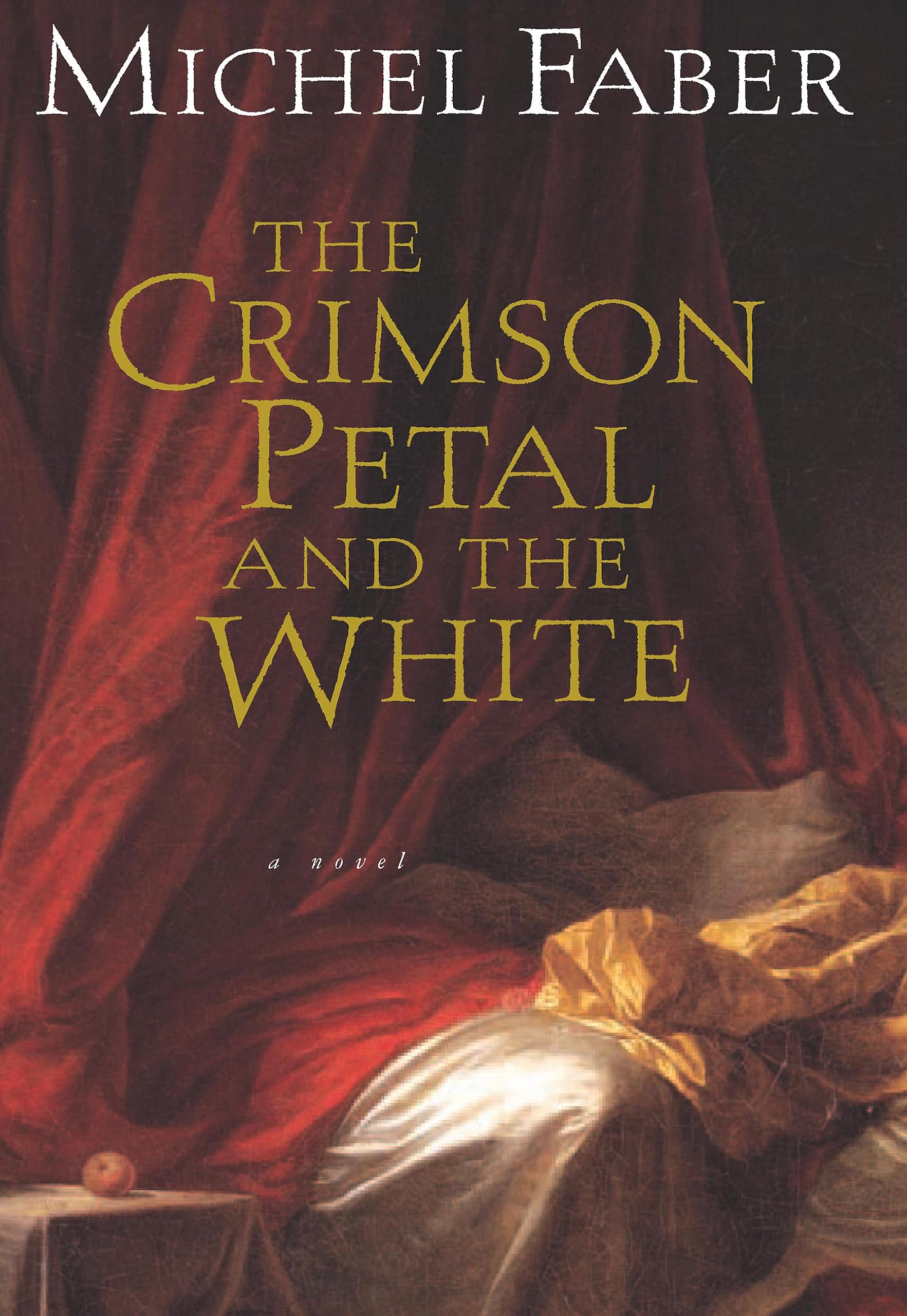
The Crimson Petal and the White: A Novel - Kindle edition by Faber, Michel. Download it once and read it on your Kindle device, PC, phones or tablets. Use features like bookmarks, note taking and highlighting while reading The Crimson Petal and the White: A Novel. Review: Odd Title; Good Read - The title is taken from Tennyson's "The Princess"; a Victorian era epic poem written by a man advocating woman's rights. In some respects I would call the style "Dickens Lite". Many people, not me, find Dickens too prosy or too wordy in his descriptions of Victorian England. This novel gives us the same locations and many of the same sort of characters but with a 20th century writer's sensibilities and word choices. This book is significantly more earthy than Dickens could or would have written and the language is substantially more trenchant. Mr. Farber has a good grasp of his characters and they stay consistent throughout the book which is admittedly more lengthy than many modern readers find comfortable. This is definitely a character driven and not a plot driven book so the reader cannot really expect it to "go anywhere" except into the lives of its characters. I believe it unfolds nicely in bits from the perspective of each of the more or less main characters, interspersed with insights and observations from an omnipresent and all-knowing first person narrator. Main characters include; William Rackham a prig who never quite got past being a "fraternity boy", deludes himself about his talent as a writer, is a possible heir to a manufacturing fortune but lacks either motivation or interest in the business until ...; Agnes Rackham, William's wife who is very "brittle" and a psychologists wet dream, possessed of more issues than Time magazine her mental health issues are organic in nature and greatly exacerbated by the examinations and treatments she is forced to undergo at the hands of the family physician; Henry Rackham, William's brother who aspires to the cloth but is deeply troubled confrontations of the flesh and tormented by the conflagration he believes will engulf him for his impure thoughts and obsession with things "low" and/or sensual; Emmiline Fox, a widow who Henry believes to be possessed of some pulchritude but others find to be quite homely, she is the object of William's base desires but is oblivious to his intentions because she is consumed by her attempts to rescue fallen angels, i.e. prostitutes. Last but by no means least is Sugar, an extremely well read 19 year old prostitute who works out a brothel run by he mother the somewhat terrifying Mrs. Castaway. Sugar's "fame" is based on her willingness to do "anything you desire", when the Fates look down on Sugar they will find her ready for the wand of change to christen her head. Her association with William Rackham changes the lives of every character in the book. The many voices construction may, on its face, seem awkward but Farber pulled it off neatly. I forget the term to describe the device but inside the story we are also treated to passages from the Diary kept by Agnes, the sermons written by Henry and the (graphic) novel being written by Sugar. I always had the feeling that the narrator was pulling my leg just slightly each time it spoke and demonstrated its finely honed sense of sarcasm. Some time ago I saw the mini-series created from this book and the color and tone injected by the narrator was conspicuous by its absence. Do not expect a happy ending. In fact, I expect most readers will find the ending far too ambiguous for their liking. But then, isn't life like that; despite our best efforts its all so ... ambiguous. Review: A Bawdy Dickensonian Epic With 21st Century Overtones! - Michel Faber's colossal novel, "The Crimson Petal And The White," is of Dickensonian scope and setting, but it delves deeper and more graphically into the down and dirty life of Victorian England than Mr. Dicken's did - thanks to 21st century sensibilities. There is bawdiness galore here, and local color from lowest-brow brothels and pubs to highbrow clubs and ballrooms. The very original cast of characters who accompany the reader through the doors of these places are as varied in class as they are in morality. This epic is chock-full of sizzling sex, prostitution of all variety, horrific poverty, disease and filth, and the epitome of wealth, privilege and luxury. The reader is escorted through the novel, and through London's streets, by a delightful, but always anonymous, narrator - who occasionally reminds us that we are reading a novel. We are taken to meet various people who soon sweep us into the pageant of their lives. One of the most memorable characters is Miss Sugar, patronym unknown. Sugar is a nineteen year old prostitute who has made a name for herself, not only by word of mouth but through the gentlemen's' guide "More Sprees in London - Hints for Men About Town." Sugar is lauded in the publication as undertaking, with zeal, any means and methods to pleasure her clients. She works for her wretched mother, the Madame and owner of Mrs. Castaway's House of Prostitution, and has since her 13th year. Sugar, smart and literate, is utilizing these unappreciated talents to write a dark novel of revenge, at various times entitled: "Scenes From The Streets," "A Cry From The Streets," "An Angry Cry From An Unmarked Grave," "Women Against Men," "Death In The House Of Ill Repute," "Come Kiss The Mouth Of Hell," "The Fall And Rise Of Sugar," etc. - you get the gist. One evening she meets a client who will forever change her destiny. William Rackham, a wealthy perfume magnate, with a noble wife, has been down and out on his luck. He desperately needs some cheering-up. Fortunately he is a subscriber to "More Sprees In London" which leads him to Sugar's open arms. He tells her he longs to be debased and she is eager to serve his every whim. Temporarily, at least, this is a match made in heaven. Both Sugar's and Rackham's stars rise in each other's company. And along the way, we are witness to the rising and falling fortunes of their various friends and family members. Faber paints a vivid portrait of Victorian England. He details the period costumes, manners, food, life on the street and in the drawing room, upstairs and down, the King's English and street cant, the opera and music hall, without slowing the brisk pace of his narrative. The title, "The Crimson Petal And The White," implies the distinction between virtue and immorality. The author has an unusual take on just who his heroes and heroines are. Like Dickens, Thomas Hardy and others, he explores the social hypocrisy and rigidity of the class system and makes some interesting observations about the sexual politics of the time. I thoroughly enjoyed this huge and entertaining read. There is more here than a "beach book." Faber's writing is lush. His dialogue is excellent - very witty, and the research is impeccable. This bold book is destined to be a classic. JANA
| Best Sellers Rank | #87,823 in Kindle Store ( See Top 100 in Kindle Store ) #48 in Literary Satire Fiction #65 in Satire #122 in British & Irish Humor & Satire |
D**O
Odd Title; Good Read
The title is taken from Tennyson's "The Princess"; a Victorian era epic poem written by a man advocating woman's rights. In some respects I would call the style "Dickens Lite". Many people, not me, find Dickens too prosy or too wordy in his descriptions of Victorian England. This novel gives us the same locations and many of the same sort of characters but with a 20th century writer's sensibilities and word choices. This book is significantly more earthy than Dickens could or would have written and the language is substantially more trenchant. Mr. Farber has a good grasp of his characters and they stay consistent throughout the book which is admittedly more lengthy than many modern readers find comfortable. This is definitely a character driven and not a plot driven book so the reader cannot really expect it to "go anywhere" except into the lives of its characters. I believe it unfolds nicely in bits from the perspective of each of the more or less main characters, interspersed with insights and observations from an omnipresent and all-knowing first person narrator. Main characters include; William Rackham a prig who never quite got past being a "fraternity boy", deludes himself about his talent as a writer, is a possible heir to a manufacturing fortune but lacks either motivation or interest in the business until ...; Agnes Rackham, William's wife who is very "brittle" and a psychologists wet dream, possessed of more issues than Time magazine her mental health issues are organic in nature and greatly exacerbated by the examinations and treatments she is forced to undergo at the hands of the family physician; Henry Rackham, William's brother who aspires to the cloth but is deeply troubled confrontations of the flesh and tormented by the conflagration he believes will engulf him for his impure thoughts and obsession with things "low" and/or sensual; Emmiline Fox, a widow who Henry believes to be possessed of some pulchritude but others find to be quite homely, she is the object of William's base desires but is oblivious to his intentions because she is consumed by her attempts to rescue fallen angels, i.e. prostitutes. Last but by no means least is Sugar, an extremely well read 19 year old prostitute who works out a brothel run by he mother the somewhat terrifying Mrs. Castaway. Sugar's "fame" is based on her willingness to do "anything you desire", when the Fates look down on Sugar they will find her ready for the wand of change to christen her head. Her association with William Rackham changes the lives of every character in the book. The many voices construction may, on its face, seem awkward but Farber pulled it off neatly. I forget the term to describe the device but inside the story we are also treated to passages from the Diary kept by Agnes, the sermons written by Henry and the (graphic) novel being written by Sugar. I always had the feeling that the narrator was pulling my leg just slightly each time it spoke and demonstrated its finely honed sense of sarcasm. Some time ago I saw the mini-series created from this book and the color and tone injected by the narrator was conspicuous by its absence. Do not expect a happy ending. In fact, I expect most readers will find the ending far too ambiguous for their liking. But then, isn't life like that; despite our best efforts its all so ... ambiguous.
J**E
A Bawdy Dickensonian Epic With 21st Century Overtones!
Michel Faber's colossal novel, "The Crimson Petal And The White," is of Dickensonian scope and setting, but it delves deeper and more graphically into the down and dirty life of Victorian England than Mr. Dicken's did - thanks to 21st century sensibilities. There is bawdiness galore here, and local color from lowest-brow brothels and pubs to highbrow clubs and ballrooms. The very original cast of characters who accompany the reader through the doors of these places are as varied in class as they are in morality. This epic is chock-full of sizzling sex, prostitution of all variety, horrific poverty, disease and filth, and the epitome of wealth, privilege and luxury. The reader is escorted through the novel, and through London's streets, by a delightful, but always anonymous, narrator - who occasionally reminds us that we are reading a novel. We are taken to meet various people who soon sweep us into the pageant of their lives. One of the most memorable characters is Miss Sugar, patronym unknown. Sugar is a nineteen year old prostitute who has made a name for herself, not only by word of mouth but through the gentlemen's' guide "More Sprees in London - Hints for Men About Town." Sugar is lauded in the publication as undertaking, with zeal, any means and methods to pleasure her clients. She works for her wretched mother, the Madame and owner of Mrs. Castaway's House of Prostitution, and has since her 13th year. Sugar, smart and literate, is utilizing these unappreciated talents to write a dark novel of revenge, at various times entitled: "Scenes From The Streets," "A Cry From The Streets," "An Angry Cry From An Unmarked Grave," "Women Against Men," "Death In The House Of Ill Repute," "Come Kiss The Mouth Of Hell," "The Fall And Rise Of Sugar," etc. - you get the gist. One evening she meets a client who will forever change her destiny. William Rackham, a wealthy perfume magnate, with a noble wife, has been down and out on his luck. He desperately needs some cheering-up. Fortunately he is a subscriber to "More Sprees In London" which leads him to Sugar's open arms. He tells her he longs to be debased and she is eager to serve his every whim. Temporarily, at least, this is a match made in heaven. Both Sugar's and Rackham's stars rise in each other's company. And along the way, we are witness to the rising and falling fortunes of their various friends and family members. Faber paints a vivid portrait of Victorian England. He details the period costumes, manners, food, life on the street and in the drawing room, upstairs and down, the King's English and street cant, the opera and music hall, without slowing the brisk pace of his narrative. The title, "The Crimson Petal And The White," implies the distinction between virtue and immorality. The author has an unusual take on just who his heroes and heroines are. Like Dickens, Thomas Hardy and others, he explores the social hypocrisy and rigidity of the class system and makes some interesting observations about the sexual politics of the time. I thoroughly enjoyed this huge and entertaining read. There is more here than a "beach book." Faber's writing is lush. His dialogue is excellent - very witty, and the research is impeccable. This bold book is destined to be a classic. JANA
B**B
Various scents encountered in a Victorian bouquet
'The Crimson Petal and the White', in some senses, has similar goals as John Fowles' 'The French Lieutenant's Woman.' Both of them are modern novels that revisit Victorian era England and view it from the lens of the 20th-21st century. Both novels tell us plainly that they are modern novels from the vantage point of the contemporary (at the time of writing) world. Although it's been over 30 years since I read Fowles' novel, I do recall that, while it points out contrasts between the Victorian era and the 20th century and even offers a metafictional choice of endings from which to choose it follows a narrative path that is very much in keeping with one of Thomas Hardy's novels if somewhat more frank in its carnal details. At the outset of 'Crimson Petal..' it is made very clear that we are in the hands of a time-traveling tour guide, as though we're ghosts from the future that can follow undetected into the most intimate chambers of inhabitants of 1870's London. Also, as anyone who has read at least a few reviews of the novel has gathered, it not only has no alternative ending but it has NO conclusive ending. Actually, it does have a definite ending even if loose threads are left loose and we are left wondering about the fates of the characters 'Gone With the Wind' is inconclusive in that, while we know that Rhett Butler has left Scarlett O'Hara, seemingly permanently, we don't know if Scarlet will win him back as she claims on the final page. It is also no surprise that this novel provides a contemporary's depiction of sexual matters that would not have been permitted in any reputable fiction of the Victorian era. We are introduced to a house of prostitution in the slums of 1875 London as well as some of its inhabitants: Caroline, a fallen woman of little education, her younger, yet better educated and professionally adept friend Sugar and Sugar's mother, Mrs. Castaway, the withered madam of the establishment. On the other side of the tracks, we meet William Rackham, the literary son and heir to his father's perfumery. Despite having a wife and young daughter, William is reluctant to seize the reins of responsibility and take charge of the business. He spends many of his evenings in the company of his former classmates, the carousing, witty pair Bodley and Ashwell. The older son Henry, the son to whom the business should reasonably be handed down to, is a pious man who has never been temperamentally suited for business and feels that he would be better suited to God's calling, if he could be certain that God was really calling him, which he is not due to libidinous thoughts of his friend and fellow fundamentalist Emmeline Fox, whose ministry is to rescue fallen woman. Seeking sexual gratification and a way to rescue him from his boring life, William seeks out Sugar, whose reputation for meeting ALL of a man's needs he has heard of from an alternative London guidebook, 'More Sprees in London—Hints for Men About Town, with advice for greenhorns'. When he finally meets her he is smitten, not only because she possesses an almost extrasensory awareness of what will satisfy him but because she is very intelligent and literate and almost as well-read as him. He is not aware that she spends most of her early mornings after a night's work writing a lurid novel of a prostitute's revenge. Her effect on William is spectacular. He floats on air and assumes a new lease on life and finally slips into the role of perfume manufacturer that his father envisioned for him. Soon William buys out her mother's investment in her, installs her in a small apartment closer to the respectable part of town and provides her with free room, board and food as well as a generous allowance, all for being available whenever he comes to call on her. Later this evolves into a position as the live-in governess of his daughter Sophie. Contrasted with William's other life is that of his ailing wife Agnes, often bedridden and afflicted with fits and delusions although periodically able to function in high society. We see her inner struggle through glimpses of the diary she has kept since she was a child. In many respects she has remained a child and, like many women of the time, her fate is controlled first by her stepfather, then her husband. Even motherhood has not altered her self-centered selfishness. She wants nothing to do with her daughter. William is not particularly happy with the current governess and finds a reason to dismiss her and install Sugar in the position. Theoretically, it's an ideal situation. He has his lover installed as a full-time resident and employee of his household and his ailing wife stays in her room and never crosses paths with Sugar, who is busy instructing Sophie. I will say no more other than that the situation quickly becomes much less than ideal. In many respects the narrative direction is a reverse of the governess/employer relationship in 'Jane Eyre.' Henry, although insufferably pious and guilt-ridden, provides an interesting contrast with the narrative of William and Sugar. His own platonic relationship with Emmeline also forms a symmetrical contrast to that of William and Sugar. I was somewhat disappointed that his fate was not entwined with theirs as I thought it would be. Although the novel is set in the Victorian era and the characters are fully embodied products of their age, the prose style is decidedly not Victorian. There is no attempt to mimic the ornamental stylistic flourishes of many of the nineteenth century authors and, despite the novel's great length, the pace of the narrative flows quite swiftly. Faber also succeeds in avoiding predictability of plot. Up until the last thirty pages or so this reader could not second guess the author and feel that he claimed to know with near certainty the outcome for all of the characters. For those who were frustrated with the lack of resolution, Faber published a collection of stories, 'The Apple: Crimson Petal Stories,' which I have purchased and intend to read although my impression is that, while it answers some questions about the fates about some of the characters, it doesn't attempt to tie up many of the loose ends left at the end of 'The Crimson Petal…' For me, the abrupt departure and lack of resolution is utterly authentic and completes the illusion of our journey back in time. Our tour guide has shown us all we need to know of this world and we are deposited at its conclusion safely back into the comfort of our 21st century lives.
L**.
Such Promise. 3 1/2 stars
How many authors can make a virtue of exhibiting their painstaking research? Michel Faber has developed a style, which ,without impinging on the readers enjoyment, describes the Victorian world in all the gross detail the Victorians themselves would have abhorred thinking about let alone mentioned. When fat and feckless William Rackham encounters the mysterious prostitute Sugar in the bowls of the Victorian underworld, this oddly addictive tale begins. William, the heir to a perfume fortune, disregards the family business, while fancying himself a literary man despite his utter lack of talent. In the meanwhile, Agnes, the angel of the house [ as upper middle class Victorians loved to think of those sexless paragons of virtue, their wives] is gradually descending into madness. Their child, a daughter, is ignored by both parents and relegated to the nursery. Enter Sugar, a young woman forced into prostitution at the age of thirteen by her own mother, who has not only managed to uplift herself by reading but is also writing a novel, an erotic tale of violence and revenge, which serves to keep her sane as she plies her trade. The story unfolds as Sugar slowly infiltrates William's life, moving from whore, to mistress, to governess while helping him gain power over both his business and domestic situation. But when she sees how deeply narcissistic and false he is, she takes matters into her own hands. Though it begins beautifully, the characters remain undeveloped [ eg: William finds himself an overnight success in the family business, his brother merely exists to demonstrate the lunacy of religious delusion in a lusty man who chooses to negate the flesh, or perhaps he and Mrs Fox are the true lovers in the tale--lovers who never manage to effect consummation of that love before they themselves are consumed]; the middle part is soggy and bogged down with the details of the deeply unsympathetic wife's self absorption and endless maladies, both real and imagined. And Sugar, potentially the most interesting character, is neglected as she experiences a reversal all too suddenly making her weak and sentimental the moment Rackham begins to support her financially. And what of Sugar's ability to pass herself off as a scholar and a lady? Little of her previous training is explained. Surely one may be an autodidact but speaking properly is an altogether different proposition and implausible if one has never left Silver street and environs [ never been to church, theater etc] Additionally, Sugar resembles the modern ideal, tall, skinny, mannish in manner and in thought, right down to her Adam's apple [?] The only other thinking woman in the book, the proto-feminist Mrs Fox, bizarrely enough, also seems to have one. Yet Sugar was at her most interesting then, and as we progress Faber loses the thread of her character, loses her motivation, neglects her in favor of the endless, dull and insipid Agnes storyline. So what was the purpose of the book? It is neither a bildungsroman focusing on Sugar's rise and fall, it is not a contrast of two Victorian women, the sexless Agnes and the prostitute Sugar. It is not a feminist tract about all the women in the house being forced to whirl around the puffed-up William--and who are driven to bizarre behavior by virtue of that fact [ Agnes' brain tumor negates that possibility]. Consequently, we are left with an endless compendium of Victorian manners, décor, food, sexuality, social relations, mores - which is all too much but never enough to satisfy. Although I did not have a problem with the open endedness of the book, Sugar's awakening was much too abrupt and her empathy for mad Agnes was never convincing. And though it's been many years since I read the following, I recommend: Charles Palliser, Quinqunx, [ like Dickens without the sentimentality ], Vikram Seth, A Suitable Boy, [ set in India ], and Ian Pears, An Instance of the Fingerpost [ set after the Restoration]. All three are less imperfect than The Petal and marvelously entertaining.
I**V
Puts the 'duck' in 'Duckensian'
A massive, character-driven slab of a novel set in Victorian times, The Crimson Petal invites inevitable comparison with Dickens' classics, but it's definitely much more accessible, irreverent and dirty. The novel is chronicling the rise of a young London prostitute, as she becomes the lover of an ascendant perfume magnate – and as his own family starts to unravel. This allows for a spectacularly panoramic novel that pokes its nose both in the London slums and in the salons of high society – and also in the places where the two happen to intersect. Farber uses this breadth to comment on the changes in the Victorian society, the upcoming emancipation of women and the vulnerabilities of the patriarchal family in a way that's insightful, scathing and sympathetic. Sometimes the novel does seem like it veers off into too many tangents, as it's not particularly clear what exactly a detailed description of a performance by a famous flatulist (in case you don't feel like googling it, a flatulist is like a politician except way more entertaining) adds to the plot, but Farber's writing style and the sheer amount of period details more than make up for it. As to the plot itself, I would say this: it's a Cinderella story that’s believable. Farber seems to have gone out of his way to create a Dickensian novel without Dickensian tropes. There are no dramatic plot twists, no definite endings to any of the book's intertwining storylines, no heroes and no villains. Each of the main characters is both sympathetic and appalling in their own unique way; when death or violence come their way, it feels less like an operatic tragedy or well-deserved comeuppance and more like an unfortunate coincidence – which is more or less how it is in normal life. When the book ends, it ends not with a bang but with a question sign: the surviving characters is given a happy ever-after; they are simply put in a new set of circumstances and expected to make due on their own, without the careful guidance of the author or the constant attention of the reader. Again, this is pretty much how real life works, no? All in all, a pretty great novel that put Michel Farber on my map. Highly recommended.
S**O
Characters In Search of an Ending
In 1870s London, England, William Rackham is an up and coming nothing, who, even though the son of the rich owner of a perfume empire, finds himself a bit lost in life. He enjoys the dandy world a bit too much even though he has a mentally ill wife, and his dad gives him only the barest minimum in the way of money in an effort to compel William to take over the family business. That burden would normally have fallen on his older brother, Henry, but the eldest wants to be a clergyman and has no interest in running a company. The problem is that William has no interest in the perfume industry either. He'd much rather hang out with his scalawag buds, and think of himself as an aspiring writer or artiste, even though he writes NOTHING. His beautiful young wife, Agnes, is suffering from a hidden brain tumor (Faber's narrator tells us this early on but the characters in the novel have no way of knowing about it and just think she's crazy). It makes her have major mental issues which compound the worldly handicaps of her already sheltered upbringing. She basically has no clue as regards to sex even though she birthed a daughter, Sophie, from her marriage to William. In fact, she pretty much ignores the existence of her own child. William, too, has little to do with his kid and leaves her care to his servants. He can't really decide what he wants to do with his life besides knowing that the perfume business isn't an option. A whore named Sugar changes all that. Sugar is known throughout London as the prostitute that will do whatever a client asks, no matter how depraved or repulsive other whores might find it. Like William, she too, is an aspiring writer, with the difference being that she actually WRITES! She wants to publish a novel based on revenge fantasies on all the men she has slept with in her career. And by so doing, reveal mankind for the revolting animals they really are, and society as a skeleton of moral hypocrisy. When she meets William, she seduces him not only with her body, but also with her mind. She sets herself up as his intellectual and carnal soulmate, so much so that William even decides to take over his dad's hated pefume business in order to afford the price of making himself Sugar's one and ONLY customer! In its most basic form, The Crimson Petal and the White is about sex. Sexual repression and sexual release. It's the book Charles Dickens would have written if he had been allowed to include not only human drama but also naughty bits that happen in the bedroom. Faber even imitates the omniscient narrators of old and makes witty asides about the past, present, and future of the characters. It's also about how dangerous, secret passions can become all too banal over the passage of time or when they become too domestic. A secret affair only holds its power and lust while it IS secret and you're in danger of being discovered. Once the cat is out of the bag, so to speak, it loses whatever forbidden fruit magnetism it had at its inception. The book is pretty lengthy, clocking in at just under 900 pages, and the saddest thing is that after reading all those pages and savoring the beautiful language, you get to the end and are like "WTF? That's IT???" All the characters are left dangling in space with no resolution whatsoever. It's like a tv show that gets cancelled at the end of season on a cliffhanger and you never find out what happened to the characters or plotlines. There's a book of stories called The Apple that supposedly sheds a bit more light on what happened to the characters after the end of the novel, but to me, shave off some of the 900 pages and add an ending. Dickens never left you hanging at the end of his books! Don't try to emulate 19th century novelists and then flub the end! I felt kinda pissed about it and considered swearing off reading any more of Faber's novels...but I guess after I cooled down I've become a bit more forgiving and will most likely read The Apple to give myself some closure. It just seemed a real ripoff to spend over a month reading a book and then the author just blows off wrapping up his work. I would say to avoid this novel if you want any sort of payoff at its finish. If it had an end I would have given it 4-5 stars. Without one, it's a 2 or 3 star book.
O**N
The type of person who will love this book
************ I wanted to write a different sort of review for this book. There are, as of this writing, 288 reviews written already, many which describe the content of the book beautifully. I wanted to add here some information about who might want to order it. If you are a person that loves to be kept up late at night by a novel you just can't put down, you will enjoy this book. It is long, as others have said, but it never is slow; in fact, I would love to read a sequel. I devoured this book and could not wait to find out what happened next. I was a little afraid that I would be offended by the explicit sexuality described by others, but I was not, as it was not gratuitous. Sexuality was simply a part of life for the characters in the book, as it is for us today. The sexual themes were different, as the main character is a prostitute, but there is a great deal of her life that any woman could identify with, maybe even---that most women today could identify with. I know I did. I was not particularly interested in this time period historically, nor am I a fan of Dickens---you can still enjoy the book having these characteristics. The time period, for me, was incidental, and reading about class and gender differences at that time in history caused me to think about class and gender differences in my own time and relationships between men and women now. This is simply a great, beautifully written story. It is entertaining, but not light in the sense that there are many layers of messages and meaning that are not superficial that one can think about as one reads. For me it was a deep book. I finished it a couple of weeks ago, and I am still thinking about it. I would encourage you to read it if you want to get lost in a lovely story and think about your life and how you relate to the opposite sex. About what immorality and morality truly is, even if you already think you know. I hate romances, and it is definitely NOT a romance...it is more for someone who wonders about romance..and love...and marriage...and men and women...for someone who thinks different unspoken things and wonders if anyone else thinks the same way. I know this sounds sort of mysterious, but that's how the book is too, and if it intrigues you, don't hesitate---get it and then enjoy! ******
J**2
A Beautifully-Written, Savage, Fascinating Read
I should preface this by saying I am a huge fan of Victorian literature. "The Crimson Petal and the White" shares some of its style with Victorian novelists, and concerns that era, but being written by a modern-day author is free to expound on what 19th-century novelists never would have dreamed of putting to paper. The subjugation of woman and children, the common choice of prostitution as more healthy to mind and body than factory work, religious hypocrisy, utterly inadequate medical theories and practices, and stark imbalance of power between the wealthy and the working class are made clear in a manner that can only arise from looking backwards. The novel is called Dickensian, and it does concern itself with the poor and downtrodden, at least partially (there are some wealthy characters as well). While Dickens would never have written a main female character like Sugar (his heroines are always terribly bland), I can certainly see him conjuring up Mrs. Castaway, or Caroline, or the Colonel. Following the rise of Sugar, a teenage prostitute inducted into the trade as a child by her terrifying mother, from a resident of a middling charnel house to the mistress of a wealthy businessman, the novel is chock-full of fascinating, well-written characters, moments of tragedy and humor, and an ending that is abrupt and a bit frustrating, but doesn't take away from the beauty of the book. I read this book at least once a year, and each time I am drawn into the story and can't put it down, although I know very well what is going to happen. I can't recommend it highly enough.
Trustpilot
2 days ago
2 weeks ago