Buy anything from 5,000+ international stores. One checkout price. No surprise fees. Join 2M+ shoppers on Desertcart.
Desertcart purchases this item on your behalf and handles shipping, customs, and support to Greece.
🚀 Elevate your travel storytelling with Leica precision and 4K clarity!
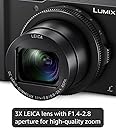
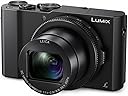
The Panasonic LUMIX LX10 is a compact powerhouse featuring a 20.1MP 1-inch MOS sensor paired with a premium 3X Leica DC Vario-Summilux lens (24-72mm) and a bright F1.4-2.8 aperture. It offers advanced 4K UHD video recording at 30fps, innovative 4K Photo and Post Focus capabilities, and a versatile 3-inch tilting touchscreen for selfies and easy control. With optical image stabilization, manual lens control ring, USB charging, and Wi-Fi connectivity, it’s designed for professionals and enthusiasts seeking DSLR-level quality in a pocketable form factor.


| ASIN | B01LZHIX13 |
| Aperture modes | F1.4-F2.8 |
| Are Batteries Included | Yes |
| Aspect Ratio | 16:9 |
| Auto Focus Technology | Face/Eye Detection / Tracking / 49-area / Custom Multi / 1-area / Pinpoint |
| Autofocus | Yes |
| Battery Weight | 1 Grams |
| Best Sellers Rank | #191,536 in Electronics ( See Top 100 in Electronics ) #1,663 in Digital Point & Shoot Cameras |
| Brand | Panasonic |
| Built-In Media | AC Adaptor, Battery Pack, Hand Strap, USB Cable, camera |
| Camera Flash | Built-In |
| Camera Lens | A crystal-clear F1.4-2.8 24-72mm LEICA DC VARIO-SUMMILUX optical zoom lens |
| Color | Black |
| Compatible Mountings | Micro Four Thirds |
| Connectivity Technology | HDMI, USB |
| Continuous Shooting | 10 FPS |
| Customer Reviews | 4.2 4.2 out of 5 stars (355) |
| Digital Scene Transition | zoom |
| Digital Zoom | 4 x |
| Digital-Still | No |
| Display Fixture Type | Fixed |
| Display Resolution Maximum | 1040 |
| Display Type | LCD |
| Dots Per Screen | 1040 |
| Effective Still Resolution | 20.1 MP |
| Expanded ISO Maximum | 25600 |
| Exposure Control | Manual |
| File Format | AVCHD |
| Flash Memory Bus Interface Type | UHS-I |
| Flash Memory Type | SDXC |
| Flash Memory UHS Speed Class | U3 |
| Flash Memory Video Speed Class | U3 |
| Flash Modes | Auto, Auto/Red-Eye Reduction, Forced On, Forced On/Red-Eye Reduction, Off, Slow Sync, Slow Sync/Red-Eye Reduction |
| Flash Sync Speed | 1/250 |
| Focal Length Description | 8.8 to 26.4mm (35mm Equivalent Focal Length: 24 to 72mm) |
| Focus Features | Depth From Defocus, Face/Eye Detection / Tracking / 49-area / Custom Multi / 1-area / Pinpoint |
| Focus Mode | Continuous-Servo AF (AF-C) |
| Focus Type | Depth From Defocus |
| Form Factor | Compact |
| Global Trade Identification Number | 00885170291843 |
| HDMI Type | Type D Micro HDMI |
| Hardware Interface | AV Port |
| Has Color Screen | Yes |
| Image Capture Type | Video |
| Image stabilization | Optical |
| Item Weight | 10.88 ounces |
| JPEG Quality Level | Basic, Fine, Normal |
| Lens Construction | 11 Elements in 9 Groups |
| Lens Type | Fisheye |
| Manufacturer | Panasonic |
| Manufacturer Part Number | DMC-LX10K |
| Maximum Aperture | 1.4 f |
| Maximum Focal Length | 72 Millimeters |
| Maximum Shutter Speed | 1/4000 Seconds |
| Memory Slots Available | 1 |
| Memory Storage Capacity | 64 GB |
| Metering Methods | Center-Weighted Average, Multi, Spot |
| Minimum Focal Length | 24 Millimeters |
| Minimum Shutter Speed | 1/16000 Seconds |
| Model Name | Panasonic Lumix LX10 |
| Model Number | DMC-LX10K |
| Model Series | LX10 |
| Movie Mode | Yes |
| Night vision | No |
| Optical Zoom | 3 x |
| Photo Sensor Resolution | 20.1 MP |
| Photo Sensor Size | 1-inch |
| Real Angle Of View | 180 Degrees |
| Recording Capacity | 30 Minutes |
| Remote Included | No |
| Screen Size | 3 Inches |
| Self Timer | 10 Seconds |
| Sensor Type | CMOS |
| Series Number | 10 |
| Shooting Modes | Time Mode,Aperture Priority, Manual, Program, Shutter Priority |
| Skill Level | Intermediate |
| Special Feature | Belt Loop, Shoulder Strap |
| Specific Uses For Product | General photography, videography, travel, high image quality, 4K video recording |
| Supported Image Format | JPEG, RAW |
| Total Still Resolution | 20.1 MP |
| Total USB 2.0 Ports | 1 |
| Total USB Ports | 1 |
| Total Video Out Ports | 1 |
| Touch Screen Type | Capacitive |
| UPC | 885170291843 |
| Video Capture Format | 4K |
| Video Output | Micro-HDMI |
| Video Resolution | 4K UHD 2160p |
| Viewfinder | flexible LCD |
| Warranty Description | MANUFACTURE |
| White Balance Settings | Auto, Cloudy, Color Temperature, Daylight, Flash torch |
| Wireless Technology | Wi-Fi |
| Zoom | Depth From Defocus |
R**R
Excellent Every-Day-Carry Camera, Great Indoors in Natural Light, Prefered over RX100, LX100, LS100, GM1 for EDC
Initial impression is excellent. My context is that this is the first camera I've purchased for personal use since the Panasonic GM1, which is a m4/3 interchangeable lens camera with a very compact body, so that is my main point of comparison. I also had a original Sony RX100, but it was lost at a conference, so needed a small every day carry camera. I do more indoor natural light shots than out, and pretty much never use a flash, so that frames my needs a bit. Based on early results, the LX10 is a great replacement for the RX100 and beats the GM1 as a travel/EDC camera. Key findings so far: *The lens on the LX10 beats the larger m4/3 sensor + stock lens on the GM1 for everyday indoor photography. To compare, I did a quick set of shots on P(rogram) setting on both cameras in a unevenly lit room at night, just to see what the P algorithms produced when left to their own devices. The GM1 was equipped with the very nice compact zoom kit lens, 12-32mm f3.5-5.6 max aperture. P sets shutter speed, aperture, and ISO automatically. Both cameras took the shot at 1/60th s with their lenses wide open, but the ISO on the LX10 was 640 while the ISO on the GM1 was 3200. Totally to be expected given the much slower f3.5 vs. f1.4, but cameras are systems, not individual components, and the 3200 ISO on the GM1 really increased the noise, lowered the detail and hurt the color fidelity much more than in the shot from the LX10. Now, of course, I could have put a fast lens on the GM1, I certainly own plenty of m4/3 lenses including fast primes, BUT, that's the point, really, that the very fast lens on the LX10 opens up a much wider operating window compared to the kit GM1, and to match it, I'd have to give up the zoom and use a fast prime, again lowering the versatility and speed of operation for my kind of indoor/low light shooting, so that is worth something to me. Other quick points: Size - the retractable lens on the LX10 makes it much easier to pocket and carry the LX10 vs. the GM1, even though the body of the GM1 is a bit smaller, due to the added depth from the 12-32mm lens. Speed of operation - the 12-32mm lens on the GM1 must be manually extended before taking the first shot, making it much tougher to capture fleeting scenes. 4K video - Not an option on the GM1. Not that I need it much just yet, but looking forward to that move in the not too distant future. I did test the 4K video on the highest data rate setting, and was able to capture and playback just fine from my very recent PNY UHS1/U3 card PNY Elite Performance 128 GB High Speed SDXC Class 10 UHS-I, U3 up to 95 MB/Sec Flash Card (P-SDX128U395-GE) . I panned an indoor scene and watched the focus adjust, and, after one big focus hunt right at the beginning, the LX10 did a very nice job, pulling from 10ft focus to less than a foot at the end of the pan, and stopping right on focus of the close object without hunting. Pretty impressive. Other points of comparison: *LX100. I briefly owned and returned the LX100 before buying the LX10 as it was just too big for the every day carry role. Further, the effective resolution due to sensor crop on the LX100 was a disappointment in the few test images I took, and the default JPEG settings left me flat, which surprised me given my preference for Pany standard JPEGs. *LS100. Own this camera for work, and the 10x zoom is really handy, but the slower lens shows indoors, even wide open. There are many more features to test and that will be fun, but, net, for me, the LX10 is the better choice, given priority for indoor or low light outdoor shots. I'll continue to use my GM1 and Olympus EM5 m4/3 cameras with appropriate lenses for the more challenging shots (e.g., the 2015 All Star Game, where 300mm zoom was essential paired with the EM5), or the LS100 where I need quick access to more zoom range outdoors, but the LX10 is now my EDC camera, especially when I know I'll want a mix of indoor + outdoor, or just indoor. Highly recommended if your priorities are similar.
J**O
Excellent pocket camera
Worth every penny. I own 3 of these cameras and I will buy more whenever I find them. I think is the 2nd most powerful compact camera in the world only after the Sony RX100 VII but the Sony cost twice the price of the LX10 and that makes this camera an unique purchase. Highly recommended. I got mine in 2022 and still going strong. Great zoom 24-70 equivalent. Sturdy body made of metal. Great design with many manual dials that provide full control. Easy to use in A+ mode Excellent 4K video!
T**D
Great Little Camera
I've had the camera for almost three years, and it's been to Japan and all around Arizona and Colorado. I think it's a great little camera, and it's performed pretty well. I use it when I don't/need to bring my big camera gear along. I installed the MoGoPod MagFilter 58 mm kit to use CP and ND filters. Read my review of that at its product page. That is a great product also. I think they could have added some textures to the body of the LX10. I added small pieces of 3M Safety Walk slip resistant tape to the front and rear of the camera. The small piece on the rear is where my thumb usually ends up. Without these, this little camera is difficult to get a firm grip because it's slippery. After a few years, there's a bit of dust inside the lens, which is easy to fix in post-processing. There are some mechanical issues caused by bumping it into things, but that's all my fault. The image quality is superb for a point and shoot camera, and low light performance is acceptable. The ability to control the shutter speed, aperture, and ISO is not as easy as on a big camera, but at least it's there. I don't care for the controls. The button assignment is somewhat customizable, but the controls are not intuitive to me. I don't care for the aperture ring. Also, video footage from this camera isn't very impressive, and 5-axis image stabilization is disabled in 4K shooting, but for a point and shoot camera released in 2016, this is about fair. The battery cover shape or placement could be improved. With the Manfrotto quick release RC2 plate, the plate covers the battery cover, and this makes it impossible to change the battery without removing the plate from the camera. Also, when the RC2 plate is on, the flip up screen cannot be manipulated from the closed position. The screen has to be flipped out of the way before putting the RC2 plate on if I intend to flip the screen up while shooting. The camera cannot be used while being charged by a micro USB cable. The only solution is to power the camera using a battery adapter such as the Panasonic DMW-DCC15A DC coupler. Shortly after purchasing the camera, the DMW-DCC15A was either not available or approved for LX10 (I could not find information online as to its use with LX10), so I took apart a spare battery and wired it with the Gowoops Boost Converter Module XL6009 to adjust to 7.4 volts, and attached a USB connector to plug into a battery pack. There is a flap for the external power cable to go through on the battery cover, which is not accessible, again, when the Manfrotto RC2 plate is on. The menu is confusing and not intuitive. On one hand, it seems like Panasonic wanted to simplify things, but things are hard to find because it's scattered all over the place. The three main tabs under settings is for photography ("Rec"), videography ("Motion Picture"), and "Custom." It's the existence of this "Custom" menu tab that confuses me. The "Custom" menu allows changing of 51 different settings that mostly have to do with photography like "Silent Mode," "AF/AE Lock," "Peaking," and "Zebra." These settings can be changed and also stored into three presets named "C1," "C2," or "C3." C1/2/3 are recalled when the shooting mode is in "C." When changing these settings in other shooting modes, they are preserved even when the shooting mode is changed to "C" and back. So in essence, there are four presets, which I appreciate. You cannot change and recall the 51 settings in "Custom" for each of the (M/P/A/S/etc) shooting modes though: they apply to all modes except in "C," where C1/2/3 takes over. Maybe other Panasonic cameras are set up the same way, but I think they could have organized the menu a little differently. I think features like Post Focus, Focus Stacking, and all the video related features are great, but I have no use for it. If I pre-plan and shoot accordingly, I can do most of those in post-processing. Not everyone has Adobe Lightroom or Photoshop, I guess. Overall, I'm not sure if Panasonic wanted a simple and easy to use camera, or confusing camera with lots of features and buttons. Here's the camera settings of the attached photos. All photos were taken in RAW, and the images were post-processed in Adobe Lr. Photo 1: Adobe Lr panorama stitch of nine exposures at ISO 125, 24 mm, f/5.6, 1/800 to 1/1250 sec. Handheld. Photo 2: Single exposure of ISO 125, 24 mm, f/5.6, 1/800 sec. Handheld. Photo 3: Single exposure of ISO 125, 24 mm, f/5.6, 1/800 sec. Handheld. Photo 4: Single exposure of ISO 80, 24 mm, f/11, 15 sec. Tripod. Photo 5: Single exposure of ISO 125, 38 mm, f/8, 1/125 sec. Handheld. Photo 6: Adobe Ps panorama stitch of 130 exposures of ISO 1600, 24 mm, f/1.4, 10s. Tripod. Photo 7: Adobe Ps panorama stitch of 10 exposures of ISO 1600, 24 mm, f/1.4, 13s. Tripod. Photo 8: Single exposure of ISO 6400, 24 mm, f/1.4, 2 sec. Handheld. Photo 9: Single exposure of ISO 400, 24 mm, f/1.4, 30 sec. Tripod. Photo 10: Adobe Lr panorama stitch of eight HDR (-1/0/1) exposures of ISO 800, 24 mm, f/5, 1/15 to 1/30 sec. Tripod.
F**I
Fast delivery and all are good.
A**R
Great Camera.
C**N
Ya tengo 2 cámaras grandes y compré esta cámara por que quería una portátil con las capacidades de una cámara semi profesional. Por lo que he probado en un año, está excelente. La cámara toma fotos en RAW o en JPEG, el formato RAW ya es compatible con la app Fotos de Google por lo que puedes subirlas a la nube, y también el formato es compatible con Affinity Photo incluyendo la corrección del lente. Solo en After Shot Pro 3 la corrección del lente no está bien, aunque se puede hacer una calibración manual que queda por default por lo que solo se hace una vez así que tampoco es mayor problema. Por lo tanto, con respecto al formato RAW, es completamente funcional y compatible con el software que utilizo. La cámara permite pasar por wifi las fotos RAW al celular o tablet, esto no es posible en las cámaras sony, en las nikon tiene que ser de una sola foto a la vez, pero con esta cámara puedes pasar todas las fotos RAW juntas por lo que más práctico. Yo creo que todo está muy bien, el diseño, la calidad de los diales y botones, el anillo de control de la apertura, todo se siente premium, los botones son muy personalizables para ajustarse a tus preferencias además de poder configurar botones en la pantalla touch. El desempeño con poca luz es excelente tanto en fotografía como en video por el tamaño del sensor y el lente luminoso, la calidad del video de noche es excelente, con muy poco ruido, además tiene modo de video manual, pudiendo controlar apertura, velocidad (máxima de 1/30 s) e ISO totalmente manual. Personalmente yo no uso el modo de foto 4K ni el modo de múltiple enfoque, creo que estos modos son puro marketing, nunca he tenido la necesidad de usarlos, afortunadamente esos botones son configurables, en el botón 4K configuré el ISO y en el botón del post enfoque configuré el HDR. Algo que me sorprendió es que al girar la pantalla hacia enfrente entra automáticamente a un modo portrait con buenas opciones de filtros, además aún con luz de sol puedes usar f1.4 para hacer un desenfoque del fondo bastante aceptable, esto normalmente es un problema porque puede quemarse la imagen al entrar tanta luz, pero el obturador electrónico extiende al mecánico de 1/2000 hasta 1/16000 s y esto resuelve el problema, la calidad baja notando dientes de sierra si hacemos zoom a la selfie, esto es normal con los obturadores electrónicos, aún así, las selfies con esta cámara son muy superiores a las de mi celular por la calidad general, desempeño en baja luz y efecto de desenfoque. Algo que me sorprendió es que la distancia de enfoque mínimo es de 1 cm aprox, permitiendo hacer unas fotos macro excelentes obteniendo un desenfoque hermoso por el F1.4, por lo que se pueden tomar excelentes fotos a plantas, flores, texturas, miniaturas, etc. En el máximo zoom podemos hacer fotos con desenfoque decente hasta formato medio (cabeza más torso), sin embargo ya en cuerpo completo el desenfoque del fondo es muy ligero, por lo que ya no sirve para esta aplicación. Un problema menor es que la cámara tiene una pila de solamente 680 mAhr que a mi gusto se descarga muy rápido, ya me ha pasado salir de viaje y quedarme sin pila, afortunadamente se carga rápido desde el puerto micro USB, por lo q cualquier batería portátil USB resuelve este detalle. En conclusión, 99% satisfecho, prácticamente tiene todo lo que mis cámaras grandes tienen (a6000 y d7200) en una cámara pequeña, ligera y discreta que cabe dentro de la bolsa del pantalón o la chamarra. Pros: Tiene HDR, Bracketing con un solo toque (excelente), fotos RAW, estabilizador óptico aceptable, video manual, excelente desempeño con poca luz, excelente pantalla táctil con muy buena resolución y buena calidad de colores y nivel de negros, excelente para selfies, excelente para fotos macro, aceptable para retratos con zoom máximo (no se acerca a un 35 mm 1.8 en formato APSC pero aún así las fotos son bastante decentes), incluye los modos básicos de las cámaras semi profesionales (M, S, A, Auto), detección de caras y enfoque al ojo, calibración manual de balance de blancos super fácil. Perfectamente útil para fotos macro, paisajes y retratos hasta formato medio. Contras Obviamente por las características del lente no sirve para telefoto, la velocidad máxima de video es de 1/30 s lo cual es normal en casi todas las marcas pero en las Sony sí es posible ajustar la velocidad hasta 1 s o más, las velocidades de 1/10 o 1/15 crean un efecto muy dramático en video que me hubiera gustado estuviera incluido, la pila es muy pequeña, creo que debería ser de al menos 50% de mayor capacidad aunque al menos se carga rápido por el puerto USB, finalmente algo que sí me molesta es el control de exposición, solo funciona en modo A y S, en Manual se cambia automáticamente a 0 y no hay modo de cambiarlo, esto es molesto ya que al usar ISO Auto yo suelo ajustar la exposición en 0 en ambientes bien iluminados o en el exterior en el día, pero en ambientes poco iluminados o en el exterior de noche me gusta usar la exposición de -1/3 o -2/3 o hasta -1 dependiendo de las condiciones (lo cual permite usar ISO más bajos y obtener una mejor calidad), no entiendo porque no se puede cambiar la exposición en M, solo en A y S como comenté, esto no es normal, tanto mi cámara a6000 como la d7200 me dejan ajustar la exposición en M sin problemas.
P**C
I had this camera for a while, and it takes quality pictures. I dont like to have to do a "manual" process to add the date to photos, but so far , so good.
T**A
I purchased to use as a lighter weight camera on my hikes rather than hauling around my heavier DSLR. I like the that it has a quicker lens which makes taking pixs in the woods so much simpler. It has a ton of features, most of which I won't use. The only negative things I have to say, based on my short possession time, is the touch screen and really small printing on the users manual. I suspect that somewhere in that small print is how to turn of the touch screen. I took both my cameras out for a test run and this performed well. When my DSLR wanted to use the flash, this one didn't. Like point and shots, framing a shot can be annoying but some simple post shot editing should suffice. It has a lot of features that may not appeal to the average user but it is nice to have them available should you wish to play around with them. It was the quicker lens that sold me. *** Edit. Other reviewers mention the short battery life and I have to mention it. After only 200 pics, the batteries died. I use pretty generic settings, took no 4K video clips, and nor did I leave it on for any significant length of time. While it is chargeable by either plugging into a wall socket adapter or USB port, those only apply if you have access to power. If you are planning on going camping or hiking then you will want to consider purchasing extra batteries and the associated charger port. Because of this, I lowered my rating to four from five. I am still enjoying the camera and carry it whenever I am out and about.
Trustpilot
3 weeks ago
2 months ago